Our Pick: Doctor's Best
Check price →What Does Kanna Feel Like? An Honest, Low-Hype Answer (2026)
Kanna is subtle by design, a light, clear-headed calm, a gentle mood lift, and a bit more ease around other people. It is not a psychedelic and not a THC-style high. Here is what it actually feels like, dose by dose, and why some first-timers barely feel it.
By Justin Park · 9 min · Updated 2026-07-01
★ Top-Rated Kanna Right Now
Best Overall
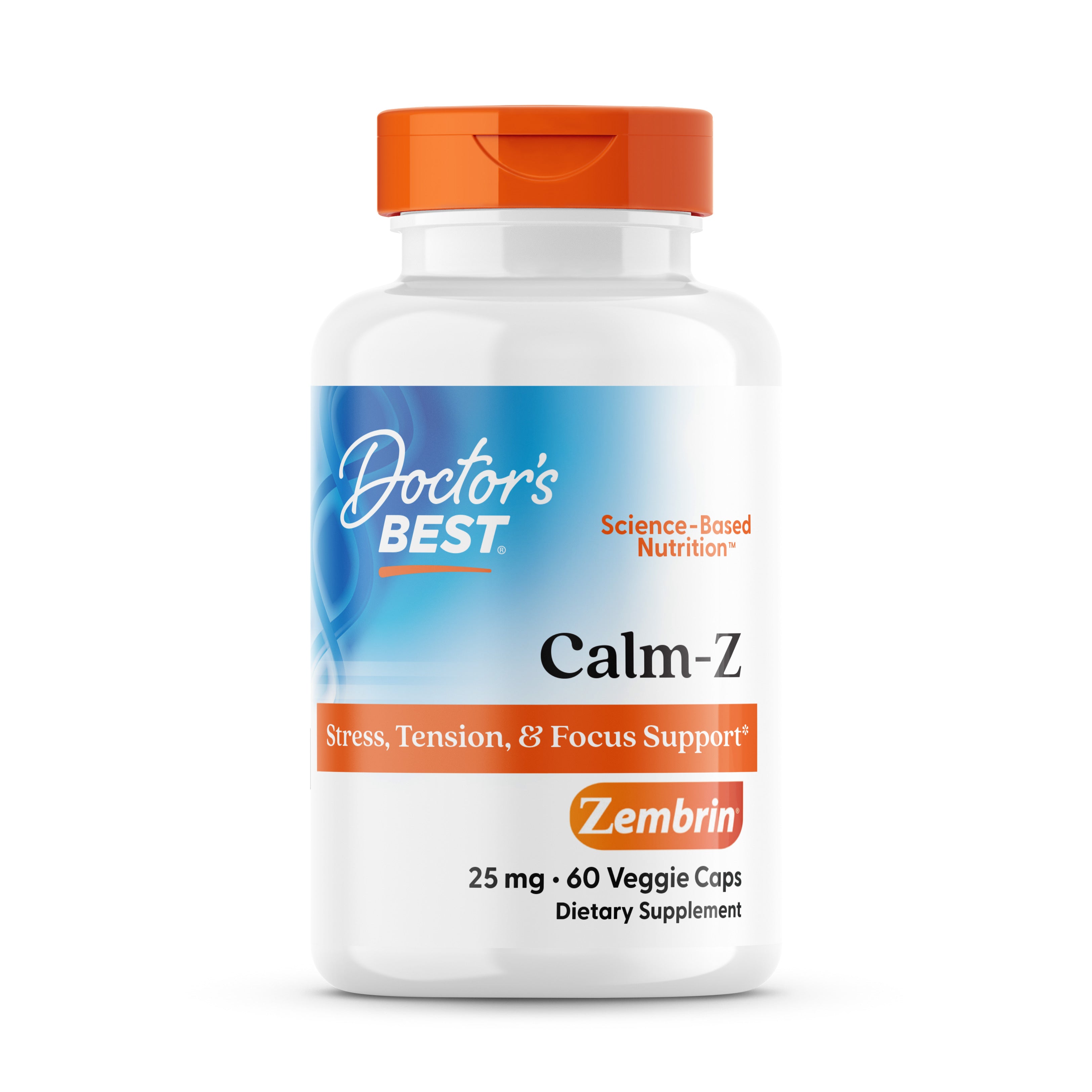
Calm-Z (Zembrin)
Doctor's Best
The one kanna extract with real published human trials behind it, at the studied 25mg dose.
The honest answer, up top: kanna feels subtle. Most people describe a light, clear-headed calm, a gentle mood lift, the anxious edge stepping back a little, and feeling a touch more open and social, not an obvious, grab-you-by-the-collar high. If you have read a Reddit thread hyping it as some big psychedelic wave, calibrate down. Kanna is not a psychedelic, and it is nothing like a THC or alcohol buzz. It is closer to "the volume on my stress turned down a notch and I feel a bit more like myself."
What you feel depends heavily on dose and format. Lower doses tend to read as calm, clear, and gently mood-lifting, with easier social connection; a modestly higher dose leans more euphoric and uplifting, with a little mild stimulation. Onset runs from about 15 to 45 minutes depending on whether you use a fast buccal chew or sublingual tincture versus a swallowed capsule, and effects typically last a couple of hours before easing off.
This guide sets expectations honestly, because an oversold first experience usually ends one of two ways: you feel let down, or you keep taking more chasing a bigger feeling and end up nauseous instead. A little housekeeping first, this is general information from a kanna publication that cares, not medical advice, and we are writers, not doctors. If you take any medication, read the safety line near the end before anything else.
The short version
- Expect subtle. Kanna typically feels like a light clear-headed calm, a gentle mood lift, less anxious edge, and feeling a bit more social, not a strong high.
- It is not a psychedelic and not a THC-style high. No hallucinations, no heavy 'stoned' feeling, no intoxication. Set expectations low so you are not disappointed and do not overdo it.
- It is dose-dependent: lower doses lean calm, clear, and gently mood-lifting; higher doses lean more euphoric and uplifting with mild stimulation.
- Onset is roughly 15 to 45 minutes, faster for buccal chews and sublingual tinctures, slower and gentler for swallowed capsules or powder. Effects usually last a couple of hours.
- Individual variation is big. Some first-timers feel very little the first time, and that is normal, it does not mean you are 'immune' or that the product is weak.
- Because kanna raises serotonin like an SSRI, do not combine it with SSRIs, SNRIs, MAOIs, or other serotonergic meds without medical advice, and avoid it in pregnancy. This is general information, not medical advice.
Does kanna get you high?
Not in the way most people mean by "high." Kanna does not produce intoxication like alcohol, a "stoned" body load like cannabis, or hallucinations like a psychedelic. At normal doses you stay fully functional and clear-headed, the effect is a nudge, not a takeover.
What people describe instead is a quiet, pleasant shift: a small mood lift, a calmer and less braced feeling, and often a little more ease in conversation. Some brands market kanna as an "empathogenic" botanical for that gently pro-social quality. At the more noticeable end, usually a step higher than a first-timer should aim for, the mood lift can read as mildly euphoric and uplifting, with a touch of clean stimulation. But even then it is a soft lift, not an obvious buzz.
What kanna actually feels like
Let us describe the real thing, not the hype. For most people a sensible dose of kanna reads as some combination of the following:
A light, clear-headed calm. Relaxed without feeling fuzzy or sleepy, a big part of why people reach for it during the day rather than at bedtime.
A gentle mood lift. A small brightening, like a knot loosening a little. Feeling a touch lighter and more positive.
The anxious edge softening. Many describe an easing of the mental "static," a sense of being a little less braced against everything, especially in social or stressful moments.
Easier social connection. Kanna is often described as gently pro-social, more at ease and more talkative in conversation.
A little mental clarity or focus. At lower doses some people find it easier to settle into a task.
The key word running through all of that is gentle. The people who get the most out of kanna are usually the ones who stopped waiting for a dramatic wave and started noticing the quiet one.
Supplement note: these statements have not been evaluated by the FDA. Kanna is not intended to diagnose, treat, cure, or prevent any disease.
Low dose vs high dose
One of the most important things to understand about kanna is that the direction of the effect shifts with dose. Traditional accounts and user reports converge on a broad pattern:
Lower doses tend to feel calm, clear, and gently mood-lifting, with the easier-social quality most people are after. This is the everyday, daytime lane.
Higher doses lean more euphoric and uplifting, with a touch of mild stimulation, more noticeable, but also where the mild side effects (nausea especially) start to show up. Overshooting is the most common way a pleasant session turns unpleasant.
Two honest caveats. First, this is an experiential and traditional pattern, not a finding from a controlled dose-ranging trial, there isn't one. The clinical studies used a single fixed 25mg dose, so treat the spectrum as a well-supported rule of thumb rather than a measured curve. Second, "low" and "high" mean very different milligram amounts depending on the product: a standardized 25mg Zembrin capsule and a raw powder and a 100:1 concentrate are not remotely the same scale, which is exactly why our kanna dosage guide is worth reading before you settle on a number.
How long until you feel it?
Onset and duration depend mostly on format, specifically, how fast the alkaloids get absorbed. Buccal and sublingual routes (a chew or gum you hold in your mouth, a tincture you hold under your tongue) come on faster because some of the dose absorbs straight through the tissue; swallowed capsules and powder have to go through your stomach first, so they are slower and often feel gentler.
| Format | Onset | Duration |
|---|---|---|
| Buccal chew / gum | ~15 to 45 min (partly buccal) | ~1 to 3 hr |
| Sublingual tincture | ~15 to 45 min | ~1 to 3 hr |
| Capsule (swallowed) | ~30 to 60 min (slower, gentler) | ~1 to 3 hr |
| Powder (swallowed) | ~30 to 60 min (slower, gentler) | ~1 to 3 hr |
Why did I not feel anything?
If your first time felt like almost nothing, don't panic and don't pile on more, this is genuinely common. There are a few reasons:
Kanna is subtle to begin with. Some people need a session or two to learn to notice it. The effect is quiet enough that first-timers sometimes talk themselves out of it, then realize on a later session what they were feeling all along.
The dose or product was gentle. A low dose, or a low-mesembrine standardized product like Zembrin, is deliberately understated. A standardized extract is often more consistent than raw powder, but not necessarily more intense.
You didn't wait long enough. If you judged it at the 15-minute mark, it may simply not have landed yet, especially with a swallowed capsule.
Individual variation is real. Bodies differ. Some people feel a clear lift on a modest dose; others need to nudge up across a few sessions to find their number.
The fix is patience, not pursuit. Finish the session as-is, and next time consider a modest step up, a slightly higher capsule dose, or a full gummy instead of half, giving each dose the full 30 to 45 minutes. Our first-time kanna guide covers this in detail.
How it compares to the feeling on kava or CBD
People often ask where kanna sits next to other calm-leaning botanicals. The short version: same neighborhood, different feel, because the mechanisms are different.
Versus kava. Kava works on GABA and tends to feel more physically relaxing and sedating, a body-forward wind-down, sometimes with mild muscle looseness. Kanna is more serotonergic and reads as a clearer, more mood-forward, slightly more uplifting lift rather than a sink-into-the-couch calm. If kava is "unwind," kanna is closer to "lighten up." (Our sister site Kava Review covers kava in depth.)
Versus CBD. CBD works through the endocannabinoid system and is usually slower and broader, a gradual, diffuse easing that many people find hard to point to. Kanna's lift tends to be a bit faster and more noticeable, and it carries the serotonergic caution CBD doesn't. Neither is dramatic, but kanna is more of a defined "nudge" than CBD's soft background hum.
There is real science behind why kanna feels the way it does. In the 2013 Terburg study (Neuropsychopharmacology, n=16), a single 25mg dose of standardized extract measurably reduced amygdala reactivity to fearful faces, a biological correlate of the "less reactive to stress" feeling users describe. And in the 2014 Chiu study (Evid Based Complement Alternat Med, n=21, 3 weeks), 25mg/day improved cognitive flexibility versus placebo, which lines up with the clear-headed rather than foggy quality people report.
To place kanna properly against its neighbors, see what is kanna and kanna effects.
The one safety rule that travels with every dose
If you read nothing else here, read this. The active alkaloids in kanna inhibit serotonin reuptake, mechanically, kanna behaves a lot like an SSRI antidepressant. On its own that is fine, but it becomes a genuine risk when kanna is stacked on top of another serotonin-raising drug. Do not combine kanna with SSRIs, SNRIs, MAOIs, or other serotonergic medications and supplements without medical advice, and avoid kanna in pregnancy.
Documented serotonin-syndrome cases from kanna are essentially absent, so this is a sensible precaution based on how kanna works, not a record of disasters, but every careful source agrees on it, and it is worth a free two-minute conversation with the prescriber or pharmacist who manages your meds. None of this is medical advice; we are writers, not doctors, and kanna is for adults.
Not sure which kanna to try?
Because the feel depends so much on format and dose, the easiest way to start is to match the product to what you actually want, a calm daytime clarity, an easier social lift, or a gentle evening wind-down. Our kanna finder asks a few quick questions and points you to a sensible starting product, and the dosage guide gives you a first number to try safely.
If you would rather browse, our roundups of the best kanna cover every format ranked on disclosed potency and value, and the first-time guide is the calm walkthrough for your very first session.
How we chose
Experiential descriptions here reflect what users and the published Zembrin research commonly report, framed experientially, never as medical outcomes or guarantees.
The human clinical base is small (roughly n=16 to n=37), short, and mostly on the standardized Zembrin extract, so we treat mechanism findings as established and subjective-effect claims as reported, not proven.
Questions, answered
What does kanna feel like?
Subtle. Most people describe a light clear-headed calm, a gentle mood lift, the anxious edge softening, and feeling a bit more open and social, not a strong high. At higher doses it can read as mildly euphoric and uplifting with a touch of stimulation, but even then it is a soft lift, not intoxication. If it feels quiet, that is normal and by design.
Does kanna get you high?
Not in the usual sense. Kanna is not a psychedelic and not a THC-style high, at normal doses it does not cause hallucinations, a 'stoned' body load, or intoxication like alcohol. People generally stay fully functional and clear-headed; the effect is a subtle mood lift and calm rather than an obvious buzz.
How long does kanna take to kick in?
Roughly 15 to 45 minutes for a fast buccal chew, gum, or sublingual tincture, and about 30 to 60 minutes for a swallowed capsule or powder, which tends to feel slower and gentler. Give any dose a full 30 to 45 minutes before deciding whether to take more, since redosing too early is how people overshoot into nausea.
Why didn't I feel anything from kanna?
That is genuinely common. Kanna is subtle, and some people need a session or two to learn to notice it, especially on a low dose or a low-mesembrine standardized product. You may also simply not have waited long enough. Don't fix it by quickly redosing; finish the session and next time try a modest step up, giving each dose the full 30 to 45 minutes. Individual variation is real, so it does not mean you are 'immune.'
Is kanna uplifting or calming?
Both, depending on dose. Lower doses tend to feel calm, clear, and gently mood-lifting; higher doses lean more euphoric and uplifting with mild stimulation. This is an experiential and traditional pattern rather than a finding from a controlled dose-ranging trial, so treat it as a rule of thumb.
Is kanna safe to try?
For most healthy adults a low dose is generally well-tolerated, with mild nausea (usually from too much) being the most common side effect. The one real rule is about combinations: kanna raises serotonin like an SSRI, so never mix it with SSRIs, SNRIs, MAOIs, or other serotonergic drugs without a doctor's okay, and avoid it in pregnancy. This is general information, not medical advice.
References
The human research on kanna is genuine but small, a handful of trials, mostly on the standardized Zembrin extract. These are the primary sources we cite, linked so you can read them yourself.
- 1.Terburg D, Syal S, Rosenberger LA, et al. (2013). Acute effects of Sceletium tortuosum (Zembrin), a dual 5-HT reuptake and PDE4 inhibitor, in the human amygdala and its connection to the hypothalamus. Neuropsychopharmacology. A single 25 mg dose of standardized extract reduced amygdala reactivity to fearful faces on fMRI (n=16). PubMed · DOI
- 2.Chiu S, Gericke N, Farina-Woodbury M, et al. (2014). Proof-of-Concept Randomized Controlled Study of Cognition Effects of the Proprietary Extract Sceletium tortuosum (Zembrin) Targeting Phosphodiesterase-4 in Cognitively Healthy Subjects. Evidence-Based Complementary and Alternative Medicine. A 3-week randomized study (n=21) reported improved cognitive set flexibility and executive function vs placebo. PubMed · DOI
Keep reading
Taking Kanna for the First Time
The calm, honest walkthrough for your very first kanna session.
Kanna Effects: What to Expect
The full picture on reported effects, onset, and duration.
Kanna Dosage Guide
How much to take by format, and how to find your dose safely.
How to Take Kanna
Formats, timing, and getting your first dose right.
What Is Kanna?
The plant, the alkaloids, and how it differs from kava, CBD, and kratom.