Our Pick: Doctor's Best
Check price →How to Take Kanna: Methods, Dosing & Onset (2026)
Every way to take kanna, capsules, gummies, tinctures, chews, raw powder, with an onset table by route, dosing by format, and how to start low and find your dose safely.
By Justin Park · 9 min · Updated 2026-06-14
★ Top-Rated Kanna Right Now
Best Overall
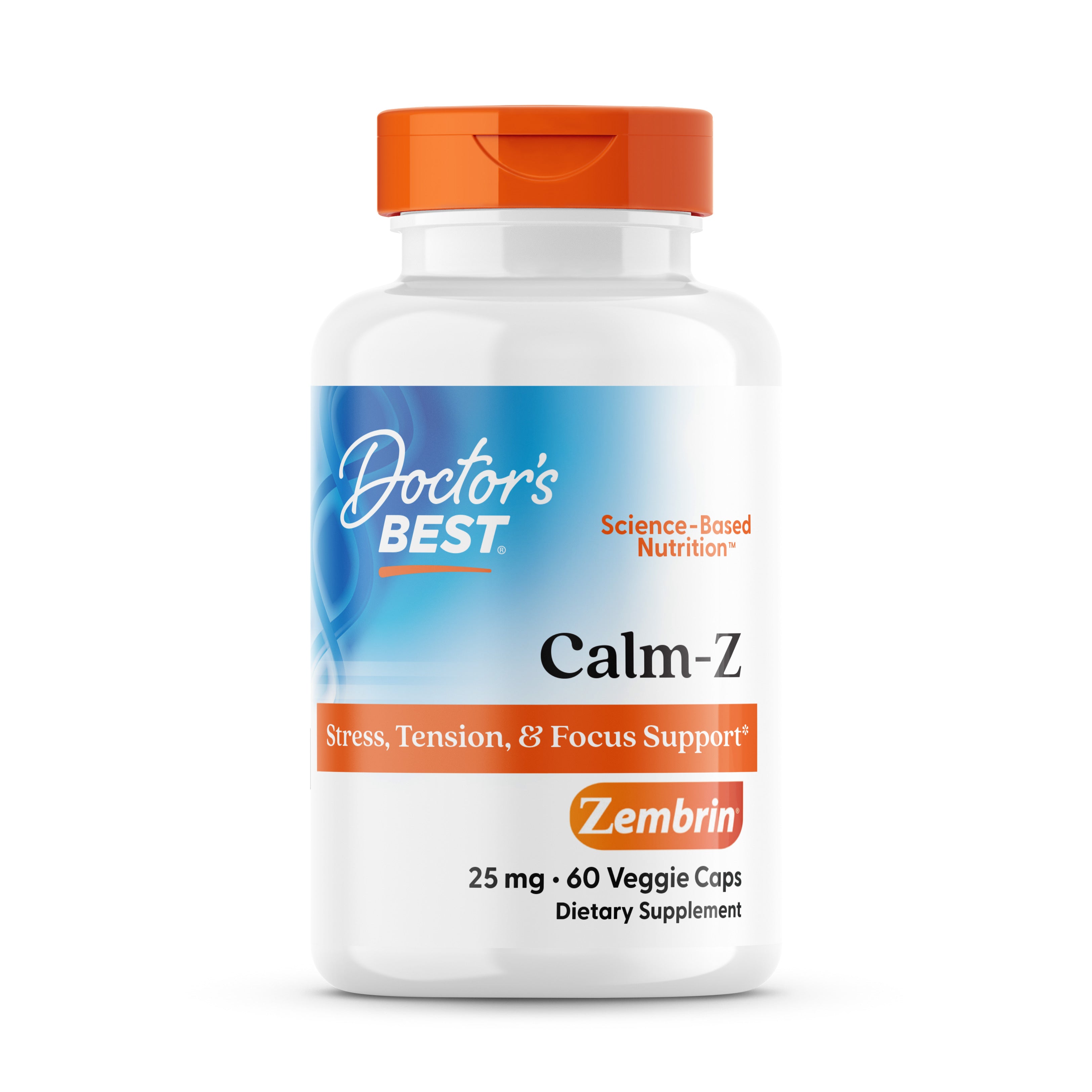
Calm-Z (Zembrin)
Doctor's Best
The one kanna extract with real published human trials behind it, at the studied 25mg dose.
The best way to take kanna for almost everyone is the simplest: a standardized capsule or a chew at about 25mg, swallowed or chewed, on a relatively empty stomach. That gives you a known, repeatable dose and a clean onset without measuring anything. From there, the method you choose mostly changes how fast it comes on and how precisely you can dial the dose.
Below is every common route, oral capsules and gummies, sublingual tinctures, buccal chews, and raw powder, with realistic onset and duration for each, plus dosing by format and a start-low method. The anchor to keep in mind throughout: 25mg of standardized extract is roughly equivalent to about 50mg of dry raw plant, and that 25mg is the dose used in the published clinical research.
The short version
- Best way for beginners: a standardized capsule or chew at ~25mg, a known dose, no measuring, the dose used in the published Zembrin research.
- Onset depends on the route: sublingual tinctures and buccal chews come on fastest (~15 to 40 min); swallowed capsules and gummies are slower (~30 to 60 min). Effects commonly last ~1 to 3 hours.
- Dose by format, not by habit: gummies/chews are 25 to 30mg per piece; tinctures are dosed by the drop; raw powder is ~50 to 400mg and imprecise; concentrates are a few milligrams, weighed.
- The anchor: 25mg of standardized extract ≈ ~50mg of dry raw plant ≈ roughly 100 to 200µg of total alkaloids.
- Snuffing/insufflating kanna is a traditional practice we don't recommend, it's harsh, hard to dose, and offers no advantage over oral or sublingual use.
- Kanna raises serotonin like an SSRI, so it must not be combined with SSRIs, SNRIs, MAOIs, or other serotonergic medications without medical advice, and should be avoided in pregnancy. This is general information, not medical advice.
Kanna onset & duration by method (the table to bookmark)
Every route delivers the same alkaloids, but how fast they reach you depends on where absorption happens. Anything that absorbs through the tissues of the mouth, under the tongue (sublingual) or held in the cheek (buccal), comes on faster than something you swallow and digest. Here's the practical reference:
| Method | How it's taken | Typical dose | Onset | Duration |
|---|---|---|---|---|
| Oral capsule | Swallowed, digested | ~25mg standardized (25 to 50mg) | ~30 to 60 min | ~1 to 3 hr |
| Gummy | Chewed and swallowed | 25 to 30mg extract / piece | ~15 to 45 min | ~1 to 3 hr |
| Buccal chew / gum | Chewed, held in the cheek | ~30mg standardized / piece | ~15 to 40 min | ~1 to 3 hr |
| Sublingual tincture | Drops held under the tongue | Start ~5 to 10 drops, titrate | ~15 to 40 min | ~1 to 3 hr |
| Raw whole-plant powder | Mixed in water / chewed | ~50 to 400mg (imprecise) | ~20 to 40 min | ~1 to 3 hr |
| Concentrate (50:1, 100:1, MT55) | Weighed, taken orally | A few mg, weigh it | ~15 to 40 min | ~1 to 3 hr |
For the full format-by-format dose breakdown, see our kanna dosage guide; for what each route actually feels like, our guide to kanna effects.
Oral: capsules and gummies (the easy default)
Swallowing a capsule or gummy is the most beginner-proof way to take kanna: a fixed, pre-measured dose and nothing to weigh. The trade-off is onset, because it has to be digested first, a swallowed dose takes the longest to arrive, usually 30 to 60 minutes. That slower curve is exactly why impatient first-timers overshoot: they take a second dose before the first has landed.
A standardized capsule at ~25mg is the cleanest starting point because the alkaloid content is fixed and disclosed. Gummies sit a little faster because some chewing happens before you swallow, and they hide kanna's natural bitterness. Either way, start with one piece and wait. Our best kanna gummies guide covers the pre-dosed options worth buying.
Sublingual & buccal: tinctures and chews (faster, more control)
Holding kanna in the mouth, a tincture under the tongue (sublingual) or a chew in the cheek (buccal), lets some of the dose absorb directly through the tissue, so it comes on faster, typically 15 to 40 minutes. These routes also give you the finest control: a tincture is dosed by the drop, so you can titrate a little at a time rather than committing to a fixed piece.
The honest caveat is taste, unmasked kanna is bitter, and a tincture held under the tongue is the most direct experience of it. Buccal chews like the well-formulated commercial ones solve that with flavor while keeping the faster, partly-buccal onset. If you want speed and dose-by-the-drop precision, sublingual is the route; if you want speed without the bitterness, a chew is the move.
Raw powder and concentrates
Raw whole-plant powder is the traditional form, mixed into water or chewed. It's gentle and forgiving but weak and variable, so the range is wide and imprecise, roughly 50 to 400mg, with two scoops rarely identical. Remember the anchor: about 50mg of dry raw plant is in the neighborhood of a 25mg standardized dose.
Concentrates are the opposite. A 100:1 extract or a high-mesembrine powder like MT55 has compressed a great deal of plant into very little material, so the dose drops to a few milligrams, far below what any kitchen spoon can measure reliably.
A note on snuffing kanna (and why we don't recommend it)
You'll see references to insufflating or snuffing kanna, it appears in some traditional accounts, where dried, fermented plant was used as a snuff. We're including it for completeness, not as a suggestion. There's no benefit to it over oral or sublingual use: it's harsh on the nasal passages, the dose is hard to control, and the onset advantage is marginal at best compared with a sublingual tincture that achieves fast absorption far more comfortably.
If you're after a quick onset, a sublingual tincture or a buccal chew gives you speed and dose control without the irritation. There's simply no reason to snuff a plant you can take pleasantly by mouth.
Start low: the method that prevents every common mistake
Almost every bad first experience with kanna traces to the same error, taking too much, too fast. The fix is a deliberate start-low approach: one standardized 25mg dose, on a relatively empty stomach, then wait a full 30 to 45 minutes before deciding anything. Kanna comes on gradually, and stacking a second dose early is the most common reason people overshoot into nausea or a heavy, sedated feeling.
There's also a dose-character pattern worth knowing: users and traditional accounts describe kanna as more uplifting at lower doses and more calming as the dose climbs. That's an experiential rule of thumb, not a finding from a controlled dose-ranging trial, the published clinical work studied a single fixed 25mg dose. So if you want a daytime lift, stay low; if you want an evening wind-down, a modestly higher standardized dose is the usual move.
Supplement note: kanna is sold as a botanical supplement. These statements have not been evaluated by the FDA, and kanna is not intended to diagnose, treat, cure, or prevent any disease.
The safety lines that override the method
No route or dose is right if you're taking something that doesn't mix with it. Because kanna acts on serotonin much like an SSRI does, the headline precaution is mechanism-based and applies to every method equally:
Side effects across all methods are generally mild and more likely at higher doses: headache, nausea, appetite loss, and occasional dizziness or drowsiness. Eating something and staying hydrated helps. None of this is medical advice, if you take prescription medication or have a health condition, talk to a clinician before trying kanna. For the full safety picture, see our kanna side effects guide.
How to take kanna safely
- 1
Rule out interactions first
Before anything else, confirm you are not taking an SSRI, SNRI, MAOI, or other serotonergic medication, and that you are not pregnant. If you are on any prescription medication, talk to a clinician first, kanna raises serotonin and shouldn't be combined with serotonergic drugs without medical advice.
- 2
Pick a beginner-friendly method and a 25mg dose
Start with a standardized capsule, gummy, or chew at about 25mg, a known, pre-measured dose used in the published research. Skip raw powder and concentrates until you know how kanna affects you.
- 3
Take it on a relatively empty stomach
Kanna is absorbed a little more cleanly without a heavy meal competing. A light stomach also makes the gradual onset easier to read.
- 4
Wait for your method's onset window before judging it
Give a sublingual tincture or buccal chew ~15 to 40 minutes, and a swallowed capsule or gummy a full 30 to 60 minutes, before deciding whether it's working. Stacking a second dose too early is the most common beginner mistake.
- 5
Adjust by 5 to 10mg across separate days, not within a sitting
If 25mg felt like too little, step up modestly on a later day. Remember the pattern: lower doses tend to feel more uplifting, higher doses more calming. Change one variable at a time.
- 6
Weigh concentrates and keep use occasional
If you move to a 50:1, 100:1, or MT55 concentrate, switch to a milligram scale and start at the very bottom of the range. Keep kanna to occasional or as-needed use, and lower the dose next time if you notice headache, nausea, or drowsiness.
How we chose
Onset, duration, and dose ranges here come from the published Zembrin clinical work (25mg/day) plus the standardized-extract specs and traditional-use ranges documented in the ethnobotanical literature, not from our own dose-ranging or pharmacokinetic trials, which we do not run.
Effects are described experientially, what users and the published research commonly report, never as medical outcomes. The human clinical base is small (n=16 to 37), short, and mostly on one standardized extract, so any guidance here should be read as conservative and provisional.
Key terms
- Sublingual
- Taken by holding under the tongue, where the dose absorbs directly through mouth tissue for a faster onset (~15 to 40 min) than swallowing.
- Buccal
- Taken by holding in the cheek (as with a chew or gum), so part of the dose absorbs through the mouth before swallowing, a fast, comfortable route.
- Onset
- How long until you feel an effect. Route-dependent: sublingual/buccal kanna ~15 to 40 min; swallowed capsules/gummies ~30 to 60 min.
- Titration
- Adjusting your dose in small steps across separate sessions to find the lowest amount that works, rather than jumping straight to a large dose.
Questions, answered
What's the best way to take kanna?
For most people, a standardized capsule, gummy, or chew at about 25mg is the best way to take kanna, it's a known, pre-measured dose with no weighing, and 25mg is the dose used in the published Zembrin research. If you want a faster onset and dose-by-the-drop control, a sublingual tincture is the next step. Save raw powder and concentrates until you know how kanna affects you.
How long does kanna take to kick in?
It depends on the route. Sublingual tinctures and buccal chews, which absorb partly through the mouth, come on in roughly 15 to 40 minutes. Swallowed capsules and gummies are slower, usually 30 to 60 minutes, because they have to be digested first. Effects commonly last about 1 to 3 hours regardless of method.
Can you take kanna on an empty stomach?
Yes, a relatively empty stomach is generally the preferred way to take kanna, since it absorbs a little more cleanly and the gradual onset is easier to read without a heavy meal competing. If kanna upsets your stomach, a small snack can help, at the cost of a slightly slower, gentler onset.
Should you snuff or smoke kanna?
We don't recommend it. Snuffing (insufflation) appears in some traditional accounts, but it's harsh, hard to dose, and offers no real advantage over oral or sublingual use. A sublingual tincture or buccal chew gives you a fast onset far more comfortably. Smoking kanna is not a meaningfully effective route either, oral and sublingual methods are the sensible choices.
How much kanna should I take the first time?
Start with about 25mg of a standardized extract, one capsule, gummy, or chew. That's a complete starting dose for most people and the dose used in the published clinical research. Wait for your method's onset window (15 to 40 minutes sublingual, 30 to 60 minutes swallowed) before considering more. This is general information, not medical advice, and kanna should never be combined with SSRIs, SNRIs, MAOIs, or other serotonergic medications without a doctor's guidance.
References
The human research on kanna is genuine but small, a handful of trials, mostly on the standardized Zembrin extract. These are the primary sources we cite, linked so you can read them yourself.
- 1.Chiu S, Gericke N, Farina-Woodbury M, et al. (2014). Proof-of-Concept Randomized Controlled Study of Cognition Effects of the Proprietary Extract Sceletium tortuosum (Zembrin) Targeting Phosphodiesterase-4 in Cognitively Healthy Subjects. Evidence-Based Complementary and Alternative Medicine. A 3-week randomized study (n=21) reported improved cognitive set flexibility and executive function vs placebo. PubMed · DOI
- 2.Nell H, Siebert M, Chellan P, Gericke N (2013). A randomized, double-blind, parallel-group, placebo-controlled trial of Extract Sceletium tortuosum (Zembrin) in healthy adults. Journal of Alternative and Complementary Medicine. A 3-month placebo-controlled trial (n=37) found 8 mg and 25 mg/day were well-tolerated, with no significant changes in vitals or blood chemistry. PubMed · DOI
Keep reading
Kanna Dosage Guide: How Much to Take
How much kanna to take by format, with onset, duration, and a start-low method.
Kanna Effects: What to Expect
What kanna feels like, the uplift-vs-calm spectrum, and how long it lasts.
The Best Kanna Gummies, Tested and Ranked
The easiest, most beginner-proof way in, pre-dosed gummies and chews worth buying.
The Best Kanna You Can Buy Right Now
Our overall top picks across every format, ranked on disclosed potency and value.