Our Pick: Doctor's Best
Check price →Kanna Effects: What to Expect and How Long They Last (2026)
What kanna actually feels like, the reported mood lift and calm, the dose-dependent spectrum, onset and duration by format, and the experiences it is often confused with but doesn't deliver.
By Justin Park · 9 min · Updated 2026-06-13
★ Top-Rated Kanna Right Now
Best Overall
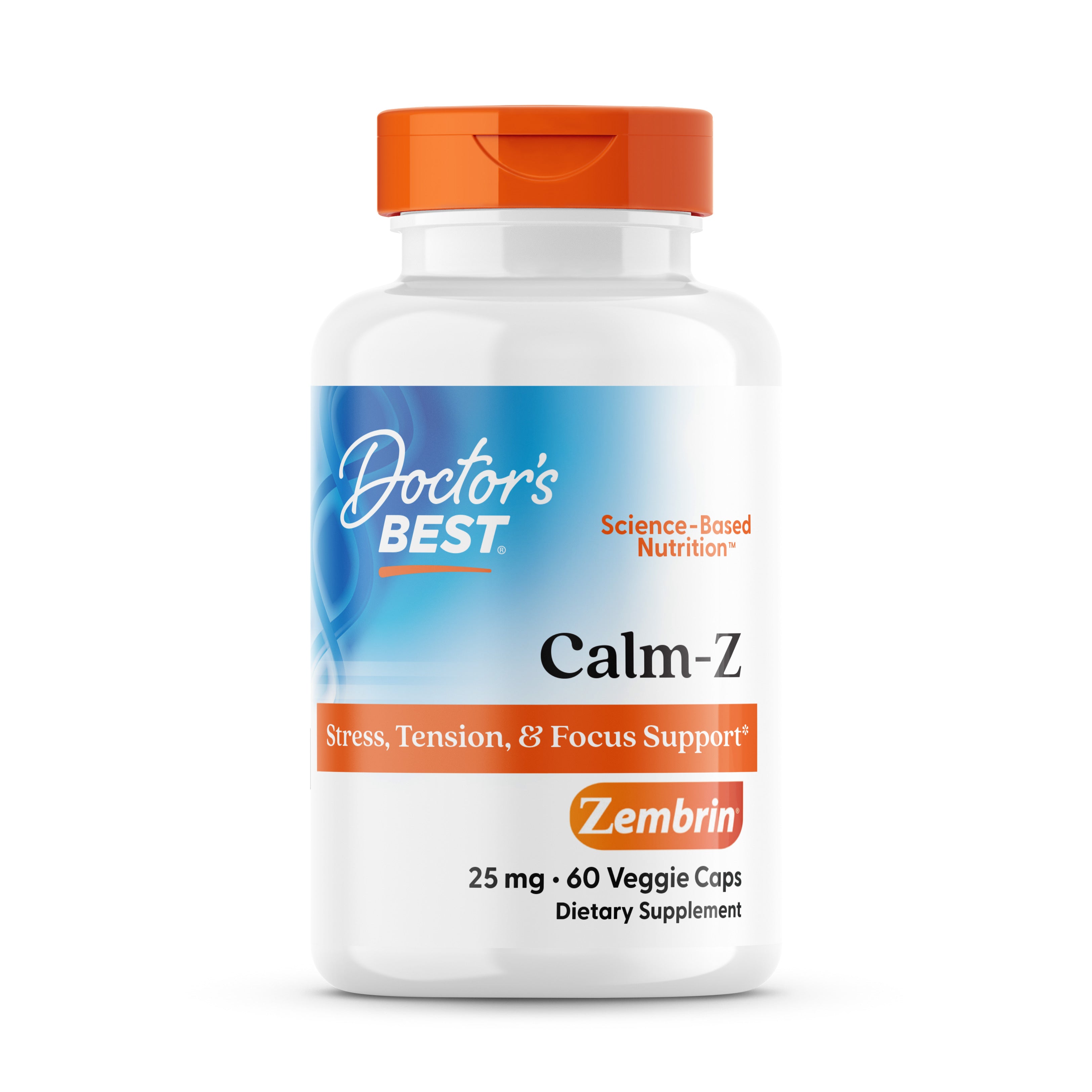
Calm-Z (Zembrin)
Doctor's Best
The one kanna extract with real published human trials behind it, at the studied 25mg dose.
Most people describe kanna as a gentle, clear-headed mood lift, a sense of feeling a bit lighter, calmer, and more sociable, without intoxication. It's subtle by design: closer to "the edge taken off and the mood nudged up" than to anything dramatic.
What you feel depends heavily on the dose and the format. Lower doses tend to read as more uplifting and a touch stimulating; higher doses lean calmer and more settled. Onset runs from about 15 minutes for a sublingual tincture to longer for a swallowed capsule, and effects commonly last one to three hours.
The short version
- Commonly reported effects: a light mood lift, a calmer and less anxious feeling, more sociability, easier focus, and reduced appetite.
- It's dose-dependent: lower doses tend toward uplifting and stimulating, higher doses toward calming and settled.
- Onset is roughly 15 to 40 minutes for sublingual tinctures and chews, longer for capsules; effects typically last about 1 to 3 hours.
- Kanna is not a psychedelic and not an opioid, it doesn't cause a high, hallucinations, or euphoric intoxication.
- Because it raises serotonin like an SSRI, don't combine kanna with SSRIs, SNRIs, MAOIs, or other serotonergic medications without medical advice. This is general information, not medical advice.
What does kanna feel like?
The most consistent way users describe kanna is as a subtle, clear-headed lift. Not a buzz, not sedation, more a quiet improvement in mood and a softening of stress, while you stay fully functional. Commonly reported experiences include:
A mood lift. A mild brightening, feeling a little lighter and more positive.
Calm and reduced anxiousness. Many describe an easing of the mental "static," especially in social or stressful moments.
Sociability. Kanna is often described as gently pro-social, more at ease in conversation. (It's marketed by some brands as an "empathogenic" botanical for this reason.)
Focus. At lower doses, some people find it easier to settle into a task.
Reduced appetite. A mild appetite-dampening effect is frequently noted.
Why kanna feels the way it does
Kanna's subjective effects map onto an unusual dual mechanism, which is also what sets it apart from other legal botanicals.
The 2011 Harvey study (J Ethnopharmacol) identified that dual action: kanna inhibits serotonin reuptake (mesembrine is its most potent serotonin-transporter alkaloid) and inhibits PDE4 (mesembrenone is the strongest here). The serotonergic side plausibly underlies the mood and calm; the combination is why kanna is pharmacologically distinct from kava (GABA), CBD (endocannabinoid), and kratom (opioid).
There's also direct brain-imaging evidence for the calming side. In the 2013 Terburg study (Neuropsychopharmacology, n=16), a single 25mg dose of standardized extract measurably reduced amygdala reactivity to fearful faces and reduced amygdala, hypothalamus coupling, a biological correlate of the "less reactive to stress" feeling users describe.
Supplement note: these statements have not been evaluated by the FDA. Kanna is not intended to diagnose, treat, cure, or prevent any disease.
The uplift-vs-calm spectrum (it's dose-dependent)
One of the most important things to understand about kanna is that the direction of the effect shifts with dose. Traditional accounts and user reports converge on the same pattern: lower doses feel more uplifting and slightly stimulating; higher doses feel more calming and sedating.
So a small standardized dose might suit a daytime mood lift, while a modestly higher one leans toward an evening wind-down. This is an experiential and traditional pattern, not a finding from a controlled dose-ranging trial, there isn't one. The clinical studies used a single fixed 25mg dose, so treat the spectrum as a well-supported rule of thumb rather than a measured curve.
How long do kanna effects last?
Onset and duration depend mostly on format, specifically, how fast the alkaloids get absorbed.
| Format | Onset | Duration |
|---|---|---|
| Sublingual tincture | ~15 to 40 min | ~1 to 3 hr |
| Chew / gum | ~15 to 40 min (partly buccal) | ~1 to 3 hr |
| Gummy (swallowed) | ~30 to 45 min | ~1 to 3 hr |
| Capsule | ~30 to 60 min | ~1 to 3 hr |
What kanna does NOT feel like
Kanna is frequently misunderstood, so it's worth being clear about what it isn't:
It is not a psychedelic. At normal doses it doesn't cause hallucinations, visual distortion, or an altered reality. The experience is grounded and clear-headed, not trippy.
It is not an opioid. Unlike kratom, kanna doesn't act on opioid receptors and doesn't produce an opioid-style high or that dependence profile. Its action is serotonergic.
It is not intoxication. You don't get "drunk" or impaired the way alcohol or a sedative would do. Most people stay fully functional, the effect is a nudge, not a takeover.
If you're expecting a strong high, kanna will disappoint you. Its appeal is precisely that it's subtle. And the one rule that travels with every dose: because kanna raises serotonin like an SSRI, don't combine it with SSRIs, SNRIs, MAOIs, or other serotonergic medications without medical advice, and avoid it in pregnancy. None of this is medical advice.
How we chose
Experiential descriptions here reflect what users and the published Zembrin research commonly report, framed experientially, never as medical outcomes or guarantees.
The human clinical base is small (roughly n=16 to n=37), short, and mostly on the standardized Zembrin extract, so we treat mechanism findings as established and subjective-effect claims as reported, not proven.
Questions, answered
What does kanna feel like?
Most people describe a subtle, clear-headed mood lift, feeling a little lighter, calmer, more sociable, and sometimes more focused, without intoxication. It's gentle by design: a nudge, not a high.
How long does it take for kanna to kick in?
Roughly 15 to 40 minutes for a sublingual tincture or chew, and about 30 to 60 minutes for a swallowed gummy or capsule. Give any dose a full 30 to 45 minutes before deciding whether to take more.
How long do kanna's effects last?
Effects commonly last about 1 to 3 hours across formats, then fade gradually.
Does kanna get you high?
No. Kanna is not a psychedelic and not an opioid, at normal doses it doesn't cause hallucinations, euphoria, or intoxication. People generally stay fully functional; the effect is a subtle mood lift and calm.
Is kanna uplifting or calming?
Both, depending on dose. Users and traditional accounts report that lower doses feel more uplifting and slightly stimulating, while higher doses feel more calming and settled. This is an experiential pattern, not a finding from a controlled dose-ranging trial.
References
The human research on kanna is genuine but small, a handful of trials, mostly on the standardized Zembrin extract. These are the primary sources we cite, linked so you can read them yourself.
- 1.Harvey AL, Young LC, Viljoen AM, Gericke NP (2011). Pharmacological actions of the South African medicinal and functional food plant Sceletium tortuosum and its principal alkaloids. Journal of Ethnopharmacology. Identified kanna's dual mechanism, serotonin-reuptake inhibition (5-HT transporter) and PDE4 inhibition, in vitro. PubMed · DOI
- 2.Terburg D, Syal S, Rosenberger LA, et al. (2013). Acute effects of Sceletium tortuosum (Zembrin), a dual 5-HT reuptake and PDE4 inhibitor, in the human amygdala and its connection to the hypothalamus. Neuropsychopharmacology. A single 25 mg dose of standardized extract reduced amygdala reactivity to fearful faces on fMRI (n=16). PubMed · DOI