Our Pick: Doctor's Best
Check price →How Long Does Kanna Last? A Practical Timeline by Format (2026)
The short answer: felt effects usually run about 1 to 2 hours, occasionally a bit longer, with onset ranging from roughly 15 minutes for a chew or tincture to about an hour for a swallowed capsule. Here is the full timeline of a kanna dose, dose and format dependent, plus how long it stays in your system.
By Justin Park · 8 min · Updated 2026-07-01
★ Top-Rated Kanna Right Now
Best Overall
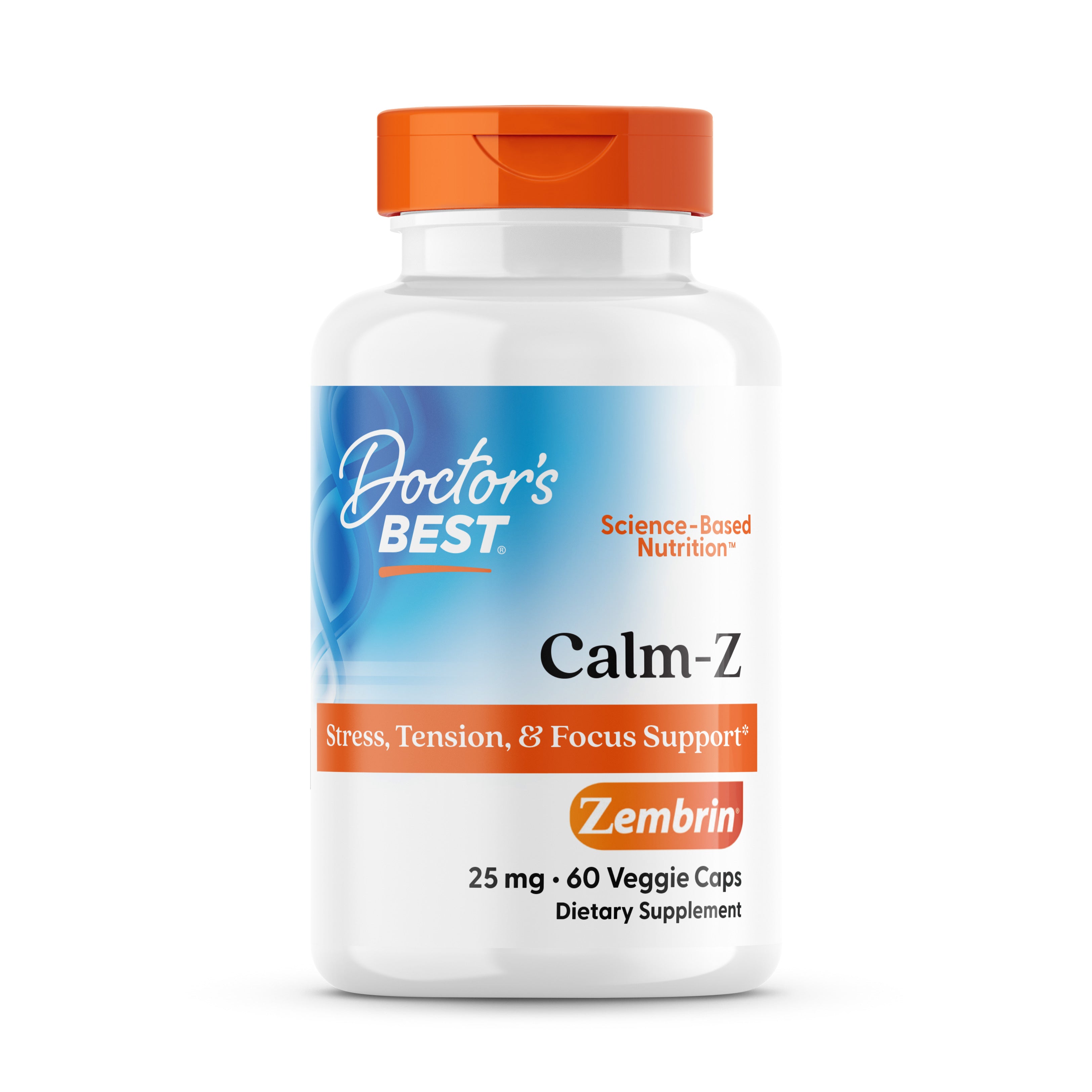
Calm-Z (Zembrin)
Doctor's Best
The one kanna extract with real published human trials behind it, at the studied 25mg dose.
The direct answer, up top: the felt effects of a single kanna dose commonly last about 1 to 2 hours, sometimes stretching up to a few hours at higher doses, then easing off gradually rather than dropping off a cliff. When it starts depends on format: a buccal chew or gum and a sublingual tincture tend to come on in roughly 15 to 45 minutes because part of the dose absorbs straight through the tissue in your mouth, while a swallowed capsule or powder is slower, usually around 30 to 60 minutes, because it has to go through your stomach first.
Two honest caveats before the timeline. First, this is dose and format and person dependent, a small daytime dose behaves differently from a larger one, and individual variation is real. Second, the precise human pharmacokinetics of kanna, including a clean half-life figure, are not well established in the public literature, so we will not hand you a made-up number. What follows is built from consistently reported experience plus the logic of how each format is absorbed.
A little housekeeping: this is general information from a kanna publication that cares, not medical advice, and we are writers, not doctors. If you take any medication, read the serotonergic safety line near the end before anything else.
The short version
- Felt effects typically last about 1 to 2 hours, occasionally up to a few hours at higher doses, then taper off gradually.
- Onset by format: buccal chews/gum and sublingual tinctures come on in roughly 15 to 45 minutes; swallowed capsules and powder take about 30 to 60 minutes.
- The peak usually lands somewhere in the first hour after onset, then the effect settles and fades.
- There is no reliable published human half-life for kanna, so treat duration as a well-supported rule of thumb from reported experience and format logic, not a measured curve.
- Kanna clears fairly quickly and is not included on standard drug tests (see our kanna and drug tests guide), which is a separate question from how long you feel it.
- Because kanna raises serotonin like an SSRI, do not combine it with SSRIs, SNRIs, MAOIs, or other serotonergic meds without medical advice, and avoid it in pregnancy. This is general information, not medical advice.
How long does kanna last?
For most people, the felt effects of a single sensible dose of kanna last about 1 to 2 hours. At higher doses the tail can stretch toward a few hours, and at very low doses it can be shorter and quieter. The comedown is gentle, kanna tends to ease off rather than crash, so the end of a session usually feels like the lift quietly settling back to baseline.
Duration is dose and format dependent. A larger dose generally lasts a little longer and feels more pronounced; a small daytime dose is shorter and subtler. Format matters more for when it starts than for how long it lasts, but a slower-releasing swallowed capsule can feel a touch more spread-out and gentle than a fast buccal route.
Onset: how long until kanna kicks in?
Onset depends almost entirely on format, specifically, how fast the alkaloids get absorbed. Buccal and sublingual routes (a chew or gum you hold in your mouth, a tincture you hold under your tongue) come on faster because some of the dose crosses the tissue directly; swallowed capsules and powder have to pass through your stomach first, so they are slower and often feel gentler.
Buccal chews and gum, and sublingual tinctures: roughly 15 to 45 minutes to first effects.
Swallowed capsules and powder: roughly 30 to 60 minutes, and the ramp is more gradual.
The most common beginner mistake is impatience, judging a dose at the 15-minute mark and stacking another too early, which is exactly how people overshoot into nausea. Our how to take kanna guide walks through the timing, and kanna effects covers what those first effects feel like.
Peak and duration: the full timeline of a dose
Here is the practical arc of a single dose. Onset, then a build to peak, then a plateau of noticeable effect, then a gradual fade. The peak usually lands somewhere in the first hour after it comes on, and the clearly noticeable window is commonly about 1 to 2 hours before it settles.
| Format | Onset | Peak | Total felt duration |
|---|---|---|---|
| Buccal chew / gum | ~15 to 45 min | ~30 to 60 min after onset | ~1 to 2 hr (up to ~3) |
| Sublingual tincture | ~15 to 45 min | ~30 to 60 min after onset | ~1 to 2 hr (up to ~3) |
| Capsule (swallowed) | ~30 to 60 min | ~45 to 75 min after onset | ~1 to 2 hr (up to ~3) |
| Powder (swallowed) | ~30 to 60 min | ~45 to 75 min after onset | ~1 to 2 hr (up to ~3) |
Two things nudge the numbers. Dose: higher doses generally last a little longer and can push the tail toward a few hours (and are also where the mild side effects show up). Format: the fast buccal and sublingual routes front-load the experience, while swallowed forms spread it out slightly. The kanna dosage guide helps you pick a starting amount that fits the window you want.
Supplement note: these statements have not been evaluated by the FDA. Kanna is not intended to diagnose, treat, cure, or prevent any disease.
Why we won't quote a half-life
People reasonably ask for a half-life, the time for the amount in your body to drop by half, because it is the usual way to talk about how long a substance sticks around. The honest answer is that robust human pharmacokinetic data for kanna, including a clean half-life for its alkaloids, are not well established in the public literature. The published human studies were designed around effects and safety, not around measuring blood levels over time.
We could invent a tidy number, but that would be exactly the kind of false precision this site exists to avoid. What we can say with confidence rests on real mechanism and effect data. Kanna's alkaloids act as a serotonin-reuptake inhibitor and a PDE4 inhibitor (Harvey et al., 2011, J Ethnopharmacol), and a single 25mg dose of standardized extract produced measurable, time-limited brain effects in a controlled study (Terburg et al., 2013, Neuropsychopharmacology, n=16). Those anchor the shape of a dose, a real onset, a real peak, a real fade, without pretending we have a pharmacokinetic curve we don't.
How long does kanna stay in your system?
This is a different question from how long you feel it, and it is the one people usually mean when they are worried about testing. The practical answers:
Felt effects are gone within a few hours of a single dose, as covered above.
Clearance from the body: kanna's alkaloids appear to clear fairly quickly rather than lingering for days, consistent with the short felt duration and with kanna's traditional use as an in-the-moment botanical, though, as noted, precise human clearance data are not established, so we describe this as fast rather than putting a number on it.
Drug tests: here the news is simple. Kanna is not included on standard drug tests. Panels like the common 5-panel or 10-panel screen for specific substances (THC, opioids, amphetamines, and so on), and kanna's alkaloids are not among them and are not structurally those drugs. Kanna is a legal botanical supplement, not a scheduled substance. For the full breakdown, including the honest caveats about unusual or bespoke testing, see our kanna and drug tests guide.
Supplement note: these statements have not been evaluated by the FDA. Kanna is not intended to diagnose, treat, cure, or prevent any disease.
How to make a kanna session last (or not)
A few practical levers, none of them exotic:
To feel it sooner: use a fast buccal or sublingual format, a chew, gum, or tincture held in the mouth, rather than a swallowed capsule.
To feel it more gradually and gently: a swallowed capsule or powder spreads the same dose out a little and tends to feel softer.
To extend a session: a modestly higher dose lasts a bit longer, but this is also where nausea and the other mild side effects turn up, so step up slowly across separate sessions rather than piling on within one. Redosing too early is the classic overshoot.
If you are still choosing a format, our what does kanna feel like guide and the dosage guide together cover what to expect and how much to take.
The one safety rule that travels with every dose
If you read nothing else here, read this. The active alkaloids in kanna inhibit serotonin reuptake, mechanically, kanna behaves a lot like an SSRI antidepressant. On its own that is fine, but it becomes a genuine risk when kanna is stacked on top of another serotonin-raising drug. Do not combine kanna with SSRIs, SNRIs, MAOIs, or other serotonergic medications and supplements without medical advice, and avoid kanna in pregnancy.
Documented serotonin-syndrome cases from kanna are essentially absent, so this is a sensible precaution based on how kanna works, not a record of disasters, but every careful source agrees on it, and it is worth a quick conversation with the prescriber or pharmacist who manages your meds. None of this is medical advice; we are writers, not doctors, and kanna is for adults.
How we chose
Timings here reflect what users and the published Zembrin research commonly report, framed experientially, never as medical outcomes or guarantees.
The human clinical base is small (roughly n=16 to n=37), short, mostly on the standardized Zembrin extract, and does not include robust public pharmacokinetic data, so we frame duration and half-life questions honestly rather than inventing a figure.
Questions, answered
How long does kanna last?
The felt effects of a single dose usually last about 1 to 2 hours, sometimes up to a few hours at higher doses, then fade gradually. It is dose and format dependent, and individual variation is real, so treat it as a rule of thumb rather than a fixed number.
How long does kanna take to kick in?
Roughly 15 to 45 minutes for a fast buccal chew, gum, or sublingual tincture, and about 30 to 60 minutes for a swallowed capsule or powder, which comes on more gradually. Give any dose a full 30 to 45 minutes before deciding whether to take more, since redosing too early is how people overshoot into nausea.
What is kanna's half-life?
There is no reliable published human half-life for kanna. The clinical studies were built around effects and safety rather than measuring blood levels over time, so a precise clearance figure isn't established. We describe the felt duration honestly (about 1 to 2 hours) instead of inventing a pharmacokinetic number.
How long does kanna stay in your system?
The felt effects are gone within a few hours, and kanna's alkaloids appear to clear fairly quickly rather than lingering for days, though precise human clearance data are not established. Importantly, kanna is not included on standard drug tests. See our kanna and drug tests guide for the full breakdown.
Does kanna show up on a drug test?
Kanna is not included on standard drug tests. Common 5-panel and 10-panel screens look for specific substances like THC, opioids, and amphetamines, and kanna's alkaloids are not among them and are not structurally those drugs. Kanna is a legal botanical supplement, not a scheduled substance.
Does kanna last longer at higher doses?
Generally a little, yes. Higher doses tend to feel more pronounced and can push the tail toward a few hours, but they are also where the mild side effects like nausea show up. Step up slowly across separate sessions rather than stacking doses within one.
References
The human research on kanna is genuine but small, a handful of trials, mostly on the standardized Zembrin extract. These are the primary sources we cite, linked so you can read them yourself.
- 1.Harvey AL, Young LC, Viljoen AM, Gericke NP (2011). Pharmacological actions of the South African medicinal and functional food plant Sceletium tortuosum and its principal alkaloids. Journal of Ethnopharmacology. Identified kanna's dual mechanism, serotonin-reuptake inhibition (5-HT transporter) and PDE4 inhibition, in vitro. PubMed · DOI
- 2.Terburg D, Syal S, Rosenberger LA, et al. (2013). Acute effects of Sceletium tortuosum (Zembrin), a dual 5-HT reuptake and PDE4 inhibitor, in the human amygdala and its connection to the hypothalamus. Neuropsychopharmacology. A single 25 mg dose of standardized extract reduced amygdala reactivity to fearful faces on fMRI (n=16). PubMed · DOI
Keep reading
Kanna Effects: What to Expect
The full picture on reported effects, onset, and duration.
What Does Kanna Feel Like?
An honest, low-hype answer on the actual feel, dose by dose.
How to Take Kanna
Formats, timing, and getting your first dose right.
Kanna & Drug Tests
Whether kanna shows up on standard testing, and the honest caveats.
Kanna Dosage Guide
How much to take by format, and how to find your dose safely.