Our Pick: Doctor's Best
Check price →Does Kanna Show Up on a Drug Test? The Honest Answer
No, kanna won't make you fail a standard drug test for THC, opioids, or amphetamines. Here's exactly why, plus the honest caveats worth knowing if you're subject to testing.
By Justin Park · ~8 min read · Updated 2026-06-23
★ Top-Rated Kanna Right Now
Best Overall
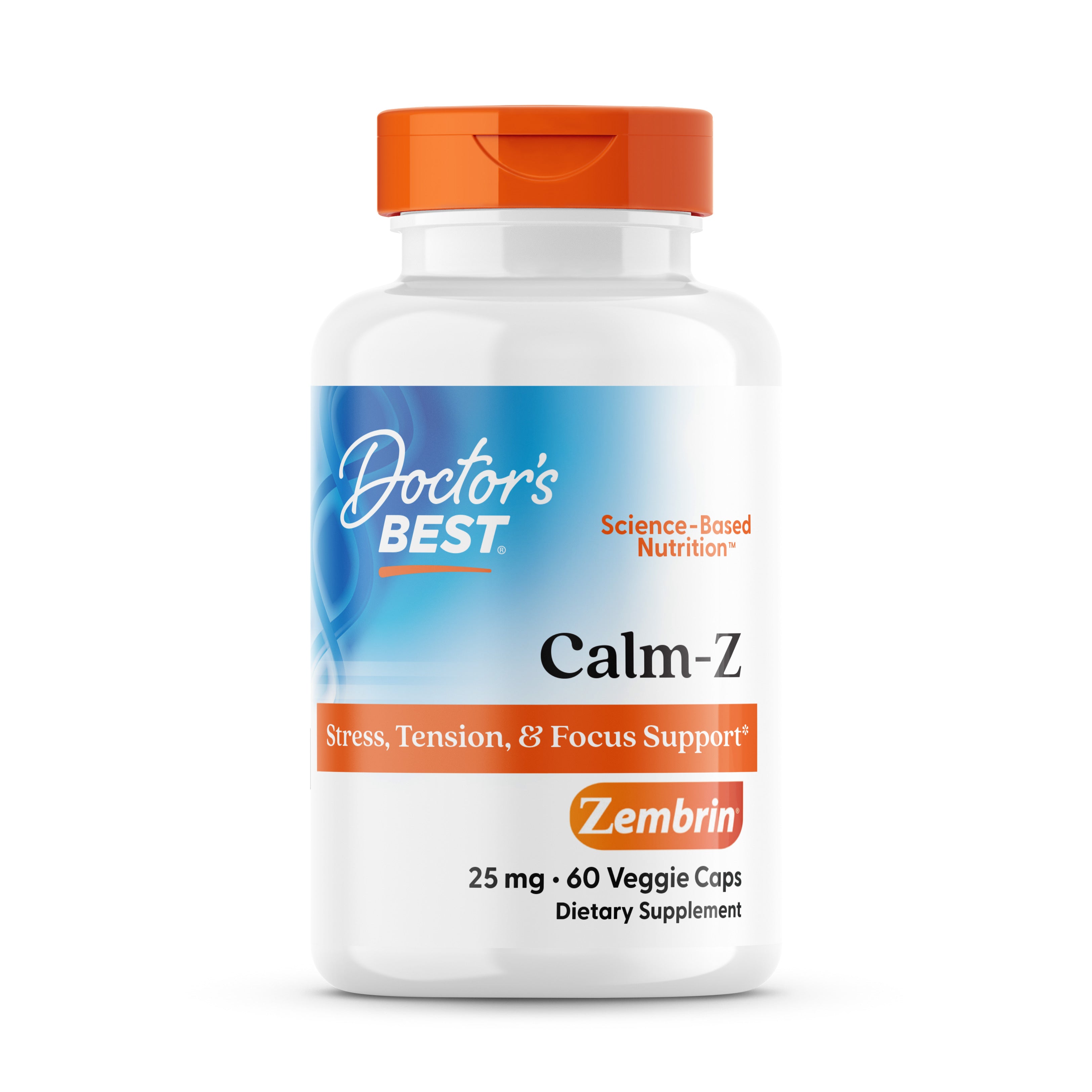
Calm-Z (Zembrin)
Doctor's Best
The one kanna extract with real published human trials behind it, at the studied 25mg dose.
Here's the honest, reassuring answer right up top: no, kanna does not show up on a standard drug test. A normal urine panel, the kind used for jobs, probation, or sports, screens for a specific list of drugs, and kanna isn't on it. It won't make you test positive for THC, opioids, amphetamines, or anything else those tests look for, because kanna's active compounds aren't chemically related to any of them.
The short version is that drug tests don't look for "something in your system" in a general way, they look for specific molecules. Kanna (Sceletium tortuosum) works through a family of compounds called mesembrine-type alkaloids, which are unrelated to the drug classes a standard panel screens for. There's also no common commercial test that even checks for kanna. So the molecule a test is hunting for simply isn't the molecule kanna puts in your body.
That said, we're going to cover the caveats honestly, because "no reported cases" isn't quite the same as "physically impossible," and a couple of real-world situations are worth your attention, mislabeled products, and what to do if you're genuinely subject to testing. One bit of housekeeping first: this is general information from a kanna publication that cares, not medical or legal advice. We're writers, not doctors or lawyers, so for anything that affects your job, your sport, or your legal standing, check with the actual testing authority and keep your product's paperwork.
The short version
- No, kanna does not show up on a standard drug test. It will not make you fail for THC, opioids, amphetamines, or anything a normal panel screens for.
- Drug tests look for specific molecules. A 5- or 10-panel screens for set drug classes (THC, cocaine, opiates, amphetamines, PCP, and sometimes benzos, barbiturates, methadone), kanna is on none of them.
- Kanna's active compounds are mesembrine-type alkaloids (mesembrine, mesembrenone). They're unrelated to THC, opioids, and amphetamines, so they don't trigger those assays.
- There is no standard or common commercial test that screens for kanna or Sceletium alkaloids. It simply isn't on the panel.
- There are no documented cases of kanna causing a false positive on a standard test, but if you're tested, buy from reputable brands that publish a COA, and keep the label in case you're ever asked.
- If your job, sport, or legal status involves testing, the genuinely safe move is to disclose your supplements and check with the testing authority. Kanna is federally legal and uncontrolled in the US.
The short answer: no, and here's why
If you take kanna and a drug test is coming, you can relax on this particular worry: kanna does not show up on a standard drug test. It won't flag as cannabis, it won't flag as an opioid, and it won't flag as an amphetamine. The reason is simple once you see how these tests actually work.
A drug test isn't a general scan that lights up whenever "a substance" is present. It's a set of targeted checks, each one tuned to detect a particular drug or its breakdown product. The test for THC looks for THC's specific metabolite; the test for opiates looks for morphine-family molecules; and so on. Kanna's active compounds aren't any of those molecules, and they aren't chemical cousins of them either, so there's nothing for those targeted checks to grab onto.
What a standard drug test actually looks for
The tests most people encounter, pre-employment screening, workplace random tests, probation checks, are usually a urine "5-panel" or "10-panel." The number refers to how many drug classes are screened. A typical 5-panel covers the big five: THC (cannabis), cocaine, opiates, amphetamines and methamphetamine, and PCP. A 10-panel adds more, commonly including benzodiazepines, barbiturates, methadone, and a couple of others.
Notice what those have in common: every entry is a specific, named drug or drug family. The lab is looking for those exact substances or the metabolites your body makes from them. There's no "mood supplement" line on the panel, no "herbal" line, and, importantly, no line for kanna, mesembrine, or Sceletium tortuosum. If a substance isn't one of those named targets and isn't close enough to one to be mistaken for it, the test has no way to register it at all.
This is the part that trips people up: they imagine a test detects "anything you've taken." It doesn't. It detects the specific things it was built to detect, and nothing else. Kanna isn't one of those things.
Why kanna's alkaloids don't trigger those tests
Kanna's effects come from a group of compounds called mesembrine-type alkaloids, mesembrine and mesembrenone are the best-known. Chemically, these are their own distinct family. They are not related to THC, they are not opioids, and they are not amphetamines or stimulants of that class.
That chemical distance is exactly why kanna stays invisible to a standard panel. Each assay on the test is shaped to recognize a particular molecular structure: the THC test reacts to THC's structure, the amphetamine test reacts to amphetamine-like structures, and so on. Because mesembrine doesn't share the shape of any of those drug families, it doesn't fit the lock that any of those assays are designed around. There's no overlap to cause a positive.
On top of that, there's no widely used test that screens for kanna at all. Even specialized expanded panels don't routinely include Sceletium alkaloids, because kanna isn't a controlled substance and isn't a common test target. So the question isn't just "will kanna be mistaken for something else?", it's that nothing on a normal test is even pointed in kanna's direction in the first place.
The honest caveats (false positives, product quality)
We promised to be straight with you, so here are the honest edges of the answer, none of them alarming, but worth knowing.
False positives, in theory vs. in practice. Cheaper screening tests (immunoassays) work by pattern-matching and can, in rare cases, flag the wrong thing, there are documented examples of unrelated medications causing false positives for various drugs. With kanna specifically, though, there are no documented or reported cases of it causing a false positive on a standard test. So the realistic risk is essentially nil. We say "essentially" rather than "zero" only because honesty requires it: "no reported cases" is extremely reassuring, but it isn't the same as a lab having formally proven it can never happen.
Product quality is the real variable. The bigger practical point isn't the test, it's what's actually in your bottle. A test reacts to whatever you put in your body, so a mislabeled or adulterated "kanna" product could, in principle, contain something the label doesn't mention. That's an argument for the same thing we recommend across this whole site: buy from reputable brands that publish a certificate of analysis (COA). Pure, properly-labeled kanna gives a test nothing to find. A sketchy mystery product is a different gamble entirely, and not one worth taking.
If you're subject to testing: the practical move
If your job, your probation, your sport, or anything else means you get tested, the smart play isn't to rely on a web page, it's to be a little boring and a little careful. A few simple habits cover you completely.
Disclose your supplements. If there's a form or a chance to list what you take, list kanna (Sceletium tortuosum) along with everything else. Most testing programs welcome disclosure, and it removes any ambiguity before it can start.
Keep the label and the COA. Hold onto your product's packaging and its certificate of analysis. In the very unlikely event anything is ever questioned, you can show exactly what you took and that it was a legal, lab-verified botanical.
When in doubt, ask the testing authority. Your employer's testing program, your medical review officer, or your sport's governing body can tell you their specific rules. That's the definitive source, far better than guessing. And it's worth knowing the legal backdrop: kanna is federally legal and not a DEA-scheduled (controlled) substance in the US, which is part of why it isn't a test target. (One minor aside: Louisiana restricts kanna to ornamental use, an unusual local rule that doesn't affect drug testing.) None of this is legal advice, it's a nudge to confirm with the people who actually run your test.
Athletes and anti-doping
If you compete under a testing body, a school athletic association, a national sport federation, or a program that follows WADA-style rules, the same calm logic applies, with one extra step. We're not aware of kanna being banned by major anti-doping bodies, and it isn't a typical screening target. So in the ordinary case, kanna isn't a substance these programs are testing for.
That said, anti-doping rules are their own world, they change, and athletes are held strictly responsible for what's in their bodies. So the genuinely safe move if you're a tested athlete is to verify kanna against your specific sport's banned list rather than take a general "probably fine" for granted. Two things make this easy: kanna's mesembrine alkaloids aren't a hidden stimulant of the amphetamine class, and a COA confirms your product isn't spiked with anything that is banned. Combine "check the list" with "buy clean," and you've handled the one part of this that actually warrants care.
Questions, answered
Will kanna make me fail a drug test?
No. Kanna does not show up on a standard drug test, and it won't make you fail for THC, opioids, amphetamines, or anything a normal 5- or 10-panel screens for. Those tests look for specific drug molecules, and kanna's mesembrine-type alkaloids aren't any of them and aren't related to them. There's also no common test that screens for kanna at all.
Does kanna show up as THC?
No. THC and kanna are completely unrelated compounds. The THC test is tuned to detect THC's specific metabolite, and kanna's alkaloids don't share that structure, so there's nothing for the cannabis assay to react to. Kanna will not register as marijuana on a standard test.
Is there a test that detects kanna?
Not in any common or standard form. Workplace, probation, and sports panels screen for set drug classes, and kanna (Sceletium tortuosum) isn't one of them, even expanded panels don't routinely include it, because kanna isn't a controlled substance or a typical test target. It would take an unusual, purpose-built lab method to look for kanna specifically, which standard testing programs don't use.
Could kanna cause a false positive?
There are no documented or reported cases of kanna causing a false positive on a standard drug test, so the realistic risk is essentially nil. False positives can happen with some substances in cheaper screening tests, but kanna isn't associated with any. The more practical concern isn't the test, it's product quality: a mislabeled or adulterated product could contain something else, which is why buying from a brand that publishes a COA matters.
I have a drug test coming up and took kanna, am I okay?
On the kanna front, you're very likely fine: pure, properly-labeled kanna doesn't show up on a standard panel and isn't known to cause false positives. The only real variable is whether your product was genuinely just kanna, so reputable brands with a published COA give you peace of mind. If you're in a formal testing program (employment, legal, or sport), the safest step is still to disclose your supplements and, if you have any doubt, check directly with the testing authority, and keep your product's label.
Keep reading
Kanna Side Effects: The Honest Breakdown
What kanna can do at normal and higher doses, and the lines that override the dose.
Is Kanna Legal?
The honest, up-to-date read on kanna's legal status in the US and beyond.
What Is Kanna?
The plant, the alkaloids, and what kanna actually does, in plain English.
Kanna and Antidepressants (SSRIs)
The one combination that genuinely needs care, explained honestly.
Kanna Dosage Calculator (free tool)
Pick your format and experience, get a sensible starting dose with the safety rule built in.