Our Pick: Doctor's Best
Check price →Kanna Withdrawal: What Actually Happens When You Stop
The honest answer up top: there's no documented kanna withdrawal syndrome in the published research, and stopping is uneventful for most people. But if you leaned on it daily, here's what you may notice, why it's usually a rebound of the original feeling and not chemical withdrawal, and how to step down if you'd rather ease off.
By Justin Park · ~8 min read · Updated 2026-07-01
★ Top-Rated Kanna Right Now
Best Overall
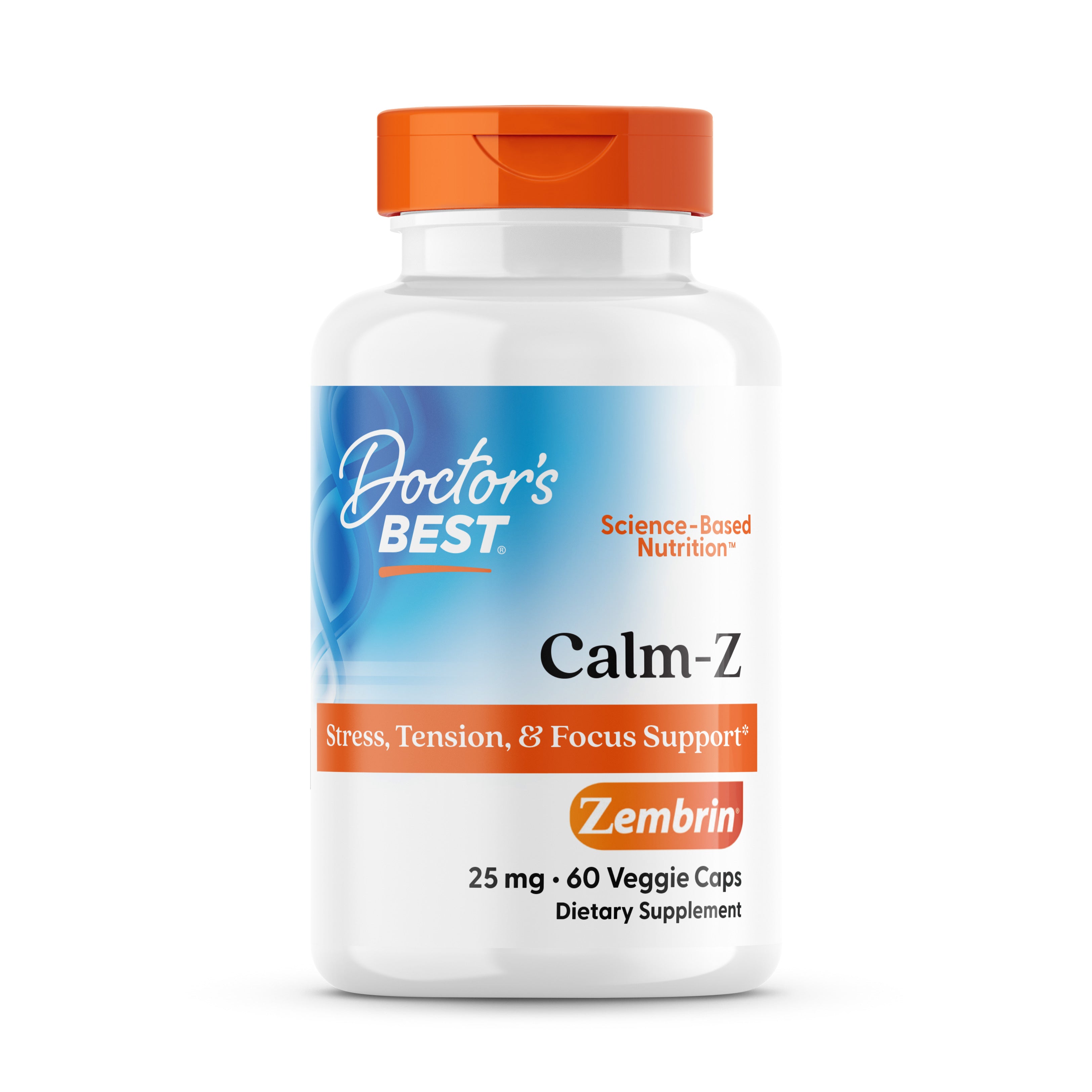
Calm-Z (Zembrin)
Doctor's Best
The one kanna extract with real published human trials behind it, at the studied 25mg dose.
Here's the honest answer before anything else: there is no documented kanna withdrawal syndrome in the published literature. Nothing like the physical withdrawal that follows stopping opioids, benzodiazepines, alcohol, or nicotine has been described for kanna. For most people, stopping kanna, whether you quit cold or taper down, is genuinely uneventful. You are not walking into a rough detox. So if you've decided to stop and you're bracing for something dramatic, you can loosen your shoulders a little.
That said, we're not going to pretend nothing can happen, because that would be dishonest and you'd feel it and not trust the rest of the page. If you used kanna daily to take the edge off stress or to lift a flat mood, stopping can let the original feeling come back, the stress it was smoothing over resurfaces. That's real, and it's worth naming, but it's a rebound of what was already there, not a chemical withdrawal the kanna created. Those are different things, and the difference matters for what you do next.
Quick bit of housekeeping. This is general information from a kanna publication that cares, not medical advice, we're writers, not doctors or pharmacists. Kanna is for adults. Kanna is a botanical supplement that has not been evaluated by the FDA to diagnose, treat, cure, or prevent any disease. If you take a serotonergic medication (an SSRI, SNRI, or MAOI), the rule that overrides everything here is to talk to your prescriber before starting, stopping, or combining anything, because kanna is serotonin-active. And if any low mood you notice on stopping feels persistent or heavy rather than passing, please read that as a signal to talk to a clinician, not to reach back for the supplement. Below: what stopping actually looks like, why, how to taper if you want to, and where the line is that isn't about kanna at all.
The short version
- There is no documented physical kanna withdrawal syndrome in the published research, nothing like opioid, benzodiazepine, alcohol, or nicotine withdrawal. For most people, stopping is uneventful.
- A 3-month placebo-controlled trial of standardized kanna in 37 adults (Nell et al., 2013) found it well-tolerated with no discontinuation crisis when the study ended.
- Kanna is not an opioid. It works mainly on serotonin (Harvey et al., 2011), not the opioid receptors that drive kratom's real, documented withdrawal, which is the cleanest reason kanna doesn't carry that kind of dependence.
- What you MAY notice if you used it daily: the original stress or low mood kanna was smoothing over comes back. That's a rebound of the baseline feeling, not chemical withdrawal.
- Because mesembrine acts like a serotonin-reuptake inhibitor, a mild, short adjustment period is biologically plausible for heavy daily users, though documented cases are essentially absent. If it happens, it's mild and passing.
- You can quit cold or taper. If you'd rather ease off, step down by dose or by frequency over a week or two. Either way is fine for most people.
- If a low mood on stopping is persistent, heavy, or was the reason you started, that's a signal to talk to a clinician, not to restart kanna. The 988 Suicide & Crisis Lifeline is there any time.
Is there a kanna withdrawal syndrome?
Short answer: no, not one that's been documented. Search the published literature and you won't find a described kanna withdrawal syndrome, no characteristic cluster of symptoms that reliably follows stopping, nothing resembling the physical withdrawal seen with opioids, benzodiazepines, alcohol, or nicotine. The clearest single data point is a 3-month placebo-controlled trial of standardized kanna in 37 adults, which found both 8mg and 25mg daily doses well-tolerated with no significant safety problems, and crucially, no discontinuation crisis when the dosing ended (Nell et al., 2013). People simply stopped, and that was that.
We do have to be square about the limits of that reassurance, the same way we are everywhere on this site. Kanna's clinical research base is small and short, weeks to a few months, not years, and none of it was designed specifically to hunt for a subtle withdrawal syndrome in long-term daily users. So 'no documented withdrawal' honestly means 'none found in a limited literature,' which is not the same as 'proven impossible.' The accurate phrase is no documented withdrawal, limited evidence. We're not going to upgrade that to a guarantee, because the data don't earn it. But the picture we do have is genuinely reassuring, and it points the same way tradition does.
Kanna is not an opioid (why kratom is the wrong comparison)
A lot of the fear people arrive with is imported from kratom, and it's worth pulling the two apart, because they are not the same kind of substance. Kratom acts on the brain's opioid receptors, and it has a real, well-documented withdrawal, aches, irritability, insomnia, sweating, GI upset, the recognizable opioid-type discontinuation pattern. That's not a rumor; it's established. If your worry about stopping kanna is really a memory of, or a story about, stopping kratom, that's the mix-up to clear up first.
Kanna works through an entirely different mechanism. Its main alkaloid, mesembrine, is a serotonin-reuptake inhibitor, and kanna also inhibits the PDE4 enzyme (Harvey et al., 2011), a dual action closer in spirit to how an antidepressant broadly nudges serotonin than to anything opioid. It doesn't touch the opioid system. That mechanistic gap is the single cleanest reason kanna doesn't carry opioid-style physical dependence or the withdrawal that comes with it. If you want the full side-by-side, our kanna vs kratom comparison lays out exactly how differently the two behave, and why people so often conflate them.
None of that makes kanna magic or consequence-free, it just means the specific fear of an opioid-type withdrawal doesn't apply. Different mechanism, different risk profile.
What you MAY notice when you stop (rebound, not withdrawal)
Here's the honest nuance that most pages skip. 'No documented withdrawal' does not mean 'you'll feel nothing.' If you were using kanna every day to take the edge off stress, to lift a flat mood, or to feel more social, then stopping removes that daily nudge, and whatever it was smoothing over is free to come back. Suddenly the stress you'd stopped noticing is noticeable again. That can feel like withdrawal in the moment, but mechanically it's a rebound of the original feeling, the baseline reasserting itself, not a new symptom the kanna manufactured on its way out.
Why does the distinction matter? Because it changes the fix. True chemical withdrawal is your nervous system detoxing from a substance, and the answer is time. A rebound of the original feeling is your actual baseline showing you what you were managing, and the answer is to look at the baseline, better sleep, movement, stress load, and if it's real and persistent, support from a clinician, rather than to conclude you 'need' kanna. It's the same trap the kanna tolerance question runs into from the other direction: tolerance is the effect fading while you keep using; rebound is the original feeling returning after you stop. Two different things, and this page is about the second.
There's also a biologically plausible, milder possibility for heavy daily users specifically. Because mesembrine acts like a serotonin-reuptake inhibitor, and because SRIs as a class can produce a brief adjustment period when they're stopped, it's reasonable to expect that a long-term, high-dose daily kanna user might notice a mild, short settling-in period, a few off days, a bit of low mood or irritability, as the serotonin system recalibrates. We want to be precise here: documented cases of this are essentially absent, so we're describing a plausible mild possibility, not a known syndrome. If it happens at all, the pattern people describe is mild and passing, not the intense, prolonged discontinuation seen with prescription antidepressants at therapeutic doses.
How to stop or step down (if you'd rather taper)
Because there's no documented withdrawal, most people can simply stop, quit cold, and be fine. But if you've been using kanna daily and you'd rather ease off, tapering is completely reasonable and costs you nothing. There are two easy ways to do it, and you can combine them:
- Taper by dose. Cut your usual amount by roughly a quarter to a third every few days. If you take a standardized 50mg, drop toward 35mg, then 25mg, then down, over a week or two. A predictable format (a capsule or a measured extract) makes this far easier than eyeballing loose powder.
- Taper by frequency. Keep your dose but use it less often, every day becomes every other day, then a couple of times a week, then done. This suits people who find dose-cutting fiddly.
As for timeline: if you notice anything at all, expect it to be mild and to settle within a few days to about a week, the same rough window it takes any short-lived adjustment to pass. There's no medically necessary taper schedule for kanna the way there is for, say, benzodiazepines; tapering here is about comfort and about not abruptly yanking the daily habit, not about avoiding danger. And the serotonergic safety line still applies through all of this: kanna raises serotonin like an SSRI, so it shouldn't be combined with SSRIs, SNRIs, MAOIs, or other serotonergic medications without medical advice, and if you're on one of those, any change to how you use kanna is a conversation to have with your prescriber first.
When what you feel is NOT about kanna
This is the most important section on the page, so we've saved it for where it lands. If you started using kanna to manage a low mood, anxiety, or stress that was already there, and stopping brings that feeling back in a way that's persistent, heavy, or hard to shake, that is a signal about your baseline, not a kanna withdrawal, and it deserves a real response. The move is not to restart the supplement to paper back over it. The move is to talk to a clinician who can actually help, a doctor, a therapist, a psychiatrist. Kanna was managing a symptom; the symptom is the thing to address.
We say this plainly because it's easy, when you feel worse after stopping something, to conclude you 'need' the thing you stopped. Sometimes what that feeling is really telling you is that there's an underlying issue that was being masked and now deserves proper attention. That's not a failure, it's useful information, and it's a far better outcome than an indefinite daily supplement habit standing in for care you'd benefit from.
And if the low mood is more than a passing dip, if you're struggling, feeling hopeless, or having dark thoughts, please reach out to someone now. The 988 Suicide & Crisis Lifeline is free, confidential, and available any time at 988 (call or text). There's no threshold you have to meet to call; feeling low enough to wonder is reason enough. You deserve support from a person, not a supplement.
The honest bottom line on stopping kanna
Pulling it together: the reassuring picture is well-supported. There's no documented kanna withdrawal syndrome, the best clinical evidence we have found stopping uneventful (Nell et al., 2013), and kanna's serotonergic, non-opioid mechanism (Harvey et al., 2011) is the clean reason it doesn't carry kratom-style dependence. For the large majority of people, stopping kanna is a non-event, and if you'd like to taper for comfort, that's easy to do.
The honest caveats are just as real and just as worth holding: the evidence base is small and short, so a subtle adjustment period in heavy daily users is plausible even though it isn't documented; a return of your original stress or low mood is a rebound of the baseline, not chemical withdrawal, and it points you toward your baseline rather than back to the bottle; and a persistent low mood on stopping is a clinician's conversation, full stop. Kanna is not something that traps you, and stopping it is not something to fear, that's the truth, told without spin in either direction.
Questions, answered
Is kanna withdrawal a real thing?
There's no documented kanna withdrawal syndrome in the published literature, nothing like the physical withdrawal seen with opioids, benzodiazepines, alcohol, or nicotine. A 3-month placebo-controlled trial in 37 adults (Nell et al., 2013) found kanna well-tolerated with no discontinuation crisis. The honest caveat is that the research base is small and short, so 'no documented withdrawal' means 'none found in a limited literature,' not 'proven impossible.' For most people, stopping kanna is uneventful.
What happens when you stop taking kanna?
For most people, not much, you simply stop and feel normal. If you used kanna daily to smooth over stress or lift a flat mood, you may notice that original feeling come back. That's a rebound of your baseline reasserting itself, not a chemical withdrawal the kanna created. Heavy daily users might notice a mild, short settling period given kanna's serotonin-reuptake action, though documented cases are essentially absent. If anything shows up, it's typically mild and passes within a few days to about a week.
How is stopping kanna different from stopping kratom?
Completely different, because they're different kinds of substance. Kratom acts on opioid receptors and has a real, well-documented withdrawal (aches, irritability, insomnia, sweating, GI upset). Kanna works mainly on serotonin (mesembrine is a serotonin-reuptake inhibitor) and inhibits PDE4 (Harvey et al., 2011); it doesn't touch the opioid system, which is the cleanest reason it doesn't carry opioid-style dependence or withdrawal. If your worry about stopping kanna is really imported from kratom, that's the mix-up to clear up.
Should I taper off kanna or quit cold?
Either is fine for most people, since there's no documented withdrawal to avoid. If you've used kanna daily and prefer to ease off, you can taper by dose (cut by about a quarter to a third every few days) or by frequency (same dose, less often, down to a couple of times a week, then done) over a week or two. There's no medically necessary taper schedule for kanna the way there is for benzodiazepines; tapering is about comfort. If you take a serotonergic medication, talk to your prescriber before changing anything.
I feel low after stopping kanna. Is that withdrawal?
Most likely it's a rebound of the original feeling, if you were using kanna to manage a low mood or stress, stopping lets that baseline resurface, which is different from a chemical withdrawal. That distinction matters: it points you toward your baseline, not back to the supplement. If the low mood is persistent, heavy, or was the reason you started kanna, please treat it as a signal to talk to a clinician rather than to restart. And if you're struggling or having dark thoughts, the 988 Suicide & Crisis Lifeline is free and available any time at 988.
References
The human research on kanna is genuine but small, a handful of trials, mostly on the standardized Zembrin extract. These are the primary sources we cite, linked so you can read them yourself.
- 1.Harvey AL, Young LC, Viljoen AM, Gericke NP (2011). Pharmacological actions of the South African medicinal and functional food plant Sceletium tortuosum and its principal alkaloids. Journal of Ethnopharmacology. Identified kanna's dual mechanism, serotonin-reuptake inhibition (5-HT transporter) and PDE4 inhibition, in vitro. PubMed · DOI
- 2.Nell H, Siebert M, Chellan P, Gericke N (2013). A randomized, double-blind, parallel-group, placebo-controlled trial of Extract Sceletium tortuosum (Zembrin) in healthy adults. Journal of Alternative and Complementary Medicine. A 3-month placebo-controlled trial (n=37) found 8 mg and 25 mg/day were well-tolerated, with no significant changes in vitals or blood chemistry. PubMed · DOI
Keep reading
Kanna Tolerance and Dependence: Is Kanna Addictive?
The companion question: effects fading with continued use, and whether kanna is habit-forming.
Took Too Much Kanna? Here's What to Do
The calm, honest guide to what too much kanna feels like and when to get help.
Kanna vs Kratom
Why kratom's real, documented withdrawal doesn't apply to kanna, and how the two differ.
Kanna and Antidepressants (SSRIs): Is It Safe to Combine?
The serotonin-syndrome caution, and what to do if you take an SSRI.
Kanna Side Effects: The Honest Breakdown
What kanna can do at normal and higher doses, and the lines that override the dose.