Our Pick: Doctor's Best
Check price →Kanna Tolerance and Dependence: Does It Build, and Is Kanna Addictive?
Yes, kanna tolerance is real if you use it often, but a short break usually resets it. On addiction, the honest read is low reported potential and limited evidence, not a clean bill of health. Here's the full picture.
By Justin Park · ~8 min read · Updated 2026-06-23
★ Top-Rated Kanna Right Now
Best Overall
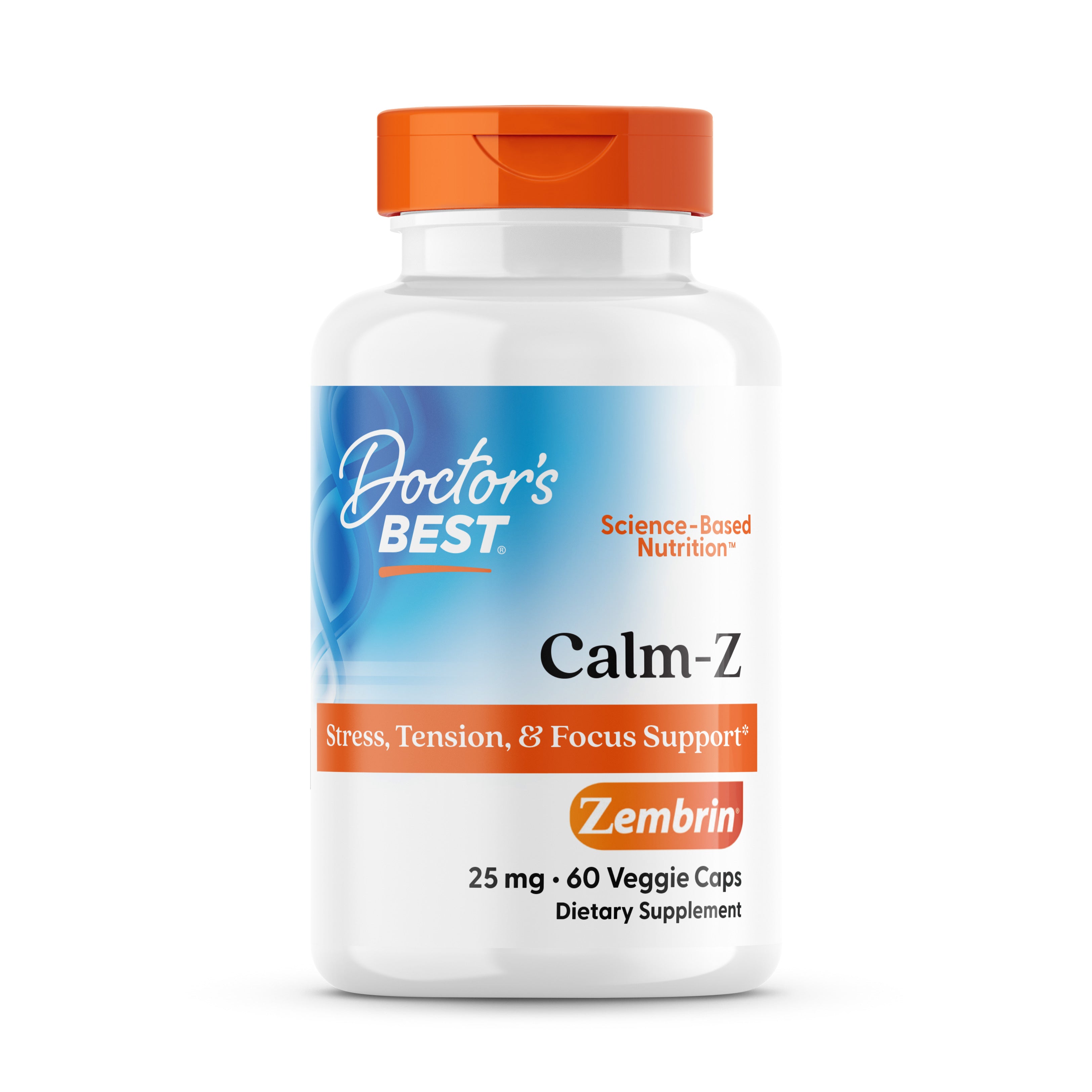
Calm-Z (Zembrin)
Doctor's Best
The one kanna extract with real published human trials behind it, at the studied 25mg dose.
Here's the honest answer up top, in two parts. First, tolerance: yes, kanna tolerance is real. If you use kanna frequently or every day, a dose that used to do the job will start to feel weaker, and you'll be tempted to take more to chase the old effect. The good news is that this kind of tolerance is usually easy to undo, a short break, anywhere from a few days to about a week, typically resets you back toward baseline. The fix is to cycle kanna rather than lean on it daily.
Second, the bigger question people are really asking: is kanna addictive? The careful answer is that kanna appears to have a low reported potential for dependence, and there's no well-documented kanna withdrawal syndrome the way there is for opioids, benzodiazepines, alcohol, or nicotine. But we're going to be straight with you: kanna's research base is small and short, so the accurate phrase is 'low potential, limited evidence,' not 'proven non-addictive.' Those are different claims, and you deserve the real one.
One bit of housekeeping before we dig in. This is general information from a kanna publication that cares, not medical advice, we're writers, not doctors or pharmacists. Kanna is for adults, and if you take any serotonergic medication (an SSRI, SNRI, or MAOI), the rule that overrides everything on this page is to talk to your prescriber before combining anything, because kanna is serotonin-active. With that said, here's what tolerance and dependence actually look like with kanna, and how to use it so it keeps working.
The short version
- Kanna tolerance is real: with frequent or daily use, the same dose feels weaker over time. The tell-tale sign is a dose that keeps climbing to get the same effect.
- It usually resets with a short break, a few days to about a week off is typically enough to bring sensitivity back toward baseline.
- On addiction: kanna has a low reported potential for dependence, and there's no established kanna withdrawal syndrome. But the research is limited, so this is 'low potential, limited evidence,' not 'proven non-addictive.'
- Kanna works mainly on serotonin (mesembrine is a serotonin-reuptake inhibitor), not primarily on the dopamine reward pathway that drives classic addictive drugs, a plausible reason its dependence potential reads low.
- Psychological habit is still possible with anything that feels good. Reaching for kanna daily out of routine is worth noticing, even without physical dependence.
- The practical move is the same either way: don't use kanna daily if you want it to keep working. Cycle it, and if your dose keeps climbing, take a break instead of escalating.
Does kanna tolerance build? (Yes, here's how)
Short answer: yes. Tolerance is the body's way of adapting to something it sees regularly, and kanna is no exception. If you take it every day, or several days in a row, the effect you felt at the start tends to fade, the same dose that once gave you a clear mood lift or a calm, clear-headed shift starts to feel like less. This is the textbook tolerance pattern, and it's the most common reason people feel like kanna 'stopped working.'
The why fits how kanna operates. Kanna's main alkaloid, mesembrine, acts as a serotonin-reuptake inhibitor, it leaves more serotonin available in the synapse. When you keep nudging the serotonin system the same way, day after day, the system adapts to compensate (think of it as the receptors and signaling dialing themselves down to find a new normal). That adaptation is exactly what makes a steady dose feel weaker over time. It's not that the kanna changed; it's that your system recalibrated around it.
How to reset kanna tolerance (the break)
The good news is that kanna tolerance is the easy kind to undo. Because it's driven by your system adapting to regular exposure, the fix is simply to remove the exposure for a while and let things settle back toward baseline. In practice, a short break does the job: a few days off is often enough, and around a week is a comfortable reset for most people. When you come back, a normal dose tends to feel like a normal dose again.
You don't have to wait until tolerance is obvious to act, either. The cleanest way to avoid the whole problem is to cycle kanna from the start, use it on the days you actually want it rather than turning it into a daily habit. Some people use it only a couple of times a week; others do a few days on and a few days off. There's no magic schedule, but the principle is consistent: the less often you use it, the better it keeps working, and the less tolerance you build in the first place.
If you find a break genuinely hard to take, not physically, but because you keep reaching for it out of routine, that's useful information in its own right, and we'll come back to it below. For most people, though, stepping away for a few days is uneventful, and it's the single most effective thing you can do to keep kanna feeling like kanna.
Is kanna addictive? The honest answer
Here's where we refuse to spin it in either direction. The honest read is that kanna appears to have a low reported potential for dependence, and there's no well-documented physical withdrawal syndrome associated with it, nothing like the established, sometimes dangerous withdrawal seen with opioids, benzodiazepines, alcohol, or nicotine. Traditionally, the San people of southern Africa used kanna occasionally and ceremonially rather than as a daily fix, which is consistent with a substance that doesn't grip people the way the classic addictive drugs do.
But, and this is the part most pages skip, kanna's research base is small and short. The clinical studies that exist ran over weeks to a few months, not years, and they weren't designed to map long-term dependence or to catch a withdrawal syndrome if a subtle one existed. So 'no established withdrawal' honestly means 'none documented in a limited literature,' which is not the same as 'proven impossible.' The accurate phrase is low potential, limited evidence. We're not going to upgrade that to 'non-addictive,' because the data don't earn that word.
There's also a second, simpler kind of dependence to be honest about: psychological habit. Any substance that reliably makes you feel better can become something you reach for out of routine rather than need, a daily ritual you'd rather not skip. That can happen with kanna even in the complete absence of physical dependence, and it's worth keeping an eye on for its own sake. If kanna has quietly become a can't-skip-a-day thing for you, that's worth a pause, regardless of what the pharmacology says.
Why kanna is different from classic addictive drugs
A big part of why kanna's dependence potential reads low comes down to where it acts. The drugs with the highest addiction potential, opioids, stimulants, nicotine, alcohol, share a common thread: they hit the brain's dopamine reward pathway hard and fast, producing the surge of reinforcement that drives compulsive use and, eventually, physical dependence. That dopamine-reward loop is the engine of classic addiction.
Kanna doesn't primarily work that way. Its main action is serotonergic, boosting serotonin availability the way an antidepressant broadly does, rather than flooding the dopamine reward circuit. Serotonin-active substances, as a class, simply don't tend to produce the intense, fast reinforcement that builds compulsive habits. That mechanistic difference is the most plausible explanation for why kanna's reported dependence potential is low, and why it doesn't come with the kind of withdrawal the reward-pathway drugs do.
We'd flag the obvious caveat one more time: 'different mechanism, lower potential' is a reason to be reassured, not a guarantee. Mechanism tells you what's likely, and the likely story here is genuinely favorable, but it's still a story told over a thin evidence base. Low potential is the honest takeaway, not zero.
The honest limits of what we know
It's worth saying plainly: a lot of confident claims about kanna online, in both directions, run ahead of the evidence. The 'kanna is completely safe and non-addictive forever' camp is overstating it, and so is anyone implying it's a sneaky habit-former. The truth sits in a humbler place. We have a clear mechanism (serotonin-reuptake inhibition), reassuring tradition (occasional, ceremonial use), a handful of short clinical studies that found it well-tolerated, and an absence of documented withdrawal. That's a reasonably encouraging picture, and it's also a thin one.
What we don't have is long-term data. There aren't studies following daily kanna users over years, which is exactly the kind of research that would settle the dependence question for good. Until that exists, anyone telling you they know precisely how kanna behaves over the long haul is filling in blanks. The grown-up approach is to act on what the evidence does support, use it occasionally, cycle it, don't escalate, rather than on a certainty nobody actually has.
How to use kanna so it keeps working
Everything above points to the same short, practical playbook:
- Don't use kanna daily. If you want it to keep working, treat it as an occasional tool, not a daily habit. Daily use is the fastest route to tolerance.
- Cycle it. Use it on the days you actually want it. A couple of times a week, or a few days on and a few days off, keeps your sensitivity intact and sidesteps tolerance before it starts.
- If your dose keeps climbing, take a break, don't escalate. A creeping dose is the tolerance signal. The answer is a few days to a week off, not a bigger dose.
- Use standardized or pre-dosed formats. Capsules, measured gummies, or a standardized extract make it far easier to notice tolerance creep, because you're tracking a consistent dose instead of guessing with loose powder.
- Notice the habit, not just the dose. If you find you're reaching for kanna out of routine and would rather not skip a day, that's worth a pause, psychological habit is real even when physical dependence isn't.
Do those, and kanna tends to stay reliable. The whole point of this page is that the levers are in your hands: tolerance is manageable, dependence potential is low, and a little restraint goes a long way toward keeping it that way.
Questions, answered
Does kanna build tolerance?
Yes. With frequent or daily use, a given dose of kanna tends to feel weaker over time as your system adapts, consistent with how its serotonin-reuptake action works. The classic sign is your dose creeping up to chase the same effect. The fix isn't more kanna; it's a short break to let your sensitivity reset.
How long does it take to reset kanna tolerance?
Usually not long. Because kanna tolerance comes from your system adapting to regular exposure, stepping away lets it settle back toward baseline. A few days off is often enough, and around a week is a comfortable reset for most people. When you return, a normal dose tends to feel normal again. The cleaner long-term fix is to cycle kanna so you don't build much tolerance in the first place.
Is kanna addictive?
The honest answer is that kanna has a low reported potential for dependence, with no well-documented withdrawal syndrome like opioids, benzodiazepines, alcohol, or nicotine have. A likely reason is that kanna works mainly on serotonin rather than flooding the brain's dopamine reward pathway. But the research base is small and short, so the accurate phrase is 'low potential, limited evidence,' not 'proven non-addictive.' Psychological habit, reaching for it daily out of routine, is still possible with anything that feels good.
Is there a kanna withdrawal?
There's no established kanna withdrawal syndrome in the literature, nothing like the physical withdrawal seen with opioids, benzodiazepines, alcohol, or nicotine. That's genuinely reassuring, but it comes with a caveat: kanna's studies are short and few, so 'no documented withdrawal' means 'none found in a limited evidence base,' not 'proven impossible.' If you've been using it daily and stop, you may simply miss the effect or notice a return of whatever you were using it for, which is different from a true physical withdrawal.
Can I take kanna every day?
You can, but it's usually not the smart move if you want it to keep working. Daily use is the fastest way to build tolerance, so the effect fades and you're tempted to escalate. Most people get more out of kanna by cycling it, using it on the days they actually want it rather than every day. If you do find yourself using it daily and can't comfortably take a break, that's worth a pause and a closer look at the habit, even though kanna's physical dependence potential reads low.
Keep reading
Kanna Dosage Guide
How much kanna to take by format, and how to find your dose safely.
Kanna Dosage Calculator (free tool)
Pick your format and experience, get a sensible starting dose with the safety rule built in.
Kanna Side Effects: The Honest Breakdown
What kanna can do at normal and higher doses, and the lines that override the dose.
How to Take Kanna
Formats, timing, and getting your first dose right.
Kanna and Antidepressants (SSRIs): Is It Safe to Combine?
The honest answer on serotonin syndrome risk and what to do if you take an SSRI.