Our Pick: Doctor's Best
Check price →Kanna vs CBD: Which Is Right for You? (2026)
Two legal botanicals people reach for to feel calmer, but they work nothing alike. Kanna lifts mood through serotonin and arrives fast; CBD works the endocannabinoid system for a slower, broader calm.
By Justin Park · 8 min · Updated 2026-06-14
★ Top-Rated Kanna Right Now
Best Overall
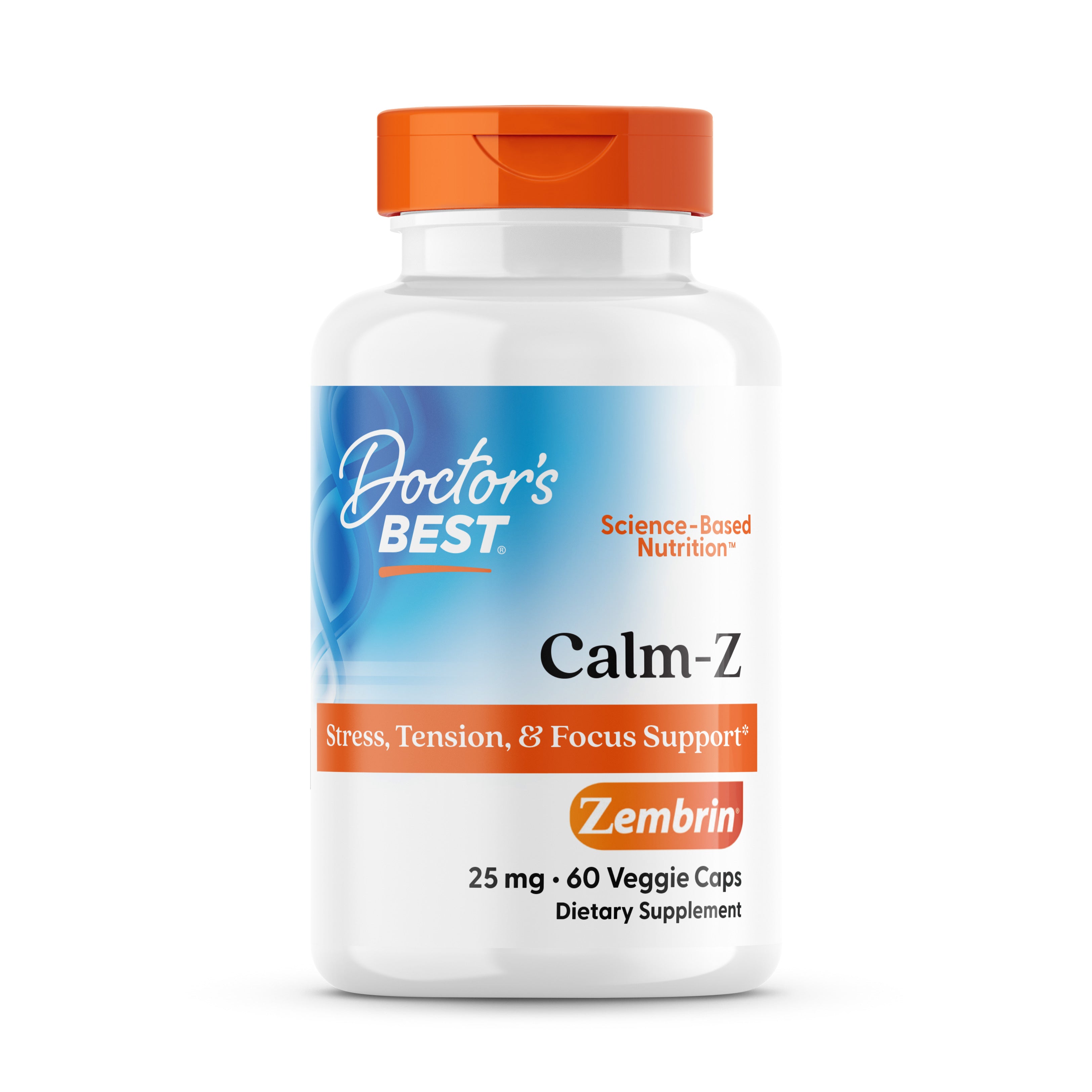
Calm-Z (Zembrin)
Doctor's Best
The one kanna extract with real published human trials behind it, at the studied 25mg dose.
Kanna and CBD both get shelved under "natural calm," but they pull completely different levers. The short answer: kanna is a serotonergic mood-lifter, faster and more noticeable, with a brighter, more uplifting edge, while CBD works through the endocannabinoid system for a slower, broader, longer-lasting sense of calm.
If you want a quick, perceptible mood shift you can feel within half an hour, kanna is usually the better fit. If you want a gentle, all-day baseline of calm with a long safety track record and zero serotonin-interaction worry, CBD is the easier, lower-friction choice. The one caution that genuinely separates them: kanna raises serotonin like an SSRI does, so it carries a drug-interaction warning that CBD does not.
The short version
- Different mechanisms: kanna is a serotonin-reuptake inhibitor and PDE4 inhibitor (faster, more noticeable mood lift); CBD acts broadly on the endocannabinoid system (slower, broader, longer calm).
- For a quick, perceptible mood lift, kanna usually wins. For a steady all-day baseline of calm, CBD usually wins.
- Onset differs sharply: kanna's fast formats land in ~15 to 40 minutes; CBD is commonly felt as a gradual settling over 45 to 90 minutes.
- Both are legal US botanicals, but only kanna carries the SSRI / serotonin-syndrome interaction caution. CBD does not have that specific risk.
- Kanna's firm rule: it raises serotonin like an SSRI, so don't combine it with SSRIs, SNRIs, MAOIs, or other serotonergic meds without medical advice.
| Kanna (Sceletium tortuosum) | CBD (cannabidiol) | |
|---|---|---|
| Mechanism | Serotonin-reuptake inhibitor + PDE4 inhibitor | Acts on the endocannabinoid system (broad, indirect) |
| Onset | ~15 to 40 min (sublingual/chew); longer for capsules | Gradual, commonly ~45 to 90 min, longer for edibles |
| Primary effect | Noticeable mood lift, calm focus, sociability | Broad, subtle calm; muscle and mind "settling" |
| Feel | Brighter, present, a clear mood shift | Even, low-key, a gentle baseline you barely notice |
| Legality (US) | Legal botanical supplement, federally uncontrolled | Hemp-derived CBD federally legal (2018 Farm Bill); state rules vary |
| Key risk | SSRI / serotonergic-medication interaction caution | Generally mild; no serotonin-interaction risk |
| Best for | A fast, felt mood lift and calm focus | A steady, all-day baseline of low-key calm |
Kanna vs CBD at a glance, same "calm" shelf, two different pathways and two different risk profiles.
The bottom line: which one should you choose?
Choose kanna if you want a mood shift you can actually feel, and feel quickly, its serotonergic action tends to lift mood and ease social friction within roughly 15 to 40 minutes on a fast format. Choose CBD if you want a gentle, broad calm you can take daily without thinking about it, with a long consumer safety record and no serotonin-interaction concern.
Plenty of people use both, kanna when they want a perceptible lift before something social or focused, CBD as a steady background. There's no rule against keeping both on the shelf, but read the safety section first, because the two are not interchangeable on risk. For the broader kanna context, see what is kanna.
How kanna works (and why it feels faster)
Kanna's signature is a rare dual mechanism. According to Harvey et al. (2011, Journal of Ethnopharmacology), it acts as both a serotonin-reuptake inhibitor (SRI), broadly the same lever an SSRI antidepressant pulls, and a PDE4 inhibitor at the same time. The alkaloid mesembrine is the most potent serotonin-transporter blocker; mesembrenone is the strongest PDE4 inhibitor. That direct serotonergic action is why kanna is commonly described as a noticeable, mood-brightening lift rather than a subtle background calm.
That mechanism also helps explain the speed. In a 2013 brain-imaging study, a single 25mg dose of standardized kanna extract measurably reduced amygdala reactivity to fearful faces (Terburg et al., 2013, Neuropsychopharmacology, n=16), an objective signal that fits the calmer, less-reactive feeling users report. On fast formats like a sublingual tincture or a chew, the experiential onset is roughly 15 to 40 minutes. For the full picture of what people feel, see kanna effects.
How CBD works (and why it's broader and slower)
CBD acts on the endocannabinoid system, a body-wide signaling network, but it does so broadly and indirectly rather than by blocking one transporter the way kanna does. That diffuse mechanism is exactly why CBD tends to be felt as a gentle, generalized settling rather than a sharp mood shift, and why people often describe its effect as "I notice I'm calmer" rather than "I felt it come on."
The trade-off cuts both ways. CBD's onset is slower, commonly a gradual 45 to 90 minutes, and longer still for edibles that have to digest, and the effect is subtler, which is why daily, consistent use is the usual way people get value from it. Where kanna gives you a fast, felt event, CBD gives you a slow, broad baseline.
The key difference: kanna's serotonin caution vs CBD's clean interaction profile
This is the single most important line in the whole comparison, and it's the one that should decide the choice for some readers.
That said, CBD is not consequence-free either: it can interact with how the liver metabolizes certain prescription drugs (the same "grapefruit" pathway some medications warn about), so anyone on prescription medication should check with a clinician before adding either botanical. The practical takeaway: if you take a serotonergic antidepressant, CBD is the far simpler option, and kanna specifically requires a doctor's sign-off first.
On the reassuring side for kanna, a 3-month placebo-controlled trial of standardized kanna in 37 adults (Nell et al., 2013) found both 8mg and 25mg daily doses were well-tolerated, with no significant changes in vitals or blood chemistry. Kanna's side effects are generally mild, occasional headache, nausea (more likely at higher doses), or appetite loss. For the full rundown, see kanna side effects.
These statements have not been evaluated by the FDA. Neither kanna nor CBD is intended to diagnose, treat, cure, or prevent any disease. This is not medical advice, talk to a clinician about your situation.
Two kanna picks if you've decided to start there
If the comparison pointed you toward kanna, two products are easy, well-disclosed places to start. For a clean, beginner-friendly calm, Doctor's Best Calm-Z uses 25mg of the clinically-studied Zembrin extract per capsule, the exact standardized dose the research was run on. For a more balanced, faster-arriving experience, KA! Empathogenics Kanna Daily Chews deliver a fixed 30mg standardized dose you chew, so some absorption happens in the mouth and the lift comes on a little quicker.
Both disclose their dose, which is the single most important thing to look for. See our full breakdown in the best kanna you can buy right now.
How we chose
We compare on mechanism, onset, primary effect, legality, key risk, and best use, drawing on the published kanna literature (mostly on the standardized Zembrin extract) and the broadly-documented pharmacology of CBD. We do not run our own clinical trials; effects are framed experientially, never as medical outcomes.
The kanna human clinical base is small (n=16 to 37, short, mostly on the patented Zembrin extract and partly industry-linked), so we treat its findings as promising rather than settled and say so wherever we cite them.
Questions, answered
Is kanna or CBD better for anxiety?
They take different routes. Kanna's serotonergic action is commonly described as easing a racing, over-reactive mind and lifting mood, with a noticeable, fairly fast effect that many prefer before a stressful event. CBD is more often used as a steady, all-day baseline of low-key calm. Neither is a treatment for any condition, and if you take a serotonergic medication, kanna specifically requires medical advice first while CBD does not carry that same interaction risk.
Can I take kanna and CBD together?
Some people do, since they act on entirely different systems (serotonin vs the endocannabinoid system). But don't stack them blindly: start low, and if you take any prescription medication, especially a serotonergic antidepressant, get a clinician's sign-off first, because kanna carries an SSRI-interaction caution and CBD can affect how the liver processes some drugs.
Which one works faster?
Kanna, on a fast format. A sublingual tincture or a chew is commonly felt in about 15 to 40 minutes, while CBD is usually a more gradual settling over roughly 45 to 90 minutes (longer for edibles). Capsule kanna is slower than its tincture or chew forms, but the mood shift is still typically more noticeable than CBD's broad, subtle calm.
Is kanna stronger than CBD?
"Stronger" depends on what you mean. Kanna's effect is usually more noticeable, a clearer, more directional mood lift, because it acts directly on serotonin. CBD's effect is broader and subtler by design. So kanna tends to feel more perceptible, while CBD tends to feel more like a gentle baseline. They're not really competing on the same axis.
References
The human research on kanna is genuine but small, a handful of trials, mostly on the standardized Zembrin extract. These are the primary sources we cite, linked so you can read them yourself.
- 1.Harvey AL, Young LC, Viljoen AM, Gericke NP (2011). Pharmacological actions of the South African medicinal and functional food plant Sceletium tortuosum and its principal alkaloids. Journal of Ethnopharmacology. Identified kanna's dual mechanism, serotonin-reuptake inhibition (5-HT transporter) and PDE4 inhibition, in vitro. PubMed · DOI
- 2.Terburg D, Syal S, Rosenberger LA, et al. (2013). Acute effects of Sceletium tortuosum (Zembrin), a dual 5-HT reuptake and PDE4 inhibitor, in the human amygdala and its connection to the hypothalamus. Neuropsychopharmacology. A single 25 mg dose of standardized extract reduced amygdala reactivity to fearful faces on fMRI (n=16). PubMed · DOI
- 3.Nell H, Siebert M, Chellan P, Gericke N (2013). A randomized, double-blind, parallel-group, placebo-controlled trial of Extract Sceletium tortuosum (Zembrin) in healthy adults. Journal of Alternative and Complementary Medicine. A 3-month placebo-controlled trial (n=37) found 8 mg and 25 mg/day were well-tolerated, with no significant changes in vitals or blood chemistry. PubMed · DOI
Keep reading
Kanna vs Kava: Which Calms Better?
Serotonin vs GABA, mood lift vs body relaxation, and how to choose.
Kanna vs Kratom: Effects, Safety, and Which to Choose
A serotonergic botanical vs an opioid one, and why they're not interchangeable.
What Is Kanna?
The plant, the alkaloids, and what the science actually shows.
Kanna Side Effects: What to Know
The mild ones, the serotonin caution, and who should avoid it.
The Best Kanna You Can Buy Right Now
Our overall top kanna picks across every format.