Our Pick: Doctor's Best
Check price →Kanna Stacking: What to Take (and Never Take) With Kanna
One rule matters more than all the rest: never stack kanna with anything else serotonergic. Past that, a few low-risk complements are fine, but more is not better. Here's the honest, safety-first way to think about a kanna stack.
By Justin Park · ~8 min read · Updated 2026-07-02
★ Top-Rated Kanna Right Now
Best Overall
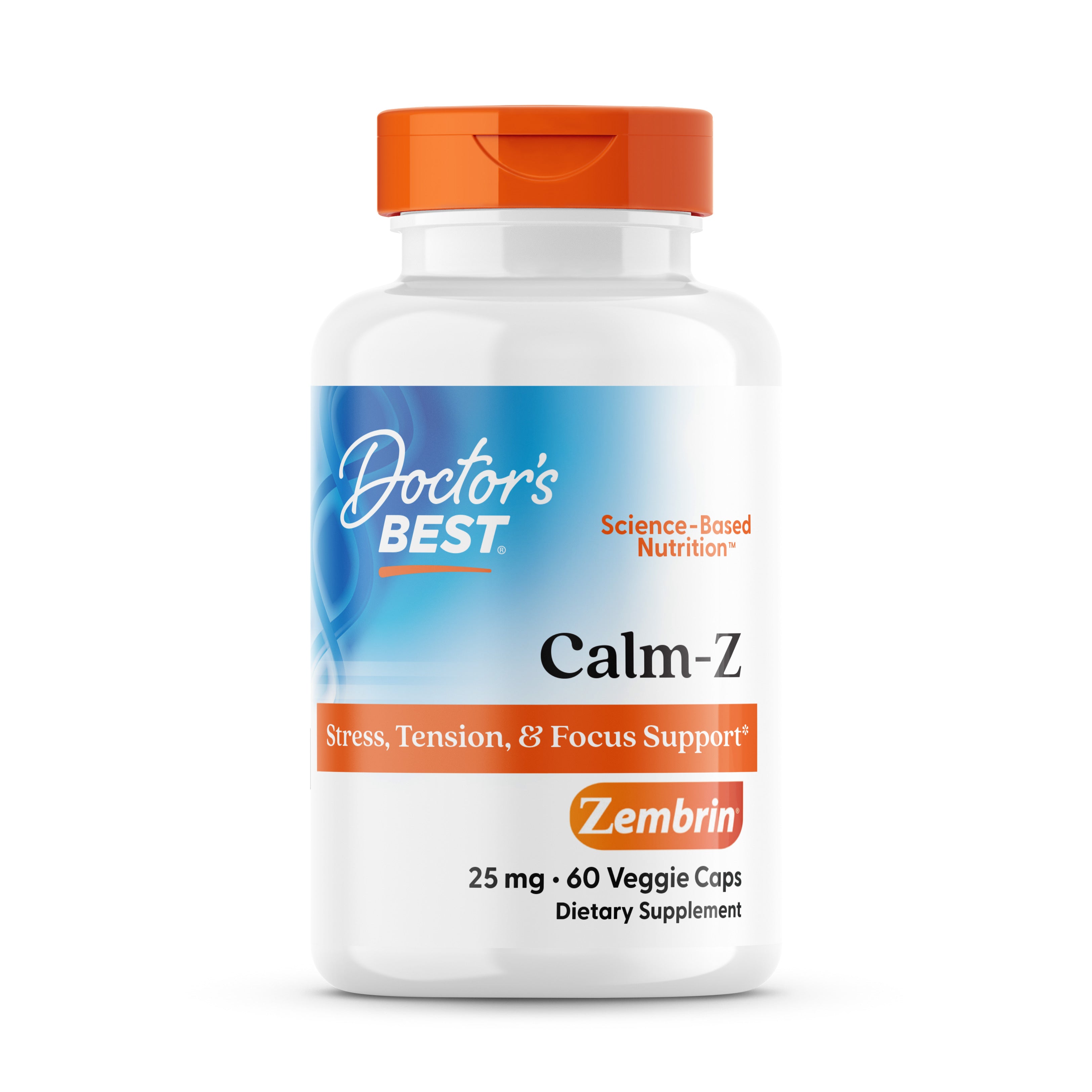
Calm-Z (Zembrin)
Doctor's Best
The one kanna extract with real published human trials behind it, at the studied 25mg dose.
Here's the whole guide in one line before anything else: the single most important rule of stacking kanna is that you never stack it with something else serotonergic. Kanna raises serotonin the same broad way an SSRI does, so combining it with another serotonin-raising drug or supplement (SSRIs, SNRIs, MAOIs, 5-HTP, St John's Wort, tramadol) can push serotonin activity too high. That is the real risk, and it isn't about dose or brand, it's about mechanism. Everything else on this page is a distant second to that one rule.
Once that hard line is respected, the honest news is that a kanna stack can be pretty boring in a good way. The complements people actually ask about (L-theanine, magnesium, and caffeine) act on entirely different systems, have no known clash with kanna, and are used together all the time. None of them is serotonergic. So the useful framing isn't 'what turbo-charges kanna,' it's 'what's safe to sit alongside it, and where does adding things stop helping.'
One bit of housekeeping first. This is general information from a kanna publication that cares, not medical advice, and we're writers, not doctors. Kanna is a supplement that has not been evaluated by the FDA and is not intended to diagnose, treat, cure, or prevent any disease. If you take any prescription medication, especially a serotonergic antidepressant, the answer to 'can I stack this with kanna' is 'ask your prescriber first,' full stop.
The short version
- The hard rule that overrides everything: NEVER stack kanna with anything else serotonergic (SSRIs, SNRIs, MAOIs, 5-HTP, St John's Wort, tramadol). Kanna is a serotonin-reuptake inhibitor, so additive serotonin is the real danger.
- Safe to consider (no known clash): L-theanine for calm-focus, magnesium for general relaxation, and caffeine in moderation. All act on different systems than kanna.
- More is not better. Every extra ingredient makes it harder to tell what's actually doing what, and stacking two stimulating things (like strong kanna plus a lot of caffeine) can feel edgy.
- Kanna's own human safety base is reassuring on its own: a 3-month trial in 37 adults (Nell 2013) found daily kanna well-tolerated, with no significant changes in vitals or blood chemistry.
- The golden rule of any stack: add one thing at a time, start low, and give it time before layering anything else on top.
- Anything serotonergic is a hard no, not a 'be careful.' If a medication or supplement raises serotonin, it does not belong in a kanna stack without a clinician's sign-off.
The one rule that matters most: never stack kanna with anything serotonergic
We're leading with this because it's the centerpiece of the entire topic, and it's the one place where getting it wrong actually matters. Kanna (Sceletium tortuosum) works through a rare dual mechanism (Harvey 2011): it's a serotonin-reuptake inhibitor and a PDE4 inhibitor at once. That first part, the serotonin-reuptake inhibition, is broadly the same lever an SSRI antidepressant pulls. It means kanna itself raises serotonin activity. So the danger in a kanna stack is never the kanna alone, it's stacking kanna on top of something else that also raises serotonin, because the two effects add up.
The things to keep away from kanna are the serotonergic ones: SSRIs (like sertraline or escitalopram), SNRIs (like venlafaxine or duloxetine), MAOIs (the highest-risk category), and other serotonin-raising agents including tramadol, triptans, dextromethorphan (DXM), and the supplements people most often try to stack for mood, namely 5-HTP, L-tryptophan, and St John's Wort. Those last three are the trap, because they look like innocent 'natural mood support,' but they raise serotonin, so they are exactly the wrong thing to pair with a serotonergic botanical. To be clear about the size of the risk: documented serotonin-syndrome cases from kanna are essentially absent, so this is a precaution based on how kanna works rather than a pile of case reports. But the mechanism is real, so the rule stands as a hard line, not a footnote. If any serotonergic medication is part of your life, kanna itself is an 'ask my prescriber first' situation, and no stack changes that. For the full breakdown, see kanna and antidepressants and, for a specific one, kanna vs 5-HTP.
The fastest way to check a specific combination before you take it is our kanna interaction checker. If you have a serotonergic question, take it there (and to your prescriber) rather than guessing.
Safe to consider vs do not stack: the quick reference
Here's the whole decision at a glance. The left column is the everyday complements people ask about, which act on different systems and have no known clash with kanna. The right column is the hard-no list, everything that raises serotonin. When in doubt, run it through the interaction checker.
| Safe to consider (no known clash) | Do NOT stack (serotonergic, real risk) |
|---|---|
| L-theanine (amino acid; calm-focus, different mechanism) | SSRIs (sertraline, escitalopram, etc.) |
| Magnesium (general relaxation, no known clash) | SNRIs (venlafaxine, duloxetine, etc.) |
| Caffeine (fine in moderation; can feel edgy) | MAOIs (highest-risk category) |
| 5-HTP and L-tryptophan | |
| St John's Wort | |
| Tramadol, triptans, DXM, other serotonergic drugs |
These statements have not been evaluated by the FDA. Kanna is not intended to diagnose, treat, cure, or prevent any disease. The left column being 'no known clash' is not a recommendation to take everything at once, see the note on why more is not better below.
L-theanine: the most sensible pairing
If there's a natural stack partner for kanna, it's L-theanine, the amino acid from tea. It's the pairing people ask about most, and for good reason: it acts on a completely different system. L-theanine nudges the calming GABA and glutamate pathways and boosts alpha brain waves, producing a quiet, calm-alert focus you barely notice. Kanna works on serotonin and PDE4. Different levers entirely, which is exactly why there's no serotonergic overlap to worry about.
The common approach is to use L-theanine as a steady, low-friction calm-focus baseline and add kanna when you specifically want a felt mood or social lift. They complement rather than compete. As with any stack, start low on the kanna side and add one thing at a time so you can tell what's doing what. We break the two down head-to-head in kanna vs L-theanine.
Magnesium: quietly fine, no known clash
Magnesium is the other low-drama complement people reach for, usually for general relaxation, muscle ease, or sleep support. It's a mineral your body needs anyway, it doesn't touch serotonin reuptake, and there's no known clash with kanna. So if you already take magnesium in the evening, there's nothing about kanna that specifically argues against it.
The honest caveat isn't a safety one, it's an expectations one: magnesium is subtle, and stacking it with kanna won't produce some dramatic combined effect. It sits quietly alongside. That's fine, just don't expect the two to multiply each other. And the same golden rule applies, if you're adding magnesium and kanna at the same time for the first time, you won't know which one is responsible for how you feel. Add one, settle in, then consider the other.
Caffeine: fine in moderation, can feel edgy
Caffeine is not serotonergic, so kanna plus coffee is not the SSRI-class interaction and there's no documented dangerous kanna-caffeine reaction in the research. In moderation, it's fine. The real, mild caution is different: both kanna and caffeine can be mildly stimulating, so a strong, high-mesembrine kanna stacked on top of a lot of caffeine can tip some people into feeling edgy or jittery. It's over-stimulation, not a chemical danger.
If you want to try the combo, the low-risk move is to keep your normal kanna dose, halve your usual caffeine the first time, and use it in the morning so you can feel how the two sit together. People who are anxiety-prone, caffeine-sensitive, or have a heart condition should be extra cautious or skip it. We cover the whole thing in kanna and caffeine.
Why more is not better
The instinct with stacks is to keep adding ingredients until you've built the perfect blend. With kanna, that instinct works against you, for two plain reasons.
First, every ingredient you add makes it harder to tell what's actually doing what. If you take kanna, L-theanine, magnesium, and a pre-workout on the same morning and feel great (or feel off), you have no way of knowing which one is responsible. You've made your own experiment unreadable. That's why the golden rule of any stack is to add one thing at a time, start low, and give it time before layering anything else on top.
Second, kanna doesn't need much help. Its own human safety and effect base is reassuring on its own terms: a 3-month placebo-controlled trial of standardized kanna in 37 adults (Nell 2013) found both 8mg and 25mg daily doses well-tolerated, with no significant changes in vitals, ECG, blood chemistry, or weight. Kanna is the star of the stack, not a base ingredient waiting to be improved. Get your kanna dose dialed in first (see how kanna works for the mechanism), then decide whether you even want to add anything. If you want the most readable possible baseline for that dial-in, a single-ingredient standardized capsule like Protocol for Life Balance's straight Zembrin (no co-ingredients, the studied 25mg dose) is the cleanest place to start.
The bottom line on stacking kanna
Stacking kanna comes down to one hard rule and one soft habit. The hard rule: never stack it with anything serotonergic, because kanna raises serotonin like an SSRI does, and additive serotonin is the real risk. SSRIs, SNRIs, MAOIs, 5-HTP, St John's Wort, and tramadol are hard nos, not 'be carefuls.' Anything serotonergic goes to your prescriber and to the interaction checker, not into your stack.
The soft habit: keep the stack short and add one thing at a time. L-theanine, magnesium, and moderate caffeine are the low-risk complements people actually ask about, and they're fine because they work on different systems entirely. But more is not better, a short, readable stack always beats a crowded one you can't interpret. Get your kanna right first, respect the serotonergic line without exception, and add the rest slowly if at all.
Questions, answered
What can you safely stack with kanna?
The low-risk complements people most often ask about are L-theanine (an amino acid for calm-focus), magnesium (general relaxation), and caffeine in moderation. All three act on entirely different systems than kanna and have no known clash with it. The key rule is to add one thing at a time and start low, so you can tell what's doing what. What you must never stack with kanna is anything serotonergic, because kanna raises serotonin the way an SSRI does.
What should you never take with kanna?
Never stack kanna with anything else serotonergic. That means SSRIs (like sertraline or escitalopram), SNRIs (like venlafaxine or duloxetine), MAOIs, tramadol, triptans, DXM, and the mood supplements 5-HTP, L-tryptophan, and St John's Wort. Kanna is a serotonin-reuptake inhibitor (Harvey 2011), so adding another serotonin-raising substance can push serotonin activity too high. This is a hard rule based on mechanism, not a mild caution. If you take any serotonergic medication, talk to your prescriber before using kanna at all, and use our interaction checker for a specific combination.
Can you stack kanna and L-theanine?
Yes, it's one of the more sensible pairings. L-theanine acts on the GABA and glutamate systems and boosts alpha brain waves for a quiet calm-focus, while kanna works on serotonin and PDE4, so there's no serotonergic overlap. A common pattern is L-theanine as a steady calm-focus baseline and kanna added when you want a felt mood or social lift. Start low on the kanna side and add one thing at a time.
Can you take magnesium with kanna?
There's no known clash. Magnesium is a mineral often used for general relaxation or sleep support, and it doesn't affect serotonin reuptake, so nothing about kanna specifically argues against it. Just don't expect a dramatic combined effect, magnesium is subtle. And if you're adding both at once for the first time, you won't know which one is responsible for how you feel, so it's better to introduce one, settle in, then consider the other.
Is it bad to stack too many supplements with kanna?
It's not usually dangerous (as long as nothing in the stack is serotonergic), but it's counterproductive. Every ingredient you add makes it harder to tell what's actually doing what, so a crowded stack becomes an unreadable experiment. A short stack, kanna plus one deliberate, different-mechanism complement, beats a kitchen-sink blend. Kanna also doesn't need much help: a 3-month trial in 37 adults (Nell 2013) found it well-tolerated on its own. Get your kanna dose right first, then add slowly if at all.
References
The human research on kanna is genuine but small, a handful of trials, mostly on the standardized Zembrin extract. These are the primary sources we cite, linked so you can read them yourself.
- 1.Harvey AL, Young LC, Viljoen AM, Gericke NP (2011). Pharmacological actions of the South African medicinal and functional food plant Sceletium tortuosum and its principal alkaloids. Journal of Ethnopharmacology. Identified kanna's dual mechanism, serotonin-reuptake inhibition (5-HT transporter) and PDE4 inhibition, in vitro. PubMed · DOI
- 2.Nell H, Siebert M, Chellan P, Gericke N (2013). A randomized, double-blind, parallel-group, placebo-controlled trial of Extract Sceletium tortuosum (Zembrin) in healthy adults. Journal of Alternative and Complementary Medicine. A 3-month placebo-controlled trial (n=37) found 8 mg and 25 mg/day were well-tolerated, with no significant changes in vitals or blood chemistry. PubMed · DOI
Keep reading
Kanna and Antidepressants: The Serotonin Caution
The one interaction that truly matters, why it exists, and what to do if you take an SSRI.
Kanna vs L-Theanine: Which Should You Take?
The most sensible stack partner, head-to-head with kanna on mechanism, feel, and safety.
Kanna and Caffeine: Can You Take Kanna With Coffee?
Not serotonergic, so not the SSRI-class risk, but two stimulating things can add up. How to pair them.
Kanna vs 5-HTP
Why 5-HTP is on the do-not-stack list, and how the two serotonergic options compare.
How Kanna Works
The serotonin-reuptake plus PDE4 dual mechanism, in plain language, and why the serotonin rule exists.