Our Pick: Doctor's Best
Check price →Kanna for Libido: Aphrodisiac, or Just Better Connection? (2026)
Kanna has a quiet reputation as a plant for intimacy. The honest read: there's no evidence it's a physiological aphrodisiac, but its empathogenic, guard-lowering feel is why some couples say it helps them feel more present together, plus the serotonergic rule that matters most here.
By Justin Park · 9 min · Updated 2026-07-01
★ Top-Rated Kanna Right Now
Best Overall
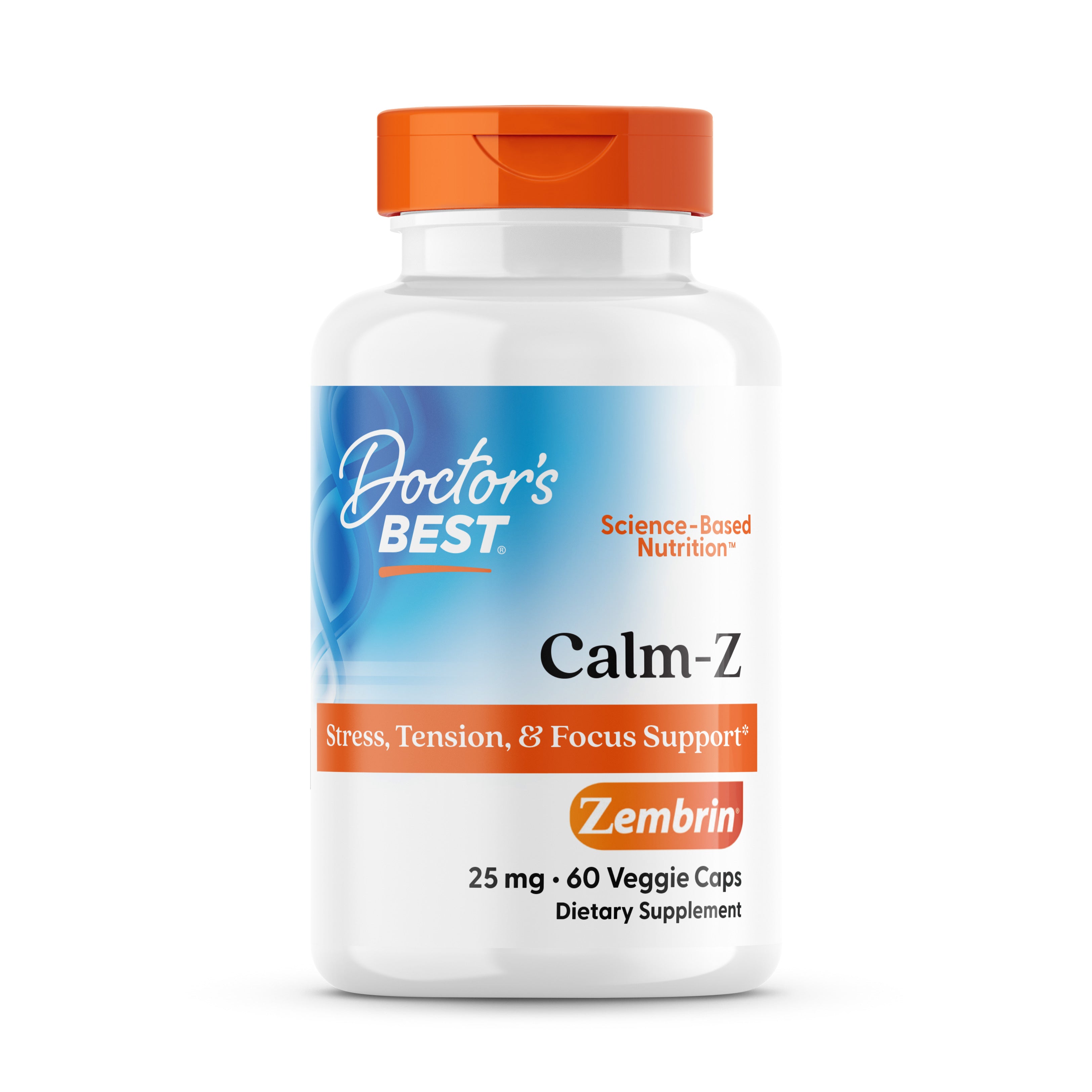
Calm-Z (Zembrin)
Doctor's Best
The one kanna extract with real published human trials behind it, at the studied 25mg dose.
The honest answer up front: kanna is not a proven aphrodisiac, and there is no clinical evidence that it raises libido or treats any sexual problem. Anyone selling it as a botanical Viagra is getting ahead of the science, which on this specific question is essentially non-existent. Nothing here is medical advice.
What can be said fairly is more interesting than the hype. Kanna (Sceletium tortuosum) is the classic empathogen, a mood-lifting, guard-lowering botanical, and the honest case for it around intimacy is emotional, not pharmacological. Many users describe feeling more relaxed, present, and connected with a partner, and for a lot of people that state of mind is exactly what makes intimacy easier. That is an indirect, set-and-setting effect on connection, not a drug acting on arousal, and the distinction is the whole point of this page.
The short version
- Kanna is not a proven aphrodisiac. There is no clinical evidence that kanna raises libido or treats sexual dysfunction, and we won't frame it as one.
- The plausible mechanism is emotional, not physiological. Kanna lowers social and emotional guardedness (empathogenic), which can leave people feeling more present and connected, and that can indirectly help intimacy.
- The science it rests on is about anxiety, not sex. In Terburg et al. 2013, a single 25mg dose reduced amygdala reactivity to fearful faces; the mechanism is serotonergic and PDE4-based (Harvey 2011). Neither study looked at libido.
- The interaction that matters most here: many people take SSRIs, which themselves blunt libido. Do NOT combine kanna with an SSRI, SNRI, or MAOI without a doctor's advice, kanna is serotonergic.
- Set and setting, low dose. If you try it, the reported benefit is about relaxation and connection, so a low, standardized dose in a calm setting is the sensible approach, not chasing a bigger effect.
Is kanna an aphrodisiac? The honest, evidence-first answer
No, not in the way the word usually means. There is no controlled research showing kanna increases libido, improves arousal, or treats any form of sexual dysfunction, and we're not going to pretend otherwise. If you came here looking for a plant that works on the body the way a prescription does, kanna isn't it, and the evidence base on this exact question is close to empty.
What kanna does have is a reputation, and that reputation has a real and defensible basis, it's just not a physiological one. Kanna is the original empathogen: a botanical that people describe as lowering their social and emotional guard, leaving them warmer, more open, and more present. For a great many people, feeling relaxed, unhurried, and emotionally connected to a partner is precisely the thing standing between them and intimacy. Kanna may help with that, the headspace, without doing anything to libido as a physical drive.
Why kanna might help intimacy indirectly: the empathogenic feel
The word for kanna's signature quality is empathogenic, from the sense of feeling more connected, more open, less on guard with other people. That's the trait the Khoisan chewed it for socially, and it's why the modern category markets it that way. The relevance to intimacy is straightforward once you separate feeling from function: intimacy is as much about being present and unguarded as it is about physical drive, and kanna's reported effect sits squarely on the emotional side of that line.
There's a mechanistic story underneath, though it's important to be precise about what it does and doesn't show. Kanna's effects trace to a rare dual action described by Harvey et al. 2011 in the Journal of Ethnopharmacology: kanna works through a serotonin-reuptake inhibitor and a PDE4 inhibitor at once, which is what sets it apart from kava, CBD, and kratom. And in a 2013 brain-imaging study, a single 25mg dose of standardized kanna measurably reduced amygdala reactivity to fearful faces (Terburg et al. 2013, n=16), a dampening of the brain's threat-and-guardedness circuitry. That is a plausible reason someone might feel more at ease and present with a partner.
So the honest chain is: kanna is plausibly guard-lowering (measured), guardedness gets in the way of intimacy (common sense), therefore kanna might indirectly help some people feel more connected (reported, not proven). That's a very different claim from "kanna boosts libido," which nothing supports.
The SSRI interaction you cannot skip (and it's especially relevant here)
This is the most important paragraph on the page, and it lands harder on this topic than almost any other. Because kanna raises serotonin the way an SSRI does, it must not be combined with SSRIs, SNRIs, MAOIs, or other serotonergic medications without a doctor's advice. The reason it matters so much here: reduced libido is one of the best-documented side effects of SSRI antidepressants, so the exact people most likely to go looking for something to help with intimacy are disproportionately already on the exact drugs kanna shouldn't be stacked with.
Play that out honestly. If your libido changed after starting an antidepressant, the productive move is a conversation with the prescriber who put you on it, not quietly adding a serotonergic botanical on top. Stacking two serotonergic agents is the scenario worth being conservative about, and it's not one to experiment with on your own.
To be accurate and not alarmist: documented serotonin-syndrome cases from kanna are essentially absent in the literature, and a 3-month placebo-controlled trial in 37 adults (Nell et al. 2013) found 8mg and 25mg daily doses were well-tolerated with no significant changes in vitals, ECG, blood chemistry, or weight. The caution is a precaution based on how kanna works, not a report of widespread harm. It's also generally advised to avoid kanna in pregnancy.
These statements have not been evaluated by the Food and Drug Administration. Kanna is not intended to diagnose, treat, cure, or prevent any disease or condition, including erectile dysfunction, low libido, or any sexual dysfunction.
If you want to try it: low dose, set and setting
Since the reported benefit is about relaxation and connection rather than a physical effect, the way you use kanna matters more than the milligrams. This is not a case where more is better, in fact the experiential pattern is that lower doses lean uplifting and open while higher doses lean heavy and sedating, and heavy-and-sedating is the opposite of present-and-connected. Start low.
The set-and-setting basics: a calm, unhurried environment, no pressure, and a modest, standardized dose you've tried before in a low-stakes moment so you already know how you respond. Give a first dose a full 30 to 45 minutes before judging it, and don't chase the feeling by redosing. Standardized products let you take a known amount, which is exactly what you want when the goal is a light, predictable shift in mood rather than a big effect.
And keep the firm rules in view regardless of the occasion: don't casually stack kanna with alcohol to "take the edge off," the combination is serotonergic and clouds judgment, and never combine it with SSRIs, SNRIs, MAOIs, or other serotonergic meds without medical advice. If you're new to kanna entirely, read our what kanna feels like guide first so the effect isn't a surprise, and see how kanna works for the mechanism in plain terms. We don't run clinical trials, and none of this is a claim of any medical or sexual benefit.
The bottom line, without the hype
Kanna is not a botanical aphrodisiac, and there's no evidence it treats low libido or sexual dysfunction. What it plausibly offers is upstream of all that: a warmer, less-guarded, more-present headspace that some couples find makes intimacy easier, not because anything happened to the body, but because the anxiety and distance got a little quieter. That's a reasonable thing to try and a reasonable thing to value, and it's an honest reason to be interested, as long as it's not dressed up as something it isn't.
If your interest in kanna is really about a sexual-health concern, that's a clinician's conversation, not a supplement's job, and it's doubly true if you're already on an antidepressant. But if what you're after is simply feeling more connected and less in your head with a partner, kanna's empathogenic reputation is at least pointed in a defensible direction, taken low, taken carefully, and taken for what it actually is.
Questions, answered
Is kanna an aphrodisiac?
Not in any proven sense. There is no clinical evidence that kanna is a physiological aphrodisiac or that it raises libido or treats sexual dysfunction, and we won't describe it as one. Its honest connection to intimacy is emotional: kanna is the classic empathogen, meaning many users feel more relaxed, present, and less guarded, which for some people indirectly makes intimacy easier. That's a mood-and-connection effect, not a drug acting on arousal.
Can kanna help with libido or sex drive?
There's no evidence kanna raises libido as a physical drive. What people report is feeling warmer, more open, and more connected with a partner, and because being present and unguarded is a big part of intimacy, some find that indirectly helps. That's very different from a pharmacological effect on sex drive, which nothing supports. If low libido is a real concern, especially if you take an antidepressant, that's a conversation for a clinician.
Can I take kanna with my antidepressant to help with intimacy?
Not without medical advice, and this is exactly the scenario to be careful about. Kanna raises serotonin much like an SSRI, so combining it with SSRIs, SNRIs, MAOIs, or other serotonergic medications is the main interaction to avoid. It matters especially here because reduced libido is a common SSRI side effect, so many people looking for help are already on those drugs. Documented serotonin-syndrome cases from kanna are essentially absent, but you should ask your prescriber before adding kanna, and avoid it in pregnancy.
How does kanna's effect on intimacy actually work?
Through mood and connection, not arousal. Kanna's dual serotonin-reuptake and PDE4 mechanism (Harvey 2011) underlies its empathogenic, guard-lowering feel, and a 2013 brain-imaging study (Terburg et al., n=16) found a single 25mg dose reduced amygdala reactivity to fearful faces, a dampening of the brain's threat circuitry. Neither study looked at sex or libido. The plausible link is that feeling less on guard can make people feel more present and connected with a partner, which is an emotional effect, not a physical one.
How should I use kanna if I want to feel more connected with a partner?
Keep it low and mind your set and setting. Since the reported benefit is relaxation and openness rather than a physical effect, a modest standardized dose in a calm, unhurried setting makes more sense than chasing a bigger effect, and higher doses tend to be more sedating, which works against the point. Give a first dose 30 to 45 minutes, don't redose to chase it, don't stack it with alcohol, and never combine it with serotonergic medications without medical advice. None of this is a claim of any medical or sexual benefit.
References
The human research on kanna is genuine but small, a handful of trials, mostly on the standardized Zembrin extract. These are the primary sources we cite, linked so you can read them yourself.
- 1.Harvey AL, Young LC, Viljoen AM, Gericke NP (2011). Pharmacological actions of the South African medicinal and functional food plant Sceletium tortuosum and its principal alkaloids. Journal of Ethnopharmacology. Identified kanna's dual mechanism, serotonin-reuptake inhibition (5-HT transporter) and PDE4 inhibition, in vitro. PubMed · DOI
- 2.Terburg D, Syal S, Rosenberger LA, et al. (2013). Acute effects of Sceletium tortuosum (Zembrin), a dual 5-HT reuptake and PDE4 inhibitor, in the human amygdala and its connection to the hypothalamus. Neuropsychopharmacology. A single 25 mg dose of standardized extract reduced amygdala reactivity to fearful faces on fMRI (n=16). PubMed · DOI
- 3.Nell H, Siebert M, Chellan P, Gericke N (2013). A randomized, double-blind, parallel-group, placebo-controlled trial of Extract Sceletium tortuosum (Zembrin) in healthy adults. Journal of Alternative and Complementary Medicine. A 3-month placebo-controlled trial (n=37) found 8 mg and 25 mg/day were well-tolerated, with no significant changes in vitals or blood chemistry. PubMed · DOI
Keep reading
The Best Kanna for Social Settings
The empathogenic, uplift-leaning picks for feeling warmer and less guarded.
Kanna for Anxiety, Honestly Assessed
What the small evidence base does and doesn't support for easing anxious tension.
Kanna and Antidepressants: The Interaction to Know
Why kanna and SSRIs/SNRIs/MAOIs don't mix, and what to do instead.
What Does Kanna Feel Like?
The uplift-vs-calm spectrum, onset, and what to actually expect from a dose.
How Kanna Works
The serotonin and PDE4 dual mechanism behind the empathogenic feel, in plain terms.