Our Pick: Doctor's Best
Check price →Kanna for ADHD: What It Can and Can't Do (2026)
An honest, evidence-first look at kanna and ADHD-type focus struggles: why kanna is not an ADHD treatment, what the (non-ADHD) cognition research actually shows, and the medication interactions that matter most.
By Justin Park · 10 min · Updated 2026-07-01
★ Top-Rated Kanna Right Now
Best Overall
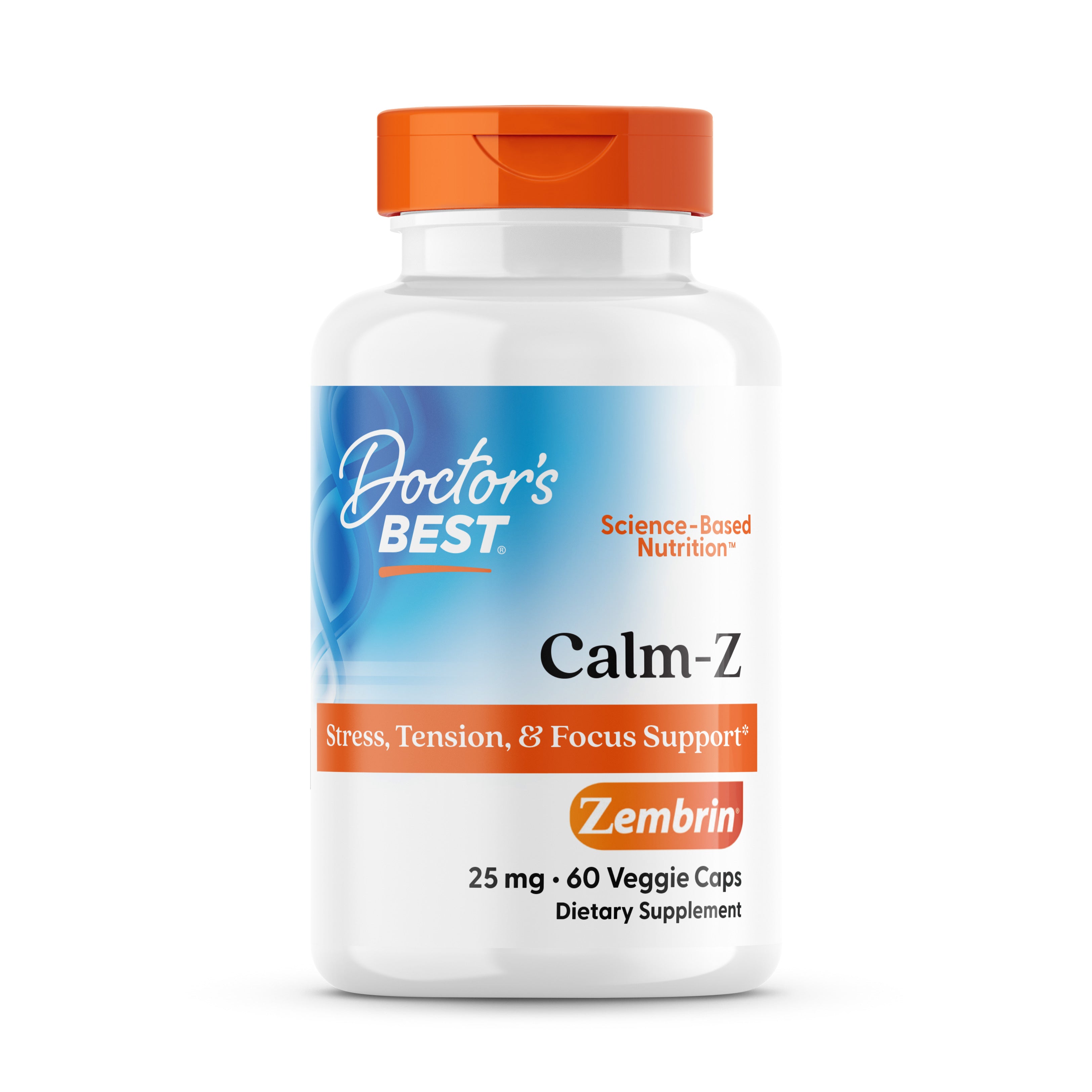
Calm-Z (Zembrin)
Doctor's Best
The one kanna extract with real published human trials behind it, at the studied 25mg dose.
The honest answer up front: kanna is not a treatment for ADHD, and it is not a substitute for prescribed medication or professional care. There are zero clinical trials of kanna in people with ADHD. Anyone who tells you a botanical supplement fixes ADHD is selling something. If you have ADHD or think you might, the highest-value step is a real evaluation with a clinician, not a supplement.
What we can say is narrower and more accurate. Kanna (Sceletium tortuosum) has one small human study that measured a cognition outcome, and a plausible mechanism (PDE4 inhibition) that touches attention. Some people describe a calmer, less-cluttered headspace on it. That is worth reporting plainly, and worth keeping in its lane: a subtle, everyday focus feel in non-ADHD adults, not an attention-disorder therapy. This page draws that line carefully and flags the medication cautions that matter if you are one of the many people with ADHD already taking a prescription.
The short version
- Kanna is not an ADHD treatment. There are zero ADHD-specific trials of kanna, and it is not a substitute for prescribed medication or professional care. Nothing here is medical advice.
- The only cognition signal is small and not in ADHD patients. In Chiu et al. 2014 (n=21, 3 weeks), 25mg/day of standardized kanna improved cognitive flexibility and executive function versus placebo, in adults aged 45 to 65, not people with ADHD.
- There is a plausible mechanism, not proof. Kanna is a PDE4 inhibitor (Harvey et al. 2011), and PDE4 activity is a reasonable cognition-and-attention pathway, but a mechanism is a reason to investigate, not evidence of benefit.
- The medication cautions are the real story for ADHD. Many people with ADHD take an SSRI (do not combine with kanna without a doctor) or a stimulant like Adderall or Vyvanse (stacking can feel edgy). Talk to your prescriber first.
- Any focus benefit is subtle. This is a calm, clear-headed feel at most, not a stimulant effect and not symptom control. If you want to try kanna for everyday focus, treat expectations accordingly.
Does kanna help with ADHD? The honest answer
No responsible answer starts anywhere but here: kanna has never been studied in people with ADHD. There is not a single controlled trial testing kanna against ADHD symptoms, in children or adults. So the accurate response to "does kanna help ADHD?" is not "a little" or "maybe", it's "we don't know, because the study has never been done, and kanna is not an approved or evidence-based treatment for ADHD."
What people are usually reaching for when they search this is real: the daily friction of ADHD-type focus struggles, a scattered head, trouble starting or switching tasks, mental clutter. Kanna is not a fix for that as a clinical condition. If those struggles are significant or persistent, the single most useful thing on this page is this sentence: get a proper evaluation from a clinician, because ADHD is highly treatable and a supplement is not the treatment.
What the research actually shows (Chiu 2014, and who it studied)
There is exactly one human study people point to for kanna and cognition, and it's important to describe it precisely. In a 3-week randomized, placebo-controlled trial, 25mg/day of standardized kanna improved cognitive flexibility and executive function versus placebo (Chiu et al. 2014, n=21). Cognitive flexibility is the mental agility to switch between tasks or rules; executive function is the broader set of planning-and-control abilities. Those are attention-adjacent, which is why the study gets cited here.
But read the fine print, because it changes everything. The participants were healthy adults aged 45 to 65, not people with ADHD. The sample was 21 people. It ran three weeks. It used one standardized extract at one dose. A single small, short study in middle-aged non-ADHD adults finding one cognitive measure moved is a genuine but slim signal, and it says nothing directly about ADHD. Extrapolating from "executive function nudged in 21 older adults" to "treats ADHD" is exactly the leap we won't make.
The mechanism that makes it plausible: PDE4 (Harvey 2011)
Why does kanna get discussed for focus at all? The mechanism. Kanna works through a rare dual action described by Harvey et al. 2011 in the Journal of Ethnopharmacology: it's both a serotonin-reuptake inhibitor and a PDE4 inhibitor at once. Mesembrine is its most potent serotonin-transporter alkaloid; mesembrenone is the stronger PDE4 inhibitor.
PDE4 inhibition is the piece relevant to attention. PDE4 is an enzyme involved in signaling pathways tied to cognition and arousal, and PDE4 inhibitors have long been of interest for cognition and attention. So kanna having PDE4 activity is a plausible reason it might touch focus. Plausible is the operative word. Mechanistic logic has misled supplement marketing for decades; a pathway that could matter is a reason to run a study, not a substitute for one. In kanna's case, that ADHD study still doesn't exist.
The medication interactions that matter most for ADHD
This is the most important section for anyone with ADHD, because so many people with ADHD are already on a prescription, and that's precisely where kanna gets risky.
If you take an SSRI or other serotonergic medication: this is the hard no. Kanna raises serotonin much like an SSRI does, so it must not be combined with SSRIs, SNRIs, MAOIs, or other serotonergic medications without medical advice. Plenty of people with ADHD are also prescribed an antidepressant, so this caution applies directly. Our full kanna and antidepressants guide covers why. To be accurate rather than alarmist: documented serotonin-syndrome cases from kanna are essentially absent in the literature, but the caution is a sensible precaution based on how kanna works, and stacking two serotonergic agents is exactly the scenario to be conservative about.
If you take a stimulant (Adderall, Vyvanse, Ritalin, Concerta): there's no well-characterized interaction study here either, but experientially, layering kanna's lift on top of a stimulant can feel edgy, wired, or overstimulated for some people rather than calmer. If you're on a stimulant and considering kanna, that's a conversation for your prescriber, not a self-experiment, and the same is true if you use caffeine heavily; see our kanna and caffeine guide.
These statements have not been evaluated by the Food and Drug Administration. Kanna is not intended to diagnose, treat, cure, or prevent any disease, including ADHD.
If you want to try kanna for everyday focus
Suppose you don't have ADHD, or you've talked it through with a clinician, and you simply want to see whether kanna's calm-focus feel does anything for your ordinary, everyday concentration. That's a reasonable thing to try, on the right expectations: a subtle, settled, clearer headspace, not a stimulant jolt and not symptom control.
The sensible starting point is a standardized extract with a disclosed alkaloid content, the same kind used in the research (25mg/day), rather than an unlabeled concentrate, so you can take a known dose and judge it honestly. The easiest match for that spec is a 25mg Zembrin capsule like Doctor's Best Calm-Z, the same standardized extract and dose the trials used, and if you prefer a focus-slanted formula from a major nootropics brand, Natural Stacks NeuroFuel now builds around the same Zembrin extract. We cover the specific products that fit that calm, clear-headed profile in our best kanna for focus roundup. Start with a single low, standardized dose, give it 30 to 45 minutes before judging, and read how kanna works and our honest kanna benefits assessment first so you know what's realistic.
We don't run clinical trials, and any picks reflect disclosed alkaloid content, standardization, and COA transparency, not our own lab testing and not any claim of a cognitive or medical benefit.
Questions, answered
Can kanna treat ADHD?
No. Kanna is not a treatment for ADHD and is not a substitute for prescribed medication or professional care. There are zero clinical trials of kanna in people with ADHD. If you have ADHD or think you might, see a clinician for a proper evaluation, ADHD is highly treatable, and a supplement is not the treatment.
Is there any evidence kanna helps focus?
Only indirectly and in non-ADHD adults. In one small 3-week trial (Chiu et al. 2014, n=21), 25mg/day of standardized kanna improved cognitive flexibility and executive function versus placebo, in healthy adults aged 45 to 65, not people with ADHD. Kanna is also a PDE4 inhibitor (Harvey et al. 2011), a plausible attention-relevant mechanism. That's a slim, suggestive signal for everyday mental agility, not proof of an ADHD benefit.
Can I take kanna with Adderall or Vyvanse?
Not without asking your prescriber first. There's no well-characterized interaction study, but layering kanna's lift on top of a stimulant can feel edgy or overstimulated for some people rather than calmer. If you're on a stimulant for ADHD, treat kanna as a conversation for the clinician who manages your medication, not a self-experiment.
Can I take kanna with my antidepressant?
Not without medical advice. Many people with ADHD are also prescribed an SSRI or SNRI, and kanna raises serotonin much like an SSRI does, so combining it with SSRIs, SNRIs, MAOIs, or other serotonergic medications is the main interaction to be cautious about. Documented serotonin-syndrome cases from kanna are essentially absent, but because the mechanism overlaps, ask your prescriber before adding kanna. Avoid kanna in pregnancy as well.
What dose of kanna would I use for everyday focus?
The studied dose is 25mg per day of a standardized extract, that's what the cognitive-flexibility trial used. A standardized 25mg product is therefore the most evidence-aligned starting point for everyday focus (not ADHD symptom control). Give any dose a full 30 to 45 minutes before adding more, and don't exceed what the label suggests. See our best kanna for focus roundup for specific standardized options.
References
The human research on kanna is genuine but small, a handful of trials, mostly on the standardized Zembrin extract. These are the primary sources we cite, linked so you can read them yourself.
- 1.Harvey AL, Young LC, Viljoen AM, Gericke NP (2011). Pharmacological actions of the South African medicinal and functional food plant Sceletium tortuosum and its principal alkaloids. Journal of Ethnopharmacology. Identified kanna's dual mechanism, serotonin-reuptake inhibition (5-HT transporter) and PDE4 inhibition, in vitro. PubMed · DOI
- 2.Chiu S, Gericke N, Farina-Woodbury M, et al. (2014). Proof-of-Concept Randomized Controlled Study of Cognition Effects of the Proprietary Extract Sceletium tortuosum (Zembrin) Targeting Phosphodiesterase-4 in Cognitively Healthy Subjects. Evidence-Based Complementary and Alternative Medicine. A 3-week randomized study (n=21) reported improved cognitive set flexibility and executive function vs placebo. PubMed · DOI
Keep reading
The Best Kanna for Focus
Calm, clear-headed picks for everyday focus, ranked on standardized potency and cost per dose.
Kanna and Antidepressants
The serotonergic interaction that matters most if you take an SSRI or SNRI.
Kanna and Caffeine
How kanna pairs, or doesn't, with your morning stimulant.
How Kanna Works
The serotonin-reuptake and PDE4 dual mechanism, explained plainly.
Kanna Benefits, Honestly Assessed
What the small evidence base supports, and where the marketing oversells.