Our Pick: Doctor's Best
Check price →Is Kanna Safe? The Honest, Evidence-First Answer (2026)
For healthy adults at sensible doses, kanna has a reassuring safety record in the (small) human research. The real risks aren't in the plant itself, they're in the combinations and the unknowns. Here's the whole picture in one place.
By Justin Park · ~9 min read · Updated 2026-07-02
★ Top-Rated Kanna Right Now
Best Overall
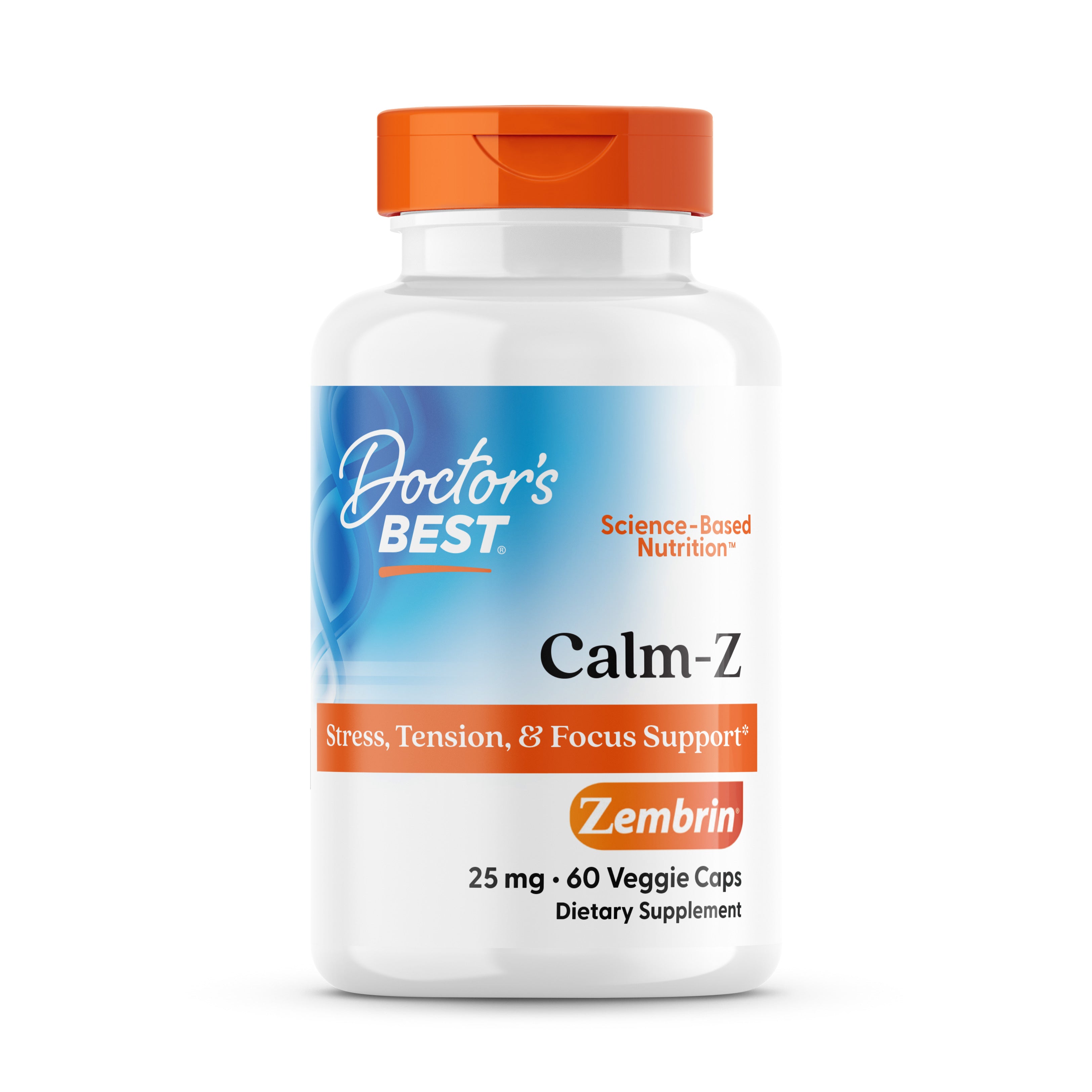
Calm-Z (Zembrin)
Doctor's Best
The one kanna extract with real published human trials behind it, at the studied 25mg dose.
Here's the straight answer up top: for healthy adults taking sensible doses, kanna appears well-tolerated in the human research we have. In a 3-month placebo-controlled trial of standardized kanna in 37 adults, both 8mg and 25mg daily doses were well-tolerated, with no significant changes in vitals, ECG, or blood chemistry versus placebo (Nell et al., 2013). That's a genuinely reassuring result, and we're not going to talk you out of it.
But we're going to be just as honest about the caveats, because that's the part most pages skip. The clinical base is small and short, roughly n=16 to n=37, mostly on one patented extract, and partly industry-linked. And there are real, specific cautions that matter more than the plant's own side-effect profile: the serotonergic drug interaction (the single most important rule), pregnancy and breastfeeding (no data, so avoid), taking too much, and mixing with alcohol. Kanna alone at sensible doses has a reassuring record. The risk lives in the combinations and the unknowns.
This page is the map. Below is the consolidated safety picture with the verdict up front, then a route to each deep guide so you can go straight to whichever question is yours. One bit of housekeeping first: this is general information from a kanna publication, not medical advice, and we're writers, not clinicians. Kanna is a supplement, not an approved treatment for anything, and nothing here is a substitute for a conversation with a doctor or pharmacist about your situation.
The short version
- For healthy adults at normal doses, kanna appears well-tolerated in the limited human research. A 3-month trial in 37 adults found 8mg and 25mg daily well-tolerated, with no significant changes in vitals or blood chemistry (Nell et al., 2013).
- The evidence is small and short (roughly n=16 to n=37, mostly on one patented extract), so "well-tolerated in these studies" is not the same as "proven safe in every form at every dose."
- The #1 rule: kanna raises serotonin like an SSRI (Harvey et al., 2011), so don't combine it with SSRIs, SNRIs, MAOIs, or other serotonergic medications without medical advice.
- Avoid kanna in pregnancy and while breastfeeding, there's simply no safety data to support it.
- The plant's own side effects are mild and dose-related (headache, nausea, appetite loss, occasional dizziness). The bigger risks are combinations: serotonergic meds, alcohol, and taking too much.
- Bottom line: kanna alone at sensible doses has a reassuring record; the risk lives in the combinations and the unknowns. This is general information, not medical advice.
The short answer: is kanna safe?
For a healthy adult taking a sensible dose of kanna on its own, the honest answer is: on the current evidence, it looks well-tolerated, with one interaction caution that matters more than everything else combined. That's the whole verdict in a sentence, and the rest of this page is the responsible version of it, both the reassuring part and the fine print.
What we can't honestly say is that kanna is proven safe for everyone, at every dose, in every form. The research base is too small and too short to make that claim, and anyone who does is overselling it. "Well-tolerated in the studies we have" is a real, useful statement. "Totally safe" is not one the evidence supports. Both halves of that are true, and you deserve both.
What the safety research actually shows
The most useful safety study to date is a 3-month randomized, placebo-controlled trial of the standardized Zembrin extract. It's the anchor for any honest discussion of kanna's tolerability.
Specifically, the Nell 2013 RCT (n=37) reported no significant changes in vital signs, ECG, blood chemistry, or body weight versus placebo over three months. That's reassuring within its limits, and those limits matter: the human clinical base is small (roughly n=16 to n=37), short, mostly conducted on one patented extract, and partly industry-linked. So it tells us kanna was well-tolerated in those specific conditions, not that every form at every dose is risk-free. Importantly, trials like this also exclude people on antidepressants, so they can't speak to the interaction that this hub keeps coming back to.
Supplement note: these statements have not been evaluated by the FDA. Kanna is not intended to diagnose, treat, cure, or prevent any disease.
The one rule that matters most: serotonergic medications
If you remember one thing from this page, make it this. Kanna's alkaloids act as a serotonin-reuptake inhibitor, the same broad mechanism as an SSRI antidepressant, alongside PDE4 inhibition (Harvey et al., 2011). That's what makes it interesting, and it's also what makes its main caution real: stacking kanna on top of another drug that also raises serotonin is the scenario to avoid.
We won't spin this either way: there isn't a body of reported kanna serotonin-syndrome cases, so this is a mechanism-based caution, not a record of harm. But "no published cases" is not "proven safe," especially for a botanical most clinicians and interaction-checkers don't track. If you take any antidepressant or other serotonergic medication, that's a conversation with your prescriber before you try kanna, full stop. Our deep guide, kanna and antidepressants, walks through exactly which meds to flag and what to do.
Pregnancy and breastfeeding: avoid
This one is short because the evidence is short. There is no safety data to support kanna use during pregnancy or while breastfeeding, and the plant is serotonergically active. When there's no data and a serotonin-active compound is involved, the sensible default isn't "probably fine," it's avoid.
We're not telling you kanna is proven harmful in pregnancy, because no one has that evidence either. We're telling you the absence of data is itself the reason to skip it, this is a case where "we don't know" points clearly toward caution. If you're pregnant, trying to conceive, or breastfeeding, the honest move is to leave kanna alone and talk to your clinician. More in kanna and pregnancy.
Taking too much, and mixing with alcohol
Most of kanna's unpleasantness is dose-related. The commonly-reported side effects, headache, nausea, appetite loss, and occasional dizziness or drowsiness, are generally mild and cluster at higher doses. Starting low (around a 25mg standardized dose) is the simplest way to avoid them; our kanna dosage guide lays out sensible starting points by format, and too much kanna covers what an overshoot actually feels like and when it's more than that.
Mixing kanna with alcohol is a common real-world question and a sensible thing to be cautious about, both can affect mood and alertness, and stacking depressant or serotonergic effects is the kind of thing to approach carefully rather than casually. We cover it honestly in kanna and alcohol. And on the tolerance side, kanna's effects can dull with daily use, which is more a reason to keep it occasional than a safety emergency, see kanna side effects for the full profile and the tolerance picture.
Who should be cautious?
A few groups should steer clear or get medical sign-off first, this is the consolidated version of the caution list, with the deep guides linked for each:
Anyone on serotonergic medication. SSRIs, SNRIs, MAOIs, and other serotonin-affecting drugs are the clearest reason not to take kanna without a doctor's guidance. This is the top rule. See kanna and antidepressants.
People who are pregnant or breastfeeding. No safety data, so the sensible default is to avoid it. See kanna and pregnancy.
Anyone with a health condition or on other prescriptions. The clinical record is too thin to anticipate every interaction, so a conversation with a clinician is the right move before starting.
People new to kanna, or taking larger doses. Not a danger group so much as the group most likely to meet the mild side effects. Start low, and let the dosage guide set your first dose.
Kanna is also not an opioid (unlike kratom) and doesn't act on GABA the way kava does, so it doesn't carry kratom's opioid-dependence profile or the liver caution linked to heavy kava use, and there's no established hepatotoxicity signal for kanna in the available literature. That's not a clean bill of health, the evidence base is simply small, but it's an honest read of where things stand. None of this is medical advice.
How we chose
The human clinical base for kanna is small (studies of roughly n=16 to n=37), short, mostly conducted on the patented Zembrin standardized extract, and partly industry-linked. We treat it as encouraging but limited, and we don't oversell it.
We don't run our own safety testing. This page consolidates what the published research and common user reports describe, framed experientially and conservatively, and links to the deeper guides for each specific question. None of it is medical advice or a guarantee.
Questions, answered
Is kanna safe?
For healthy adults at sensible doses, kanna appears well-tolerated in the human research we have. A 3-month placebo-controlled trial in 37 adults found 8mg and 25mg daily doses were well-tolerated, with no significant changes in vitals or blood chemistry (Nell et al., 2013). The evidence base is small and short, though, and the most important caution is that kanna raises serotonin, so it shouldn't be combined with SSRIs, SNRIs, MAOIs, or other serotonergic medications without medical advice. Avoid it in pregnancy. This isn't medical advice, talk to a clinician about your situation.
What's the single most important kanna safety rule?
Don't combine kanna with antidepressants or other serotonergic drugs without your prescriber's okay. Kanna inhibits serotonin reuptake the same broad way SSRIs do (Harvey et al., 2011), so stacking them can push serotonin too high. Documented serotonin-syndrome cases from kanna are essentially absent, so this is a mechanism-based precaution rather than a record of harm, but it's the one every careful source agrees on.
Is kanna safe in pregnancy or while breastfeeding?
No, the sensible default is to avoid it. There's no safety data to support kanna use during pregnancy or breastfeeding, and it's a serotonin-active botanical. When there's no data and a serotonergic compound is involved, caution is the right call. Talk to your clinician.
What are the side effects of kanna?
The plant's own side effects are generally mild and more likely at higher doses: headache, nausea, appetite loss, and occasional dizziness or drowsiness. Starting with a low standardized dose (around 25mg) is the simplest way to avoid them. The bigger safety questions are about combinations, serotonergic medications, alcohol, and taking too much, rather than the side effects themselves.
Is kanna addictive or hard on the body?
Kanna isn't an opioid like kratom and doesn't act on GABA like kava, so it doesn't carry kratom's opioid-dependence profile or the liver caution linked to heavy kava use, and there's no established hepatotoxicity signal in the available literature. The evidence base is small, so the honest answer is that there's no established dependence signal, but keeping use occasional is sensible.
Can I drink alcohol with kanna?
It's a reasonable thing to be cautious about. Both can affect mood and alertness, and stacking sedating or serotonergic effects is the kind of thing to approach carefully rather than casually. See our kanna and alcohol guide for the honest breakdown, and if you're on any serotonergic medication, the antidepressant interaction takes priority.
References
The human research on kanna is genuine but small, a handful of trials, mostly on the standardized Zembrin extract. These are the primary sources we cite, linked so you can read them yourself.
- 1.Harvey AL, Young LC, Viljoen AM, Gericke NP (2011). Pharmacological actions of the South African medicinal and functional food plant Sceletium tortuosum and its principal alkaloids. Journal of Ethnopharmacology. Identified kanna's dual mechanism, serotonin-reuptake inhibition (5-HT transporter) and PDE4 inhibition, in vitro. PubMed · DOI
- 2.Nell H, Siebert M, Chellan P, Gericke N (2013). A randomized, double-blind, parallel-group, placebo-controlled trial of Extract Sceletium tortuosum (Zembrin) in healthy adults. Journal of Alternative and Complementary Medicine. A 3-month placebo-controlled trial (n=37) found 8 mg and 25 mg/day were well-tolerated, with no significant changes in vitals or blood chemistry. PubMed · DOI
Keep reading
Kanna Side Effects & Safety
The full side-effect profile at normal and higher doses, and how to reduce them.
Kanna and Antidepressants (SSRIs)
The #1 rule, explained: why the serotonin overlap matters and what to do.
Kanna and Pregnancy
Why the honest answer is avoid, and what the (lack of) data says.
Too Much Kanna
What an overshoot feels like, and when it's more than just an uncomfortable dose.
Kanna Dosage Guide
How much to take by format, and how to find your dose safely.