Our Pick: KA! Empathogenics
Check price →Kanna vs Rhodiola: Mood Lift vs Stress-Stamina Adaptogen (2026)
Two different classes of botanical. Rhodiola is an adaptogen for fatigue and stress stamina that can feel stimulating; kanna is a serotonergic mood-and-calm lifter. Here's how to tell which one you actually want.
By Justin Park · ~8 min · Updated 2026-07-01
★ Our Top Pick
If You Choose Kanna: Easiest Start
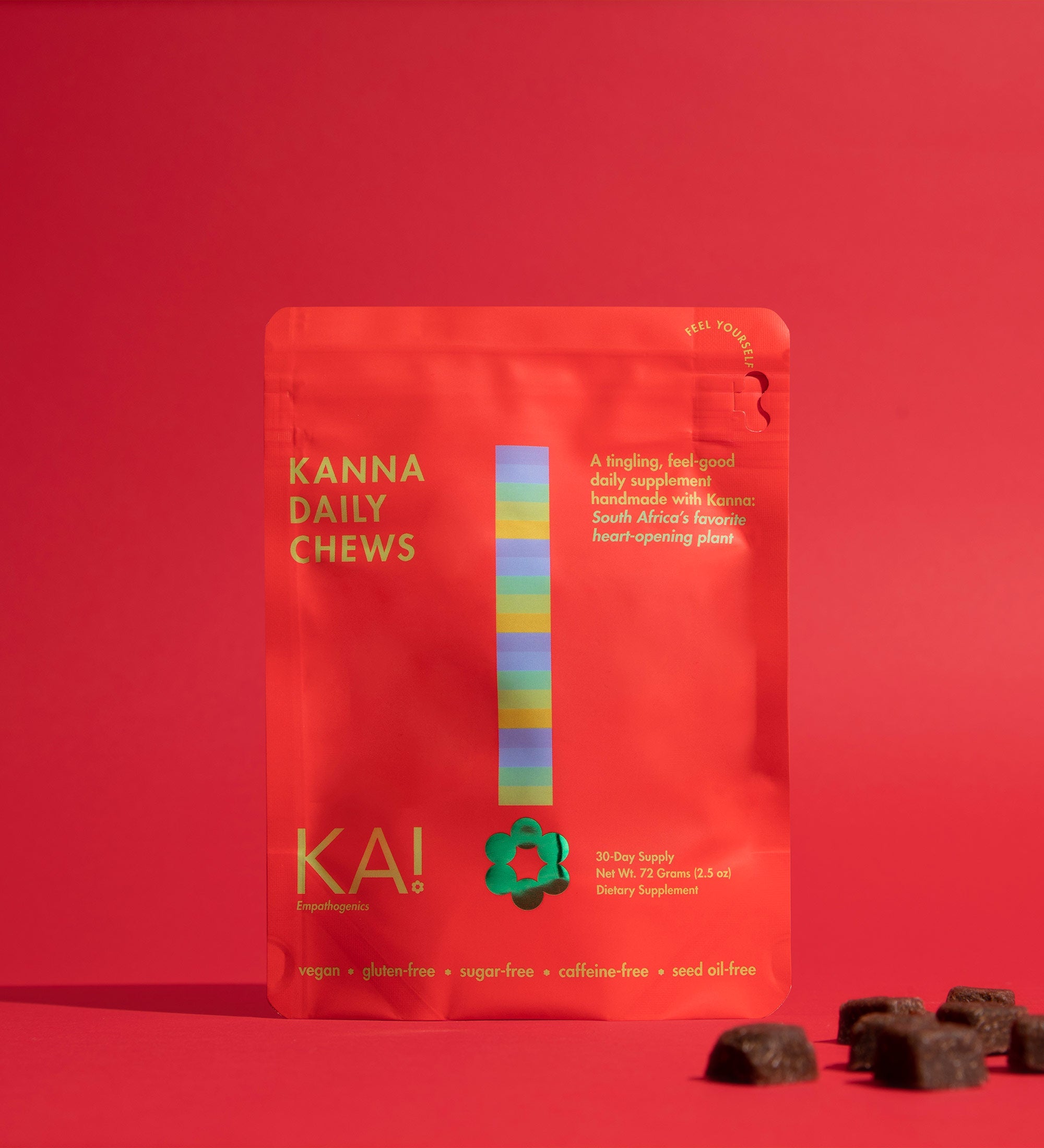
KA! Empathogenics Kanna Chews (Wildberry)
KA! Empathogenics
30mg of standardized kanna per chew, a fast, precise, no-measuring way to start.
Not sure yet? Compare all 2 picks below ↓
Kanna and rhodiola get lumped together as "natural stress" botanicals, but they come from completely different classes and do different jobs. Rhodiola rosea is an adaptogen: people take it for daytime fatigue, burnout stamina, and mental endurance, and it can feel mildly stimulating. Kanna is a serotonergic mood-lifter: it leans toward mood, social ease, and a clear-headed calm-uplift rather than raw energy.
Put bluntly: if your problem is running out of gas, fatigue, low stamina, that burnt-out afternoon wall, rhodiola is the better-matched tool. If your problem is mood, social tension, or an anxious edge you want to take off, kanna is the closer fit. They aren't really rivals; they solve different complaints, and the choice comes down to which one you actually have.
The short version
- Different classes: rhodiola is a classic adaptogen (active compounds salidroside and rosavins); kanna is a serotonergic botanical (a serotonin-reuptake + PDE4 inhibitor).
- Different feel: rhodiola tends toward energy and anti-fatigue and can feel mildly stimulating; kanna tends toward mood, social ease, and clear-headed calm-uplift.
- Different mechanisms: rhodiola acts on the stress/HPA axis and possibly monoamines to support stress resilience; kanna raises serotonin like an SSRI (Harvey et al., 2011).
- Best for: rhodiola for daytime fatigue, burnout, and mental stamina; kanna for mood, social settings, and anxious tension.
- Evidence, framed honestly: rhodiola has a larger literature but the results are genuinely mixed and study quality varies; kanna's clinical base is small, short, and mostly on the standardized Zembrin extract.
- Kanna's key caution (rhodiola does not carry it): kanna raises serotonin like an SSRI, so don't combine it with SSRIs, SNRIs, MAOIs, or other serotonergic meds without medical advice, and avoid in pregnancy.
- Some people stack them (rhodiola for daytime energy, kanna for mood/social), but mind kanna's serotonergic caution and talk to a clinician first.
| Kanna | Rhodiola | |
|---|---|---|
| Plant / class | Sceletium tortuosum, serotonergic botanical | Rhodiola rosea, classic adaptogen |
| Active compounds | Mesembrine, mesembrenone (alkaloids) | Salidroside, rosavins |
| Mechanism | Serotonin-reuptake inhibitor + PDE4 inhibitor | Acts on the stress/HPA axis, possibly monoamines |
| Feel | Mood lift, social ease, clear-headed calm-uplift | Anti-fatigue, mental stamina, can feel mildly stimulating |
| Best for | Mood, social settings, anxious tension | Daytime fatigue, burnout, mental stamina |
| Evidence base | Small, short studies, mostly on Zembrin | Larger literature, but genuinely mixed / uneven quality |
| Key caution | Serotonergic, avoid with SSRIs/SNRIs/MAOIs without medical advice | Generally well-tolerated; can feel over-stimulating late in the day |
Kanna vs rhodiola at a glance, same "natural stress" shelf, two different classes.
01 · If You Choose Kanna: Easiest Start
Easiest StartKA! Empathogenics Kanna Chews (Wildberry)
30mg of standardized kanna per chew, a fast, precise, no-measuring way to start.
Lab report: Standardized to 30mg kanna per chew; gum-based delivery for faster onset.
For readers who land on kanna and want mood-and-social ease without measuring powder or judging a tincture, KA! Empathogenics chews are the easiest on-ramp. Each chew delivers a standardized 30mg of kanna, so your dose is fixed and repeatable, the single biggest thing beginners get wrong is inconsistent dosing, and a standardized chew removes that variable entirely.
The gum-based delivery means some of the alkaloids absorb through the mouth, so onset tends to run faster than a swallowed capsule, a good fit for the acute, in-the-moment mood lift kanna is known for. On cost per standardized dose, the value depends on pack size: the larger tins bring the per-chew price down meaningfully, so buy the bigger count if you expect to reach for it regularly.
- Form
- Chew (gum-based)
- Standardization
- 30mg standardized kanna per chew
- Onset
- Faster (partial oral absorption)
- Price (approx.)
- $35 to $89
What we like
- Fixed, standardized 30mg per chew, no measuring
- Gum-based delivery comes on faster than capsules
- Portable and beginner-friendly
- Larger tins lower the cost per standardized dose
Worth noting
- Direct-only; premium per-dose price at small pack sizes
- Fixed 30mg dose offers less fine-tuning
Who should buy it: The reader who decided on kanna and wants the simplest possible start, a fixed, standardized dose in a fast, portable chew, with no powder to weigh or tincture to titrate.
What we don't like: Direct-only and priced at a premium per dose at small pack sizes; the fixed 30mg per chew gives less fine-tuning than a tincture or powder.
Bottom line: If kanna is your pick and you want the lowest-friction entry, KA!'s wildberry chews are it: a fixed, standardized 30mg per chew you don't have to measure, in a gum-based format that comes on fast.
02 · If You Choose Kanna: Best Value
Best Value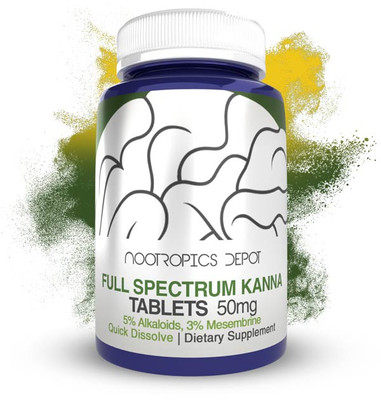
Nootropics Depot Full-Spectrum Kanna Tablets
Full-spectrum extract standardized to 3% mesembrine / 5% total alkaloids, lab-tested, at a strong price.
Lab report: Third-party tested with published COAs; standardized to 3% mesembrine and 5% total alkaloids.
If kanna is your pick but you'd rather not pay a premium per dose, Nootropics Depot's Full-Spectrum Kanna Tablets are our value choice. Rather than isolating a single fraction, they use a full-spectrum extract standardized to 3% mesembrine and 5% total alkaloids, a defined, disclosed potency alongside the plant's broader alkaloid profile.
Nootropics Depot's reputation is built on transparency: published certificates of analysis and third-party testing are standard, which is exactly what you want before buying any kanna. The tablet format is convenient and consistent, and on cost per standardized dose it tends to undercut branded-extract competitors without giving up disclosure.
- Form
- Tablet
- Extract
- Full-spectrum Sceletium tortuosum
- Standardization
- 3% mesembrine / 5% total alkaloids
- Price (approx.)
- $20 to $40
What we like
- Standardized to 3% mesembrine / 5% total alkaloids
- Full-spectrum profile, not a single isolate
- Vendor known for published COAs and third-party testing
- Strong cost per standardized dose vs branded-extract options
Worth noting
- Full-spectrum can feel stronger, start low
- Batch availability can vary
Who should buy it: The reader who chose kanna and wants standardized, lab-verified potency and a full-spectrum profile at the best cost per standardized dose, and who values published COAs over a brand name.
What we don't like: Full-spectrum potency can feel a touch stronger than expected for sensitive users, so start low; batch availability can vary.
Bottom line: A full-spectrum kanna tablet standardized to 3% mesembrine and 5% total alkaloids, from a vendor known for transparent lab testing, strong potency and value on a cost-per-standardized-dose basis.
The short answer: kanna or rhodiola?
Choose rhodiola if your main complaint is fatigue, low stamina, or burnout, that afternoon wall where your body has energy but your brain has clocked out. Rhodiola is an adaptogen taken for anti-fatigue and mental endurance, and many people find it mildly stimulating, so it earns its keep as a daytime tool. Choose kanna if your main complaint is mood, social tension, or an anxious edge you want smoothed. Kanna's serotonergic action leans toward a mood lift and clear-headed calm rather than raw energy.
Neither is a treatment for any condition, and they don't really compete, they cover different jobs. If you can't decide, ask what's actually bothering you today: are you tired, or are you tense / low? That answer usually picks for you.
How each one works (adaptogen vs serotonergic)
Kanna's signature is a dual mechanism. According to Harvey et al. (2011, Journal of Ethnopharmacology), Sceletium tortuosum acts as both a serotonin-reuptake inhibitor (SRI), broadly the same lever an SSRI pulls, and a PDE4 inhibitor at the same time. The alkaloid mesembrine drives the serotonergic uplift; mesembrenone is the stronger PDE4 inhibitor. Because it acts on serotonin signaling, kanna's felt effect is mood-forward: a lift, an easing of social friction, a clear-headed calm.
Rhodiola works on a different principle entirely. Rhodiola rosea is a classic adaptogen standardized to salidroside and rosavins, and its commonly-described action is helping the body handle stress load, working on the stress / HPA axis and possibly on monoamine signaling, to support stress resilience and reduce the feeling of fatigue. That anti-fatigue angle is why rhodiola can read as mildly stimulating and suits a daytime, run-out-of-gas problem rather than a mood one. Same shelf, different pharmacology: one is a serotonergic mood tool, the other a stress-and-stamina adaptogen.
Feel & best-for: energy vs mood
This is the difference that matters most in practice. Rhodiola feels like stamina. People reach for it against daytime fatigue, burnout, and the kind of mental tiredness that makes a long task feel longer. Because it can be mildly stimulating, most people take it earlier in the day, taken too late, it can make winding down harder. If your problem is "I'm running on empty," rhodiola is aimed at that.
Kanna feels like mood. Users commonly describe a mood lift, easier social settings, and a take-the-edge-off calm rather than a jolt of energy. It's dose-dependent in the experiential reports: lower doses tend to read as more uplifting and lighter, higher doses as more calming, though that dose-response comes from tradition and user reports, not a formal dose-ranging trial, so treat it as a rule of thumb, not a fact.
What the research shows on each (honestly)
We'll be straight about the evidence, because neither is airtight. Rhodiola has the larger literature for fatigue and stress, but the results are genuinely mixed and the study quality is uneven, some trials are small, some are industry-linked, and reviews often land on "promising but inconsistent." It's fair to say rhodiola has been studied more than kanna, and equally fair to say that more study hasn't produced a clean verdict.
Kanna's clinical base is thinner and mostly on the standardized Zembrin extract. The dual serotonergic + PDE4 mechanism is established in the pharmacology (Harvey et al., 2011); on the human side, a 3-week randomized trial found 25mg/day of standardized kanna improved cognitive flexibility versus placebo in adults aged 45 to 65 (Chiu et al., 2014, n=21). The human studies are small, short, and partly industry-linked, so we treat kanna as promising rather than settled.
The honest takeaway: if you weight sheer volume of published human evidence, rhodiola has more of it, but it's mixed. If you want a mood-forward, serotonergic experience, that's kanna's lane, with a smaller, Zembrin-heavy trial base. Neither body of evidence supports treating, curing, or preventing any condition.
Safety & who should avoid which
Both are generally well-tolerated, but they carry different cautions, and one of them is specific to kanna.
Kanna's caution is serotonin. Because kanna raises serotonin like an SSRI does, it should not be combined with SSRIs, SNRIs, MAOIs, or other serotonergic medications without medical advice, and it's not recommended in pregnancy. This is a precaution based on how kanna works, documented serotonin-syndrome cases from kanna are essentially absent, but the mechanism is real, so the caution stands. Side effects of kanna are generally mild: occasional headache, nausea (more likely at higher doses), or appetite loss.
Rhodiola does not carry that serotonergic caution, and it's usually considered well-tolerated. Its most common practical downside is the flip side of its benefit: because it can feel mildly stimulating, some people find it over-stimulating, jittery, or sleep-disrupting if taken late in the day, so it's typically dosed earlier. As with any supplement, anyone pregnant, on medication, or with a health condition should check with a clinician first.
These statements have not been evaluated by the FDA. Neither kanna nor rhodiola is intended to diagnose, treat, cure, or prevent any disease. This is not medical advice, talk to a clinician about your situation. We are independent and not paid to favor either option.
Can you take kanna and rhodiola together?
Some people do stack them, and the logic is clean: rhodiola in the morning for daytime energy and stamina, kanna reached for when you want a mood lift or to take the edge off socially. Because they act on different systems, one an adaptogen on the stress axis, one serotonergic, the pairing isn't inherently contradictory.
But stacking doesn't erase kanna's caution, it still applies. You keep kanna's serotonergic caution (no combining with SSRIs/SNRIs/MAOIs or other serotonergic meds without medical advice, and not in pregnancy), and you should still watch rhodiola's potential over-stimulation, especially later in the day. If you're considering running both, start low, add one at a time so you can tell what's doing what, and clear the combination with a clinician first, especially if you take any prescription medication.
Bottom line: how to choose
Decide by complaint. Running out of gas, fatigue, burnout, low mental stamina? That's rhodiola's lane, an adaptogen you take (usually earlier in the day) for energy and stress endurance. Wrestling with mood, social tension, or an anxious edge? That's kanna, a serotonergic lift and clear-headed calm. They're tools for different problems, and some people keep both.
Because this is a kanna site, the picks below are the kanna options for readers who landed on kanna, we don't sell rhodiola. If kanna is your pick, the two products below are clean, well-disclosed places to start, chosen for standardized potency and honest cost per standardized dose.
How we chose
We compare on plant class, active compounds, mechanism, feel, best use-case, evidence base, and key caution, drawing on the published kanna literature (mostly the standardized Zembrin extract) and the broader, mixed rhodiola literature for fatigue and stress. We don't run our own clinical trials, and we frame effects experientially, never as medical outcomes.
Where products appear we frame value as cost per standardized dose, the honest way to compare a branded standardized extract against a lab-tested full-spectrum one. Scope note: kannareviews.com is a kanna site. We feature kanna products for readers who decide kanna is their pick. Rhodiola is covered here editorially only; we don't sell it and there are no rhodiola buy buttons anywhere on this page.
Questions, answered
Is kanna or rhodiola better for energy and fatigue?
Rhodiola, by design. Rhodiola rosea is an adaptogen taken specifically for daytime fatigue, burnout, and mental stamina, and many people find it mildly stimulating. Kanna is more mood-forward, a serotonergic lift and clear-headed calm rather than a raw energy boost. If your complaint is running out of gas, rhodiola is the closer match; if it's mood or anxious tension, that's kanna. Neither treats any condition.
Is kanna or rhodiola better for mood and anxiety?
Kanna leans more toward mood and social ease. It acts as a serotonin-reuptake and PDE4 inhibitor (Harvey et al., 2011), so its felt effect is mood-forward, a lift and a take-the-edge-off calm. Rhodiola is aimed more at fatigue and stress stamina than at mood specifically. That said, kanna carries a serotonergic caution rhodiola doesn't: if you take any serotonergic medication, kanna specifically requires medical advice first.
Can I take kanna and rhodiola together?
Some people stack them, rhodiola in the morning for energy and stamina, kanna for a mood lift or to take the edge off socially, because they act on different systems. But stacking keeps kanna's serotonergic caution (no SSRIs/SNRIs/MAOIs without medical advice, not in pregnancy) and rhodiola's tendency to over-stimulate if taken late. Start low, add one at a time, and clear the combination with a clinician first.
Which has better evidence, kanna or rhodiola?
Rhodiola has the larger literature for fatigue and stress, but the results are genuinely mixed and study quality is uneven. Kanna's clinical base is smaller, shorter, and mostly on the standardized Zembrin extract, for example, a 3-week trial found 25mg/day improved cognitive flexibility versus placebo (Chiu et al., 2014, n=21). More study of rhodiola hasn't produced a clean verdict, and kanna's evidence is promising rather than settled. Neither supports treating or curing any condition.
Can I take either with antidepressants?
Not without medical advice. Kanna raises serotonin like an SSRI, so combining it with SSRIs, SNRIs, MAOIs, or other serotonergic medications is specifically cautioned against without a doctor's sign-off. Rhodiola doesn't carry that same serotonergic caution but can still interact with medications and may be over-stimulating. If you take any prescription, antidepressants included, talk to your clinician before starting either.
References
The human research on kanna is genuine but small, a handful of trials, mostly on the standardized Zembrin extract. These are the primary sources we cite, linked so you can read them yourself.
- 1.Harvey AL, Young LC, Viljoen AM, Gericke NP (2011). Pharmacological actions of the South African medicinal and functional food plant Sceletium tortuosum and its principal alkaloids. Journal of Ethnopharmacology. Identified kanna's dual mechanism, serotonin-reuptake inhibition (5-HT transporter) and PDE4 inhibition, in vitro. PubMed · DOI
- 2.Chiu S, Gericke N, Farina-Woodbury M, et al. (2014). Proof-of-Concept Randomized Controlled Study of Cognition Effects of the Proprietary Extract Sceletium tortuosum (Zembrin) Targeting Phosphodiesterase-4 in Cognitively Healthy Subjects. Evidence-Based Complementary and Alternative Medicine. A 3-week randomized study (n=21) reported improved cognitive set flexibility and executive function vs placebo. PubMed · DOI
Keep reading
Kanna vs Ashwagandha: Fast Mood Lift vs Slow Stress Build
Another adaptogen comparison, acute serotonergic lift vs slow, daily stress adaptation.
The Best Kanna for Energy
Our top kanna picks for a lighter, more uplifting daytime feel, ranked.
How Kanna Works
The dual serotonin-reuptake + PDE4 mechanism, in plain language.
The Best Kanna for Focus
Kanna picks for clear-headed, focused calm without the jitters.
What Is Kanna?
The plant, the tradition, and what to expect from Sceletium tortuosum.