Our Pick: Doctor's Best
Check price →Kanna for Depression: What It Can and Can't Do (2026)
Why people ask whether kanna helps with low mood, what the small human research actually covers, and the one safety rule that matters most if you take an antidepressant. This is experiential mood information, not treatment.
By Justin Park · 10 min · Updated 2026-07-01
★ Top-Rated Kanna Right Now
Best Overall
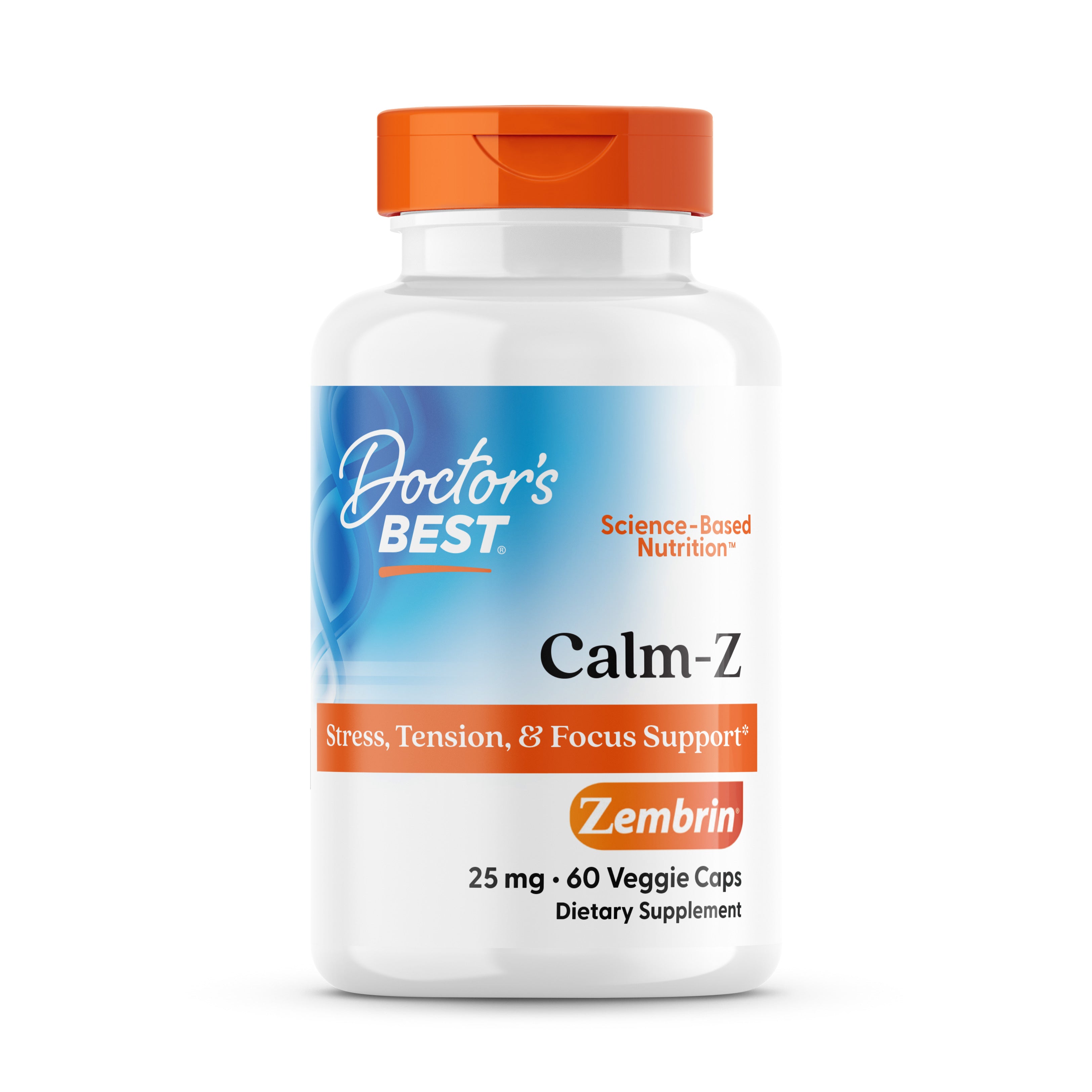
Calm-Z (Zembrin)
Doctor's Best
The one kanna extract with real published human trials behind it, at the studied 25mg dose.
The honest answer up front: kanna is not a treatment for depression, and nothing here is medical advice. There are no human trials showing kanna treats clinical depression, and it should never replace professional care. What this page can offer is narrower and more accurate, an experiential look at how some people describe kanna and everyday low mood, and a clear-eyed account of why the science is thinner than the search term suggests.
Here is why people ask in the first place. Kanna's main alkaloid, mesembrine, is a serotonin-reuptake inhibitor, the same broad mechanism class that prescription SSRI antidepressants use (Harvey 2011). That shared mechanism makes it easy to assume kanna is a natural antidepressant. But mechanism is not proof, the human studies that exist are small, short, and about mood, anxiety, and cognition in non-depressed adults, not depression trials. And that same serotonergic mechanism is exactly why, if you already take an antidepressant, you must not add kanna without your prescriber.
The short version
- Kanna is not a treatment for depression. There are no human trials showing it treats clinical depression, and it is not a substitute for professional care. If low mood is persistent or severe, that is a clinician conversation.
- Why people ask: mesembrine inhibits serotonin reuptake (Harvey 2011), the same mechanism class as SSRI antidepressants. That makes the question reasonable, it does not make kanna an antidepressant.
- The human evidence is small and not about depression. Studies like Chiu et al. 2014 (n=21, cognition and mood) and Terburg et al. 2013 (n=16, brain imaging) were run in non-depressed adults, not people with a depression diagnosis.
- The safety line that matters most: if you take an antidepressant, do not add kanna on your own. Kanna raises serotonin like an SSRI, so combining them needs your prescriber's okay.
- If low mood is persistent or severe, reach out. Talk to a doctor, and in the US you can call or text 988 any time. Kanna is not the answer to clinical depression.
Does kanna help with depression? The honest answer
The direct answer is the one this whole page keeps: kanna is not a treatment for depression, and there is no human trial showing it treats a clinical depressive disorder. What some people describe is narrower, an experiential lift in everyday low mood, a sense of feeling a bit lighter or more present after a dose. That experience is real for the people who report it, and we respect it. It is not the same thing as clinical efficacy for depression, and we will not blur that line.
Clinical depression is a medical condition, not just a low afternoon. It can be persistent, it can be serious, and it responds to established treatments and to professional care. A botanical supplement with a handful of small studies, none of them depression trials, is not a stand-in for that. If what you are dealing with is real depression, the most useful thing on this page is the sentence telling you to talk to a clinician.
Why people ask: the serotonin mechanism (Harvey 2011)
The reason "kanna for depression" is even a search is mechanism. Kanna's most studied alkaloid, mesembrine, is a potent serotonin-reuptake inhibitor, described alongside a second action (PDE4 inhibition) by Harvey et al. 2011 in the Journal of Ethnopharmacology. Serotonin reuptake inhibition is, broadly, the same lever that prescription SSRI antidepressants pull. So on paper, kanna looks like it is in the same pharmacological family.
Kanna and SSRI antidepressants share a broad mechanism, serotonin-reuptake inhibition, but a shared mechanism is a reason to ask questions, not a license to call kanna an antidepressant. Mechanistic logic has misled supplement marketing for decades. Plenty of compounds that touch serotonin do not turn out to be effective, well-tolerated, or safe treatments for depression. The mechanism explains the curiosity. It does not settle whether kanna does anything meaningful for low mood, and it definitely does not make it a therapy.
What the human research actually covers (and doesn't)
Here is the part the search term hides: the small human research on kanna is not about depression. It is about mood, anxiety, and cognition in adults who did not have a depression diagnosis. Two examples show the shape of the evidence.
In Chiu et al. 2014 (Evidence-Based Complementary and Alternative Medicine, n=21, 3 weeks), 25mg per day of a standardized extract improved cognitive flexibility and executive function versus placebo in adults aged 45 to 65, with some subjective sleep and mood improvement reported. In Terburg et al. 2013 (Neuropsychopharmacology, n=16), a single 25mg dose measurably reduced amygdala reactivity to fearful faces, a change in the brain's threat-detection circuit. Both are interesting. Neither was a depression trial, neither enrolled people with a depression diagnosis, and both are tiny.
None of this means kanna does nothing. It means the accurate label is "early, indirect, and not about depression," and that is a very different claim from the one the keyword implies.
The safety rule that matters most: kanna and antidepressants
This is the single most important paragraph on the page, and it matters most precisely because so many people searching "kanna for depression" are already taking an antidepressant. Because kanna raises serotonin the way an SSRI does, if you are on an antidepressant, do not add kanna without your prescriber. Stacking two serotonergic agents is the scenario worth being conservative about, and it is the whole reason we treat this as a "ask first" situation rather than a "try it and see" one.
To be accurate and not alarmist: documented serotonin-syndrome cases from kanna are essentially absent in the literature, and a 3-month placebo-controlled trial in 37 adults (Nell et al. 2013) found 8mg and 25mg daily doses were well-tolerated with no significant changes in vitals, ECG, blood chemistry, or weight. The caution is a precaution based on how kanna works, not a report of widespread harm. But those safety studies deliberately exclude people on antidepressants, so they cannot tell you what happens in the exact combination this page is about. Please also never stop an antidepressant on your own to try kanna, that has its own real risks. Our full kanna and antidepressants guide walks through the medications to flag and what to do.
These statements have not been evaluated by the Food and Drug Administration. Kanna is not intended to diagnose, treat, cure, or prevent any disease, including depression.
If your low mood is persistent or severe, this is a clinician conversation
We want to be direct and kind here at once. If your low mood has stuck around for weeks, if it is interfering with sleep, work, or the people you care about, or if it feels severe, that is not a supplement question. That is a reason to reach out to a doctor. Depression is common, it is treatable, and asking for help is not an overreaction, it is the sensible move.
In the United States, you can call or text the 988 Suicide & Crisis Lifeline at 988 any time, day or night, if you are struggling or in crisis. If you ever have thoughts of harming yourself, please treat that as urgent and reach out right away. None of this is a lecture, it is the part of an honest kanna page that would be irresponsible to leave out.
If you still want to try kanna for everyday low mood
Let's be clear about what this section is and isn't. This is not a plan for treating depression, it is guidance for the person who has ruled out anything serious, has talked to a clinician if needed, and simply wants to try kanna for ordinary, everyday low mood. If that's you, the most sensible entry point is a standardized product with a disclosed alkaloid content, the same kind of extract the small human studies actually used (25mg per day), rather than an unlabeled concentrate. Standardization is what lets you take a known dose and judge it honestly.
Start with a single low, standardized dose, give it 30 to 45 minutes before judging, and pay attention to how you actually feel rather than how you hoped to feel. Our best kanna for mood roundup covers the standardized, transparent options worth considering, and it is the right next stop if you have cleared the safety questions above. It also helps to understand how kanna works and how it compares to other mood supplements like kanna vs 5-HTP before you buy.
We don't run clinical trials, and any picks reflect disclosed alkaloid content, standardization and COA transparency, and dose consistency, not our own lab testing or any claim of medical benefit. Kanna is a botanical supplement for everyday mood, not a treatment, and if low mood is more than everyday, the doctor conversation comes first.
Questions, answered
Can kanna treat depression?
No. Kanna is not a treatment for depression, and there are no human trials showing it treats a clinical depressive disorder. It is a botanical supplement that some people describe as a mild, short-lived mood lift, not a substitute for professional care. If your low mood is persistent or severe, talk to a doctor. In the US you can call or text 988 any time.
Why do people say kanna is like an antidepressant?
Because of mechanism. Kanna's main alkaloid, mesembrine, is a serotonin-reuptake inhibitor (Harvey 2011), the same broad mechanism class that SSRI antidepressants use. That makes the comparison understandable, but a shared mechanism is not proof of benefit. The human studies on kanna are small, short, and about mood, anxiety, and cognition in non-depressed adults, not depression trials, so kanna is not an established antidepressant.
Can I take kanna with my antidepressant?
Not without medical advice. Kanna raises serotonin much like an SSRI does, so combining it with an SSRI, SNRI, MAOI, or other serotonergic medication is the main interaction to be cautious about. Documented serotonin-syndrome cases from kanna are essentially absent, but because so many people with low mood are already on these medications, you should ask your prescriber first. Never stop your antidepressant on your own to try kanna. See our kanna and antidepressants guide for the full checklist.
What does the research on kanna and mood actually show?
It is small and indirect. In Chiu et al. 2014 (n=21, 3 weeks), 25mg per day of a standardized extract improved cognitive flexibility versus placebo in adults 45 to 65, with some subjective mood and sleep improvement. In Terburg et al. 2013 (n=16), a single 25mg dose reduced amygdala reactivity to fearful faces. Both were in non-depressed adults and neither was a depression trial, so they cannot tell you kanna treats depression.
When should I see a doctor instead of trying kanna?
If your low mood has lasted for weeks, feels severe, or is interfering with sleep, work, or relationships, that is a clinician conversation, not a supplement question. Depression is common and treatable, and reaching out is the sensible move. In the US, you can call or text the 988 Suicide and Crisis Lifeline any time, and if you ever have thoughts of harming yourself, treat that as urgent and get help right away.
References
The human research on kanna is genuine but small, a handful of trials, mostly on the standardized Zembrin extract. These are the primary sources we cite, linked so you can read them yourself.
- 1.Harvey AL, Young LC, Viljoen AM, Gericke NP (2011). Pharmacological actions of the South African medicinal and functional food plant Sceletium tortuosum and its principal alkaloids. Journal of Ethnopharmacology. Identified kanna's dual mechanism, serotonin-reuptake inhibition (5-HT transporter) and PDE4 inhibition, in vitro. PubMed · DOI
- 2.Terburg D, Syal S, Rosenberger LA, et al. (2013). Acute effects of Sceletium tortuosum (Zembrin), a dual 5-HT reuptake and PDE4 inhibitor, in the human amygdala and its connection to the hypothalamus. Neuropsychopharmacology. A single 25 mg dose of standardized extract reduced amygdala reactivity to fearful faces on fMRI (n=16). PubMed · DOI
- 3.Chiu S, Gericke N, Farina-Woodbury M, et al. (2014). Proof-of-Concept Randomized Controlled Study of Cognition Effects of the Proprietary Extract Sceletium tortuosum (Zembrin) Targeting Phosphodiesterase-4 in Cognitively Healthy Subjects. Evidence-Based Complementary and Alternative Medicine. A 3-week randomized study (n=21) reported improved cognitive set flexibility and executive function vs placebo. PubMed · DOI
- 4.Nell H, Siebert M, Chellan P, Gericke N (2013). A randomized, double-blind, parallel-group, placebo-controlled trial of Extract Sceletium tortuosum (Zembrin) in healthy adults. Journal of Alternative and Complementary Medicine. A 3-month placebo-controlled trial (n=37) found 8 mg and 25 mg/day were well-tolerated, with no significant changes in vitals or blood chemistry. PubMed · DOI
Keep reading
Kanna for Anxiety: What the Research Shows
The honest, balanced look at kanna and everyday anxious feelings.
Kanna and Antidepressants (SSRIs): Is It Safe to Combine?
The serotonin overlap, the real risk, and what to do if you take an SSRI.
The Best Kanna for Mood
Standardized, transparent options if you've cleared the safety questions.
How Kanna Works
The serotonin and PDE4 mechanism, in plain terms.
Kanna vs 5-HTP
How two serotonin-adjacent mood supplements actually compare.