Our Pick: G1 Nutrition
Check price →G1 Nutrition Kannect Review (2026): A 100mg Kanna Cap With One Missing Number
G1 Nutrition's Kannect is a higher-dose, 100mg nano-extract kanna capsule you can buy on Amazon at a fair price. It gets a lot right, but it leaves out the one number that lets you judge value: the alkaloid percentage. Here's our honest take, and the disclosed-potency options we'd reach for instead.
By Justin Park · ~8 min · Updated 2026-07-01 · Official site ↗
★ Our Top Pick
The Product Under Review
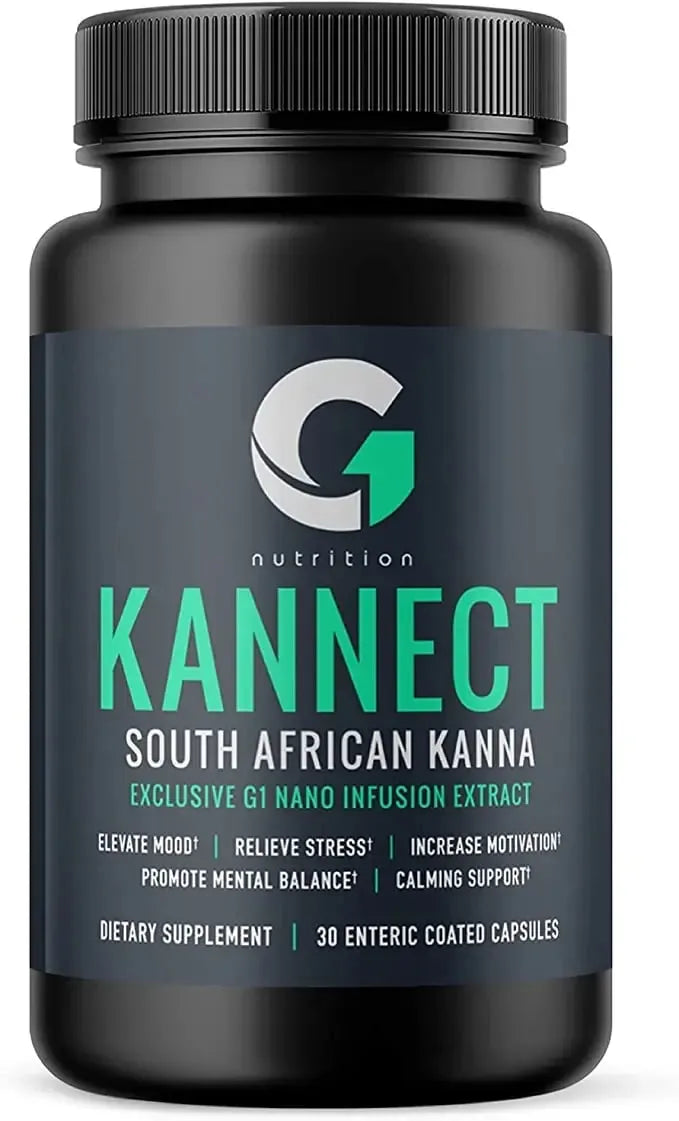
Kannect (100mg Nano Kanna Extract)
G1 Nutrition
An accessible, higher-dose 100mg kanna cap on Amazon, held back by an undisclosed alkaloid percentage.
The Disclosed-Potency Alternative
Kanna Extract (50mg, ≥0.4% Alkaloids)
The Evidence-Aligned Alternative
Calm-Z (25mg Zembrin)
Not sure yet? Compare all 3 picks below ↓
G1 Nutrition Kannect is one of the more accessible higher-dose kanna capsules on Amazon: roughly $20 to $30, a stated 100mg of a nano-processed Sceletium tortuosum extract per serving, and a calm-and-mood positioning aimed at people who found lower-dose caps too subtle. On the things that make a supplement easy to try, it does well. It's cheap, it's on Amazon, and it commits to a real milligram number instead of hiding behind a proprietary blend.
The bottom line up front: Kannect is a reasonable, budget-friendly higher-dose capsule to experiment with, but it withholds the single number that decides value in kanna. G1 tells you the extract weighs 100mg. It does not tell you the alkaloid content or mesembrine percentage of that extract. Two extracts can both say "100mg" and differ several-fold in actual active alkaloids, so without a percentage you cannot calculate a true cost per standardized dose, which is the metric that lets you compare kanna products honestly.
We aren't paid by G1 or by anyone. We rank on what a brand discloses (alkaloid content, dose-per-serving, COA transparency) and on cost per standardized dose. Kannect is a fine entry point if you want a higher dose for cheap and don't mind flying partly blind. If you want to actually know the potency of what you're taking, we point you to two capsules that print it: Double Wood (50mg, ≥0.4% alkaloids) and Doctor's Best Calm-Z (25mg disclosed Zembrin).
The short version
- What Kannect is: G1 Nutrition's higher-dose kanna capsule, a stated 100mg of a nano-processed extract per serving, positioned for calm and mood, sold on Amazon for roughly $20 to $30.
- What it gets right: it's accessible (Amazon, budget-friendly), it commits to a real 100mg milligram number rather than a mystery blend, and the nano-delivery claim is a plausible bid at better absorption.
- The honest catch: G1 discloses a milligram weight but NOT an alkaloid or mesembrine percentage, so you cannot compute a true cost per standardized dose, the number that actually decides value in kanna.
- Higher dose is not the same as higher potency: a 100mg extract of unknown alkaloid content can carry fewer active alkaloids than a 50mg extract standardized to a disclosed percentage.
- If you want disclosed potency instead: Double Wood's 50mg capsule states ≥0.4% total alkaloids, and Doctor's Best Calm-Z uses 25mg of the clinically studied Zembrin extract. Both let you do the math Kannect won't.
- Kanna raises serotonin much like an SSRI, so do not combine it with an SSRI, SNRI, MAOI, or other serotonergic medication without a doctor's sign-off, and avoid it in pregnancy.
- Kanna is sold as a botanical supplement; it has not been evaluated by the FDA and is not intended to diagnose, treat, cure, or prevent any disease. This isn't medical advice.
| Product | Format | Disclosed potency | Price | Best for |
|---|---|---|---|---|
| G1 Nutrition Kannect | Capsule (nano extract) | 100mg extract, alkaloid % NOT disclosed | $20 to $30 | A cheap higher-dose cap to experiment with |
| Double Wood Kanna Extract | Capsule | 50mg extract, ≥0.4% total alkaloids | $30 to $42 | The disclosed-potency value pick you can do math on |
| Doctor's Best Calm-Z | Capsule | 25mg Zembrin (the studied extract) | ~$26 | The evidence-aligned beginner cap |
Kannect vs the two disclosed-potency capsules we'd compare it against. Note the missing cell: because G1 doesn't publish an alkaloid percentage, its true cost per standardized dose can't be calculated.
01 · The Product Under Review
Higher Dose, Missing NumberKannect (100mg Nano Kanna Extract)
An accessible, higher-dose 100mg kanna cap on Amazon, held back by an undisclosed alkaloid percentage.
Lab report: States a 100mg extract dose per serving and a nano-processing (better-absorption) claim, but does not publish an alkaloid or mesembrine percentage, so potency can't be independently verified.
Kannect's pitch is straightforward: more kanna per capsule, for less money, on Amazon. At a stated 100mg of extract per serving it sits at the higher-dose end of the capsule market (double Double Wood's 50mg, quadruple a 25mg Zembrin cap), it's priced in the accessible $20 to $30 band, and G1 leans on a "nano" extract claim, meaning the particles are processed smaller in a bid for better absorption. For a curious buyer who found lower-dose caps too subtle and wants something stronger without paying a premium, that's a reasonable package, and we won't pretend otherwise.
This is why we're careful to separate dose from potency. A big milligram number looks like more, but a 100mg extract of unknown alkaloid content can easily carry fewer active alkaloids than a 50mg extract standardized to a stated percentage. Compare that to Double Wood, which prints ≥0.4% total alkaloids on its 50mg cap, so you can actually do arithmetic, or to the clinically studied Zembrin extract used in Doctor's Best Calm-Z, which is deliberately standardized to a known ~0.35 to 0.45% alkaloid range and was the extract in the human trials. The research is thin as it is: a 3-month placebo-controlled study of standardized kanna (Nell et al. 2013, n=37) found 8mg and 25mg daily doses well-tolerated, and Harvey et al. (2011) documented kanna's rare dual mechanism as a serotonin-reuptake inhibitor and a PDE4 inhibitor at once. All of that work used disclosed, standardized extracts, not a 100mg nano extract of unstated potency, so we describe Kannect experientially and don't lend it evidence it wasn't part of.
To be fair to G1: committing to any milligram number puts Kannect ahead of the many "kanna" products that bury their content in a proprietary blend, and the nano-absorption angle is a legitimate (if unproven at the label level) idea. If G1 published a per-batch COA with an alkaloid percentage, this would be a very different, and much stronger, review. As it stands, it's an accessible higher-dose cap you take somewhat on faith. See our best kanna capsules guide for how it stacks up against the field, and our how kanna works explainer for why the alkaloid percentage, not the milligram weight, is the number that matters.
- Format
- Capsule (nano-processed extract)
- Dose
- 100mg extract per serving
- Alkaloid %
- Not disclosed
- Axis
- Calm / mood
- Positioning
- Higher-dose
- Where to buy
- Amazon
What we like
- Higher dose (100mg) at an accessible $20 to $30
- Commits to a real milligram number, not a blend
- Easy to buy and return on Amazon
- Nano-processing is a plausible absorption angle
Worth noting
- No disclosed alkaloid or mesembrine %
- Can't compute a true cost per standardized dose
- Higher dose is not the same as higher potency
- Not the clinically studied standardized extract
Who should buy it: Budget-minded, not-brand-new users who specifically want a higher single-capsule dose, are comfortable buying on Amazon, and don't mind that the exact potency isn't disclosed. If "more milligrams for less money" is the whole ask, Kannect answers it.
What we don't like: No disclosed alkaloid or mesembrine percentage, which makes a true cost per standardized dose impossible to calculate and leaves you trusting the label. A high milligram number can read as more potent than a smaller, standardized dose while actually delivering fewer active alkaloids. Not a first-ever kanna for someone who wants to start low and know exactly what they took.
Bottom line: Kannect is easy to like and hard to fully trust. As a cheap, Amazon-available way to try a higher kanna dose, it's genuinely convenient, and it deserves credit for stating a real 100mg number instead of a proprietary blend. But it stops one number short: without an alkaloid percentage, that 100mg tells you the weight of the extract, not how much active kanna is in it. If you want a known potency, this isn't the one.
02 · The Disclosed-Potency Alternative
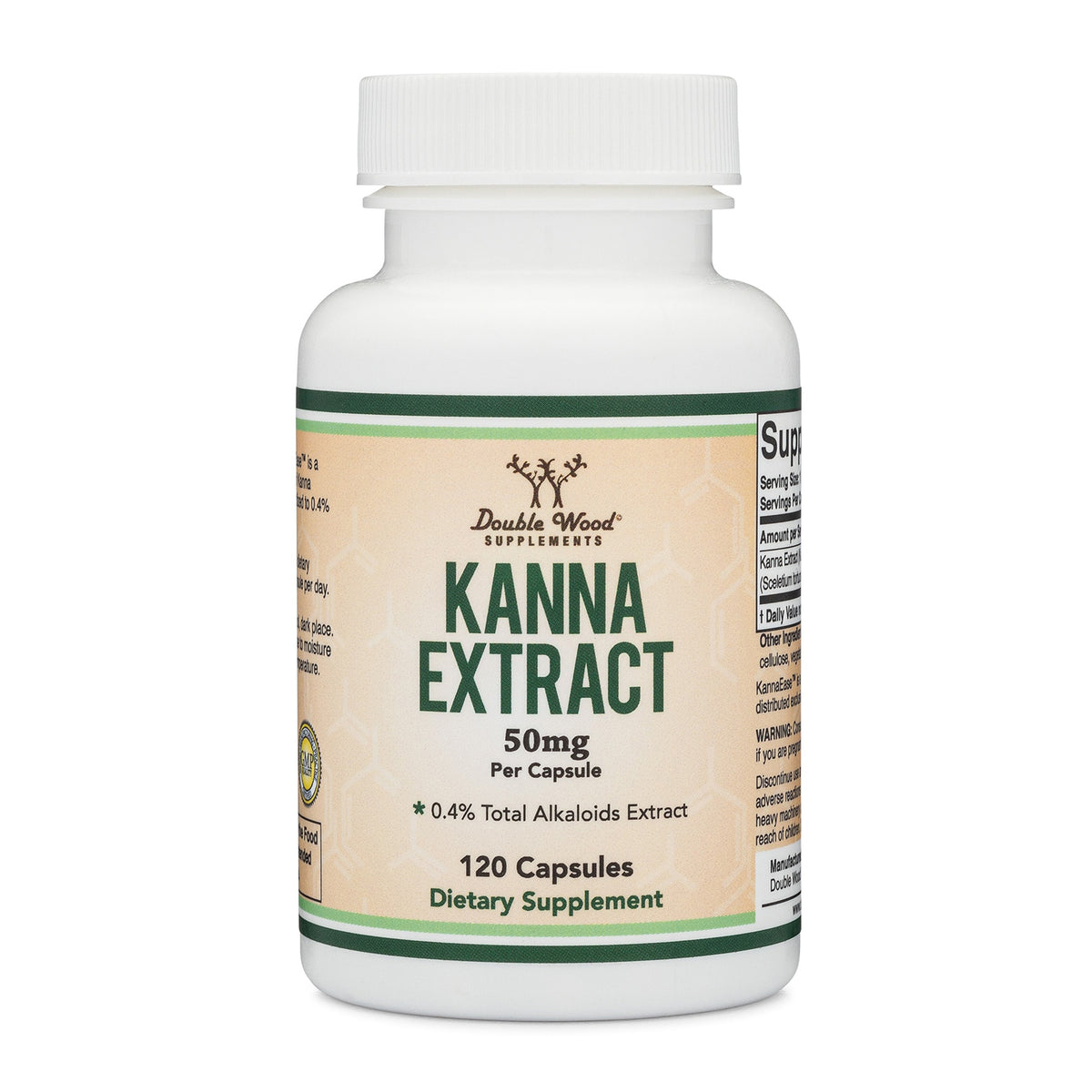
Kanna Extract (50mg, ≥0.4% Alkaloids)
Half the milligrams of Kannect but a disclosed ≥0.4% alkaloid spec, so you can actually do the math.
Lab report: States 50mg of extract standardized to ≥0.4% total alkaloids per capsule, and Double Wood publishes third-party testing, so the potency is verifiable rather than implied.
If Kannect is the higher-dose cap that won't show its potency, Double Wood is the mid-dose cap that will. It prints a 50mg extract weight and a ≥0.4% total-alkaloid standardization, which together let you estimate the actual alkaloid load per capsule, the input Kannect withholds. That's the whole point of standardization: it turns "trust us" into arithmetic.
The honest trade-offs: at $30 to $42 it can cost a bit more than Kannect, the single-capsule dose is lower (fine for most people, and you can always take a known second cap), and like any Amazon supplement the listing and price can move, so confirm the ≥0.4% spec is still printed before you buy. But on the metric that decides value, cost per standardized dose, it's playable where Kannect simply isn't. See our full Double Wood kanna review for the deeper breakdown, and our kanna dosage guide for how 50mg of a ~0.4% extract lands in practice.
- Format
- Capsule
- Dose
- 50mg extract per capsule
- Standardization
- ≥0.4% total alkaloids (disclosed)
- Testing
- Third-party tested
- Axis
- Calm
- Where to buy
- Amazon
What we like
- Discloses a ≥0.4% alkaloid percentage
- Lets you compute cost per standardized dose
- Third-party tested
- Amazon-available like Kannect
Worth noting
- Can cost a bit more than Kannect
- Lower per-capsule dose (50mg)
- Amazon listing and price can fluctuate
Who should buy it: Value-minded buyers who want a capsule they can actually reason about: a disclosed alkaloid percentage, third-party testing, and Amazon convenience, even if it means a lower per-cap dose than Kannect.
What we don't like: A slightly higher price than Kannect, a lower single-capsule dose, and the usual Amazon caveat that listings and pricing fluctuate, so verify the ≥0.4% standardization is still on the label.
Bottom line: This is the capsule that shows why Kannect's missing number matters. Double Wood discloses less milligrams (50mg) but more information: a ≥0.4% total-alkaloid standardization you can put into a cost-per-standardized-dose calculation. It's also Amazon-available, so you give up nothing on convenience to gain the transparency.
03 · The Evidence-Aligned Alternative
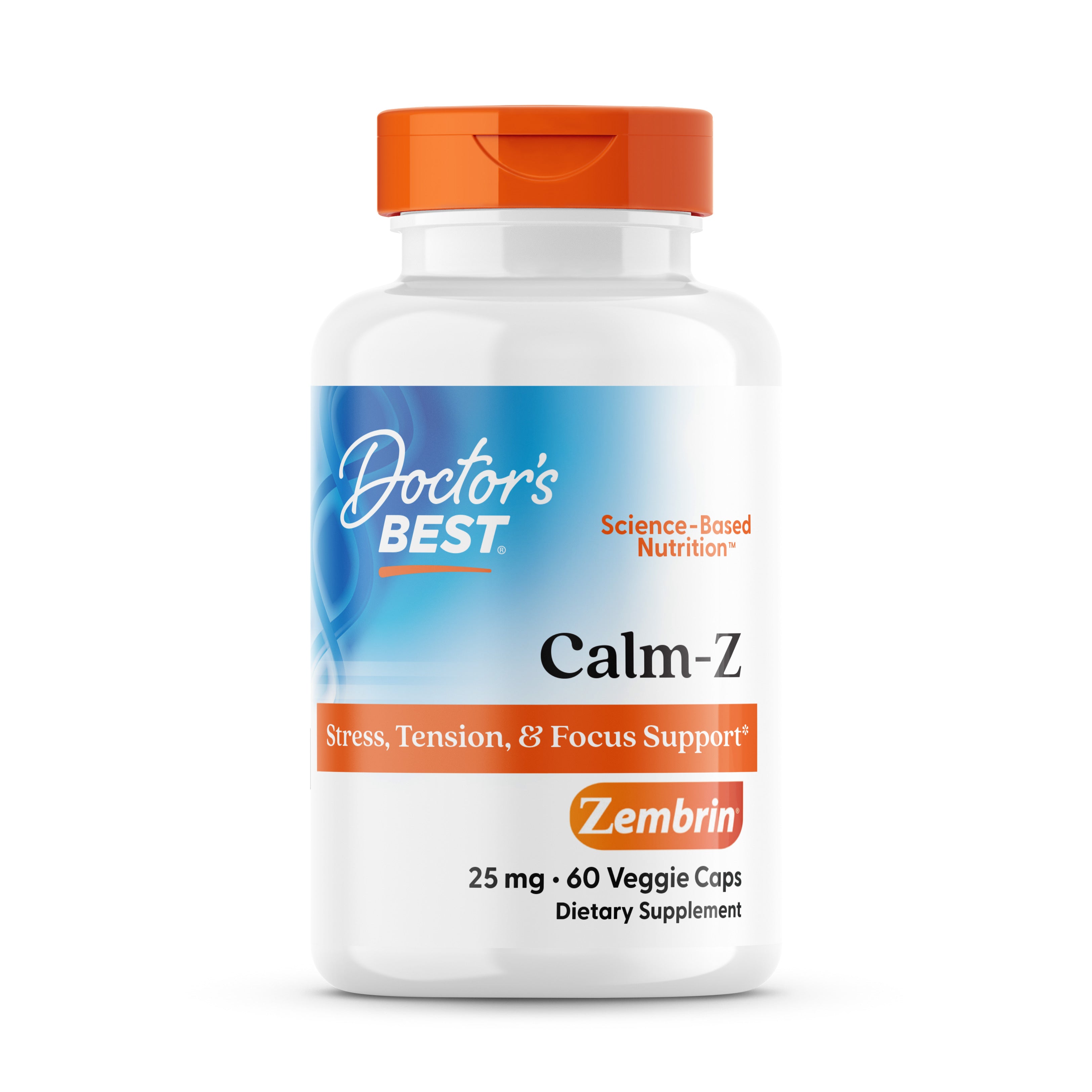
Calm-Z (25mg Zembrin)
The clinically studied Zembrin extract at its 25mg trial dose, in a mainstream, Amazon-available capsule.
Lab report: Uses branded Zembrin, a standardized ~2:1 extract held to a known low-alkaloid spec, at the 25mg/day dose used in kanna's human clinical studies.
Calm-Z leans on the one kanna ingredient with real human data behind it: Zembrin, the patented, deliberately low-alkaloid standardized extract used in essentially every published trial. Doctor's Best uses it at 25mg, the same daily dose from the studies. That's a very different proposition from a 100mg nano extract of undisclosed potency: instead of guessing what's in the capsule, you're taking the material and the amount the research actually looked at.
The trade-off is that 25mg is a low, gentle dose by design, so people chasing a strong higher-dose experience may find it subtle, which is exactly the crowd Kannect targets. But for a beginner, or anyone who wants their capsule to line up with the actual research rather than a bigger-is-better number, Calm-Z is the honest choice, and it's mainstream and Amazon-available. For the wider science, see how kanna works; for where a disclosed-potency capsule fits overall, see our best kanna supplement guide.
- Format
- Capsule
- Dose
- 25mg Zembrin per capsule
- Extract
- Zembrin (the clinically studied extract)
- Standardization
- Known low-alkaloid spec
- Axis
- Calm
- Where to buy
- Amazon
What we like
- Uses the clinically studied Zembrin extract
- 25mg matches the trial dose
- Standardized to a known spec
- Mainstream and Amazon-available
Worth noting
- Low 25mg dose may feel subtle
- Calm-leaning, not strongly uplifting
- Not a higher-dose experience
Who should buy it: Beginners and evidence-minded buyers who want the exact standardized extract (Zembrin) and dose (25mg) used in kanna's human studies, in a mainstream capsule, and who don't need a big higher-dose hit.
What we don't like: It's a low, gentle 25mg dose by design, so higher-dose seekers (Kannect's audience) may find it too subtle, and Zembrin's deliberately low-alkaloid profile means it's calm-leaning rather than strongly uplifting.
Bottom line: If Kannect's problem is that you don't know what you're taking, Calm-Z is the opposite: it uses the exact standardized extract, Zembrin, that kanna's clinical research was built on, at the studied 25mg dose. It's the lowest-dose pick here and that's the point, it's the one you can tie directly to the evidence.
How we chose
We rank on disclosure, not on marketing. For a brand review that means three things decide our verdict: how clearly G1 states the dose and alkaloid content of Kannect, how transparent it is about testing and concentration, and how its cost per standardized dose compares to products that disclose just as much. A capsule that prints a big milligram number but hides its alkaloid percentage loses to a smaller-dose one that shows the whole math.
We don't run clinical trials and don't pretend to. Effects here are described experientially, what users and the published Sceletium research commonly report, never as medical outcomes. The human clinical base for kanna is small (studies of n=16 to 37), short, and built almost entirely on the one patented low-alkaloid Zembrin extract, which Kannect does not use. We flag that distinction rather than borrow Zembrin's evidence to flatter a higher-dose, undisclosed-potency product.
Questions, answered
Is G1 Nutrition Kannect good kanna?
It's a reasonable, accessible higher-dose option with one real limitation. Kannect gives you a stated 100mg of a nano-processed kanna extract per serving for roughly $20 to $30 on Amazon, and it deserves credit for committing to a milligram number instead of a proprietary blend. The catch is that G1 doesn't disclose the extract's alkaloid or mesembrine percentage, so you can't calculate a true cost per standardized dose or know how potent that 100mg actually is. If you want a cheap higher-dose cap to experiment with, it's fine; if you want to know exactly what you're taking, a disclosed-potency capsule like Double Wood (50mg, ≥0.4% alkaloids) is the better buy.
How many milligrams of kanna are in Kannect, and is that a lot?
G1 Nutrition lists 100mg of kanna extract per serving, which is a higher dose than most capsules (Double Wood is 50mg, a standardized Zembrin cap is 25mg). But higher dose is not the same as higher potency. That 100mg is the weight of the extract, not a measure of its active alkaloids, and G1 doesn't publish the alkaloid percentage. A 100mg extract of unknown strength can carry fewer active alkaloids than a smaller extract standardized to a disclosed percentage, so treat the 100mg as a starting point to respect, not proof of strength. Start low and go slow.
Why can't you calculate Kannect's cost per standardized dose?
Because G1 discloses the milligram weight of the extract but not its alkaloid content. Cost per standardized dose is our signature value metric, and it requires knowing how much active alkaloid you get per dollar, which means you need the alkaloid or mesembrine percentage. Kannect gives you the extract weight (100mg) and the price, but without a percentage there's no way to convert that into a standardized-dose comparison. Products that disclose a percentage, like Double Wood at ≥0.4% total alkaloids or Zembrin-based capsules with a known low-alkaloid spec, let you do that math; Kannect doesn't.
Kannect vs Double Wood vs Doctor's Best Calm-Z, which should I pick?
It depends on what you value. Pick Kannect if your priority is the biggest single-capsule dose for the least money and you're comfortable not knowing the exact potency. Pick Double Wood (50mg, ≥0.4% alkaloids) if you want a disclosed-potency, third-party-tested capsule you can actually reason about, still on Amazon, at a modest premium. Pick Doctor's Best Calm-Z (25mg Zembrin) if you want the exact standardized extract and dose used in kanna's clinical studies and don't need a strong hit. On our disclosure-first standard, the two that publish their potency win the value argument.
Is Kannect safe? Can I take it with antidepressants?
Kanna is sold as a legal botanical supplement, and a 3-month clinical study of standardized kanna (Nell et al. 2013, n=37) reported it was well-tolerated with mild side effects at most, though that study used a disclosed low-alkaloid extract, not Kannect's higher-dose nano extract. The key caution applies to Kannect as much as any brand, and arguably more because it's a higher dose of undisclosed potency: kanna raises serotonin like an SSRI, so it should not be combined with SSRIs, SNRIs, MAOIs, or other serotonergic medications without a doctor's sign-off, and it's not recommended in pregnancy. Start low. This isn't medical advice, and kanna hasn't been evaluated by the FDA to treat anything.
References
The human research on kanna is genuine but small, a handful of trials, mostly on the standardized Zembrin extract. These are the primary sources we cite, linked so you can read them yourself.
- 1.Harvey AL, Young LC, Viljoen AM, Gericke NP (2011). Pharmacological actions of the South African medicinal and functional food plant Sceletium tortuosum and its principal alkaloids. Journal of Ethnopharmacology. Identified kanna's dual mechanism, serotonin-reuptake inhibition (5-HT transporter) and PDE4 inhibition, in vitro. PubMed · DOI
- 2.Terburg D, Syal S, Rosenberger LA, et al. (2013). Acute effects of Sceletium tortuosum (Zembrin), a dual 5-HT reuptake and PDE4 inhibitor, in the human amygdala and its connection to the hypothalamus. Neuropsychopharmacology. A single 25 mg dose of standardized extract reduced amygdala reactivity to fearful faces on fMRI (n=16). PubMed · DOI
- 3.Nell H, Siebert M, Chellan P, Gericke N (2013). A randomized, double-blind, parallel-group, placebo-controlled trial of Extract Sceletium tortuosum (Zembrin) in healthy adults. Journal of Alternative and Complementary Medicine. A 3-month placebo-controlled trial (n=37) found 8 mg and 25 mg/day were well-tolerated, with no significant changes in vitals or blood chemistry. PubMed · DOI
Keep reading
The Best Kanna Capsules, Ranked
Every capsule ranked on disclosed potency, testing, and cost per standardized dose, including where Kannect lands.
Double Wood Kanna Review
The 50mg, ≥0.4%-alkaloid capsule that shows why disclosed potency beats a big milligram number.
The Best Kanna Supplement
Our top overall pick across formats, judged on disclosure and value, not marketing.
Kanna Dosage Guide
How much kanna to take by format, why the alkaloid percentage matters, and how to find your dose safely.
How Kanna Works
The alkaloids, the dual mechanism, and why potency (not milligram weight) is the number that matters.